Author Archives: richards

Wide open: Read and read wide open/De Bat a Bat: Llegir i Llegir-se


Authors: Carla Canongia  and Marta Puig ( Xarxa de Biblioteques Municipals.

Facebook: https://www.facebook.com/bibliotequesXBM/
Twitter: @bibliotequesxbm

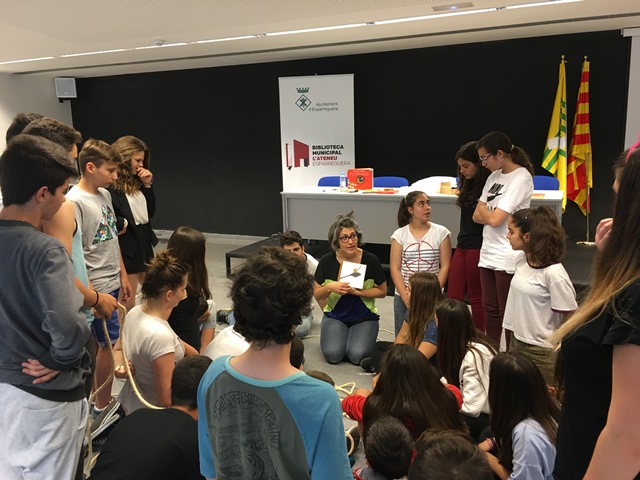
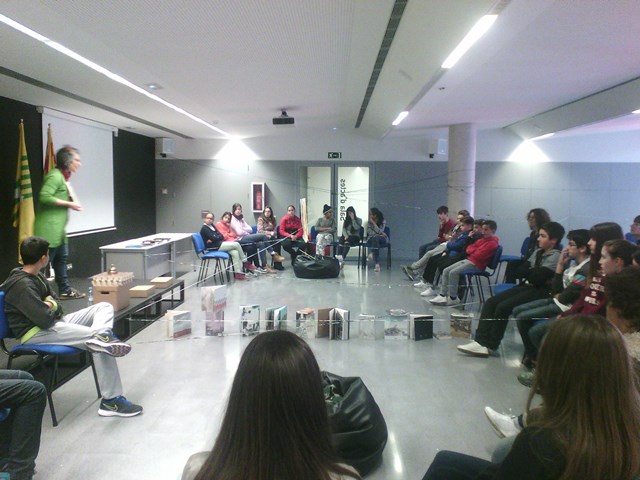
Wide open: Read and read is a new resource designed to facilitate the work with young people from 12 to 16 years through picture books; a universe where art, literature and philosophy go hand in hand.

The DNA of the project are young people, reading, library, activities, participation, dialogue, listening, street art, thought, literature, picture books, experience, innovation.
The resource consists of 3 Bats (Author, Subject and Picture Books).

Bat01: that which is not seen (open what is to do, to think and to continue).
Bat02: what you say and do not say (all playing with words and pictures, we give meaning to the outside world and in yourself).
Bat03: the struggle (the struggle between oneself and the world).


The objectives of the project are:

  • To discover the picture books as an element of promotion and discovery of new forms of reading and writing
  • To develop the entrepreneurial spirit, participation, critical thinking in young people
  • To promote strategies of work/promotion focused on direct participation, dialogue and listening
  • To promote a community of practice focused on exploring new strategies, tools and methods aimed at young audiences.

Mon Mas, creator of the resource, made us think about what it is that makes us happy; What is the spark that makes us get up each day … Mon Mas made us see, with the dynamics in which we see immersed, as illustrated albums can be the perfect excuse to talk about life, death, family, what we are concerned, we are happy … and of that restless and exciting youngsters of our libraries!

In 2017, 12 libraries will be able to put into practice with the young of its municipalities the three experiences, the three Bates, created for this first year of the project. Each library participating in the project will receive a Bat per quarter, this Bat will consist of a box with the materials and albums that are necessary to carry out the session. The ideal is between 15 and 20 adolescents per session.

Facebook:
Twitter:

Indigenous Spaces in Library Places

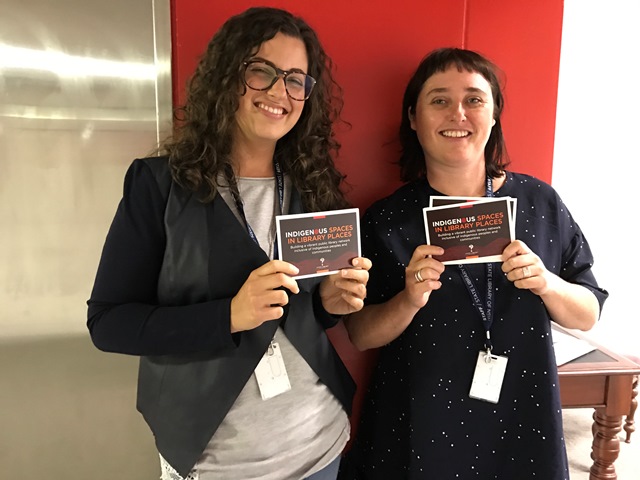
Monica Galassi and Kirsten Thorpe from the Indigenous Services Unit launch the Strategy

Monica Galassi and Kirsten Thorpe from the Indigenous Services Unit launch the Strategy

The State Library of New South Wales (NSW) in Sydney (Australia) recently launched Indigenous Spaces in Library Places a strategy to provide Indigenous services across the State’s public library network. The program’s goal is to create interest and awareness on the way libraries across the state can engage and support Indigenous peoples and communities.

The  main objectives revolve around the concepts of Welcome, Support, Share, Include, Build and Collaborate and the Strategy (which can be downloaded from the website) provides practical and thoughtful assistance in implementing these.

A cohort of public librarians from across NSW are currently participating in Aboriginal Cultural Competence Training as part of this initiative with feedback from participants demonstrating strong engagement with the content.


EIFL launches 2017 Public Library Innovation Awards

box_4_innovation_award_trophies_0

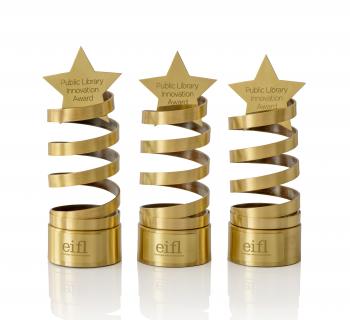
Our friends at EIFL have announced a new EIFL Public Library Innovation Award – for public library services that improve lives.
All public and community libraries in developing and transition economy countries may apply. The deadline for applications is 27 January 2017.

Libraries that apply must use information and communication technology (ICT) to improve lives in their communities by addressing any of the following issues, which are included in the United Nations 2030 Agenda for Sustainable Development:

  • Economic wellbeing and employment
  • Farming and sustainable agriculture
  • Health and hygiene
  • Digital inclusion
  • Gender equality and empowerment of women and girls
  • Education for all
  • Climate change and other issues affecting the environment


The prize includes US$1,500 and wide publicity through EIFL’s global communication channels and networks.
Applications will be accepted in English, French, Russian and Spanish. Further details are available at the EIFL website.

Portable Reading Laboratories

IFLA_Montserrat-Espuga


Our Guest blogger , Montse, has invited her colleague Montserrat Alvarez Massó. Gerència de Serveis de Biblioteques to write this post. Montserrat can be contacted at  [email protected]

2015 Manager of Library Services launched the portable Reading Labs project with the aim to provide those in charge of the children’s areas of the libraries of the network of Municipal Libraries implementing the family activity for the promotion of reading under the name Reading Portable Laboratories.
img_1995

Portable Reading laboratories have their origin in 2005 at the Roca Umbert Library, in Granollers (Barcelona), where began activities that aim to combine literature and art with the family audience. The first name was Laboratories of Letters and Images, during this time, other professionals share the project and organize reading activities with the same purposes; invites families to experience around reading.

In the context of work to grow the capacity for innovation, the Management of the services of libraries of the provincial Council of Barcelona decides to promote an initiative for the implementation of this model of activities in other libraries of the network of Municipal Libraries of the province of Barcelona. Of this sum of wills born in portable Laboratories of reading the XBM, a proposal that takes into account on the one hand, to provide new resources to work in the library; and, on the other hand, start with the participants of the project, a process of professional learning sector in the implementation of the project.
img_1994


Thus, under the concept of training in the workplace, promotes a dynamic of informal learning that opens new perspectives and to enhance the ability of professionals beyond the traditional formulas. In this way, the training is closely linked with the labour practice but with a theoretical base that guarantees. Participants cease to be mere recipients of knowledge and, therefore, the possibilities of interaction are much larger. We’re talking about, in essence, the concept that is based on participation, of learning by doing experiential learning, social projects and in the workplace.

That is why, even though the reading portable Labs are designed so that they are easy to execute by a professional, it insists on a structured process of learning and of individual and shared research. This process is established on the basis of dynamic tutorial in a first cycle of the project and a work of empowerment by staff involved in a second cycle.

In parallel it was also created a community of practice between all participants with the purpose of having a space for communication and exchange of knowledge itself. The virtual space of LabdeLabs opens doors to a systemic process of improvement and creativity, and a permanent space of support. With the purpose of ensuring a continuous interaction between the participants to the project, these assume an explicit commitment of participation, which is achieved by activating a personal blog within the virtual space. The individual blog is an exercise in reflective practice where each professional relates with a free text style, pictures, what has been your experience, dynamic and/or tools used, once each of the Laboratories in the library. Creative and professional Dynamics emerge amazingly.

The portable Labs project of Reading has become a successful project, for several reasons. We have made a step forward in the promotion of reading; 60 network libraries have incorporated this activity quarterly in its programming. Secondly, we have created a community of learning and expertise among staff at the XBM, which makes it possible not only to incorporate new libraries to the project, but they, too, grow a sense of belonging based on a shared project. Finally, we have managed to take over the staff of the XBM in this format and, to improve the knowledge about children’s literature.

With the portable Reading Labs project Manager of Library Services starts a new path as is setting up new lines of work aimed at enhancing the talent and the ability of innovation of professional network. Our challenge is to produce a new leadership more facilitator to create new conditions for innovation and creativity among the libraries of the network. It is possible from staging new work frames ideal for sharing knowledge and experience, and grown the creativity of the people, as well as their capacity for collective construction.

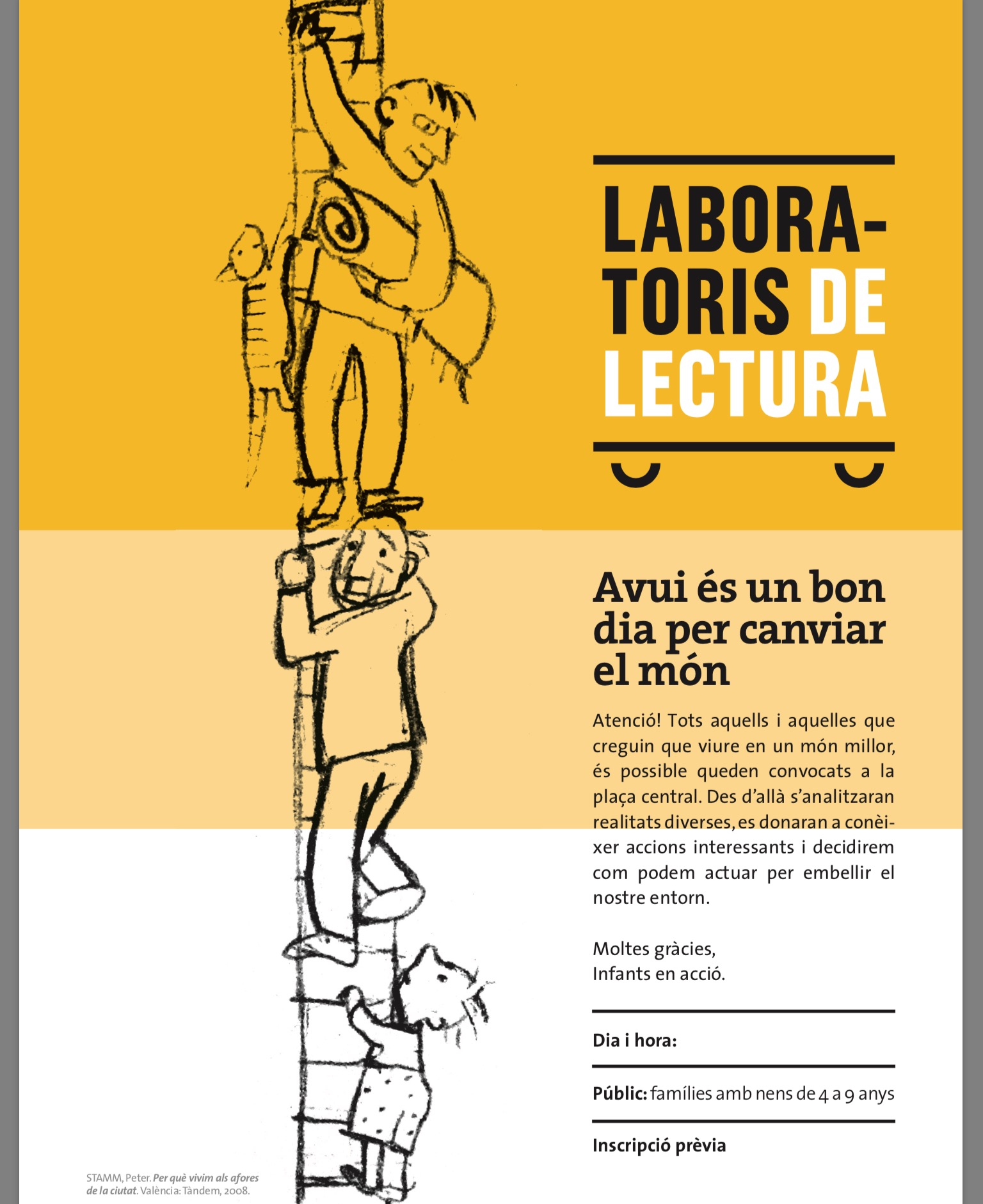
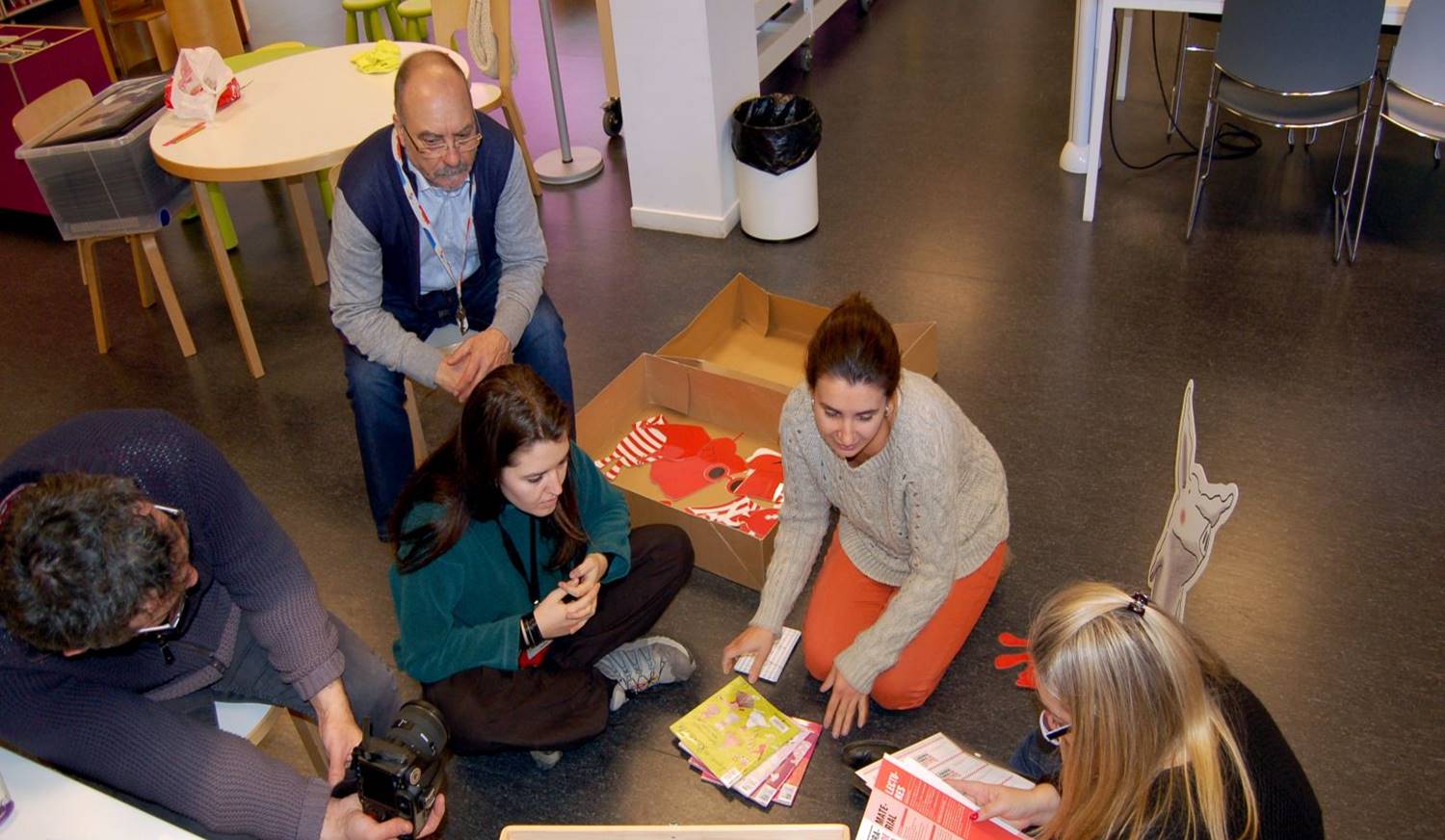
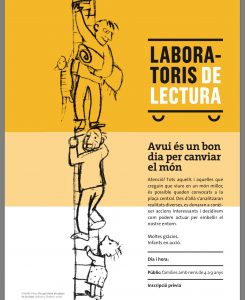
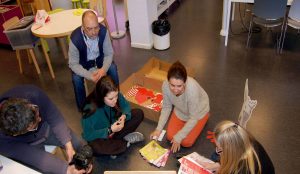
You can see some pictures from the Laboratori « Avui és un bon dia per canviar el mon » (Today is a good day to change the world) from the library Caterina Albert in Tona (Barcelona)


Laboratoris de lectura

How can libraries better serve refugees and asylum seekers?

Join a discussion on How can libraries better serve refugees and asylum seekers?

Web-conference sessions:

  • December 2, 2016 10:30-11:30 am CT

Participant link: http://tinyurl.com/pw-room

  • Best used with headset and high speed internet on the Chrome browser, or another browser with Flash Player

Twitter chat sessions:

  • November 29, 2016; 1:00-2:00 pm CT
  • December 5, 2016; 8:00-9:00 pm CT

Join the Twitter discussion @MortensonCenter using the hashtag #libraries4refugees

  • Use the hashtag #welcomepitch to share announcements, resources, CFPs, etc relevant to chat topic or refugees and asylum seekers

Use https://www.timeanddate.com/worldclock/converter.html to determine your local time.

The Mortenson Center for International Library Programs has partnered with ALA on the IMLS-funded “Project Welcome: Libraries and Community Anchors Planning for Resettlement and Integration of Refugees and Asylum Seekers”.  https://publish.illinois.edu/projectwelcome/   Project Welcome is a one-year planning grant (May 2016 – April 2017) that aims to learn about and articulate ways libraries can address the information needs of refugees and asylum seekers in order to support and empower them in their resettlement and integration process.  We are assessing the information needs and gaps in library services by learning from US and international librarians, international and national governmental agencies, and domestic resettlement and social services to develop recommendations and an action agenda on information resources, services, training, and research needed to support the resettlement and integration of refugees and asylum seekers in the United States.


As part of the planning grant, we are holding listening sessions to learn from the library and information community: How can libraries better serve refugees and asylum seekers?  The input will be incorporated into a thought paper, that will be used to provide background for the 2-day collaborative learning space/meeting to explore library and information solutions, including a 1-day public summit (February 6, 2017; Cambria Chicago Hotel)


If you have questions, please email [email protected]


Project Coordinators: Clara M. Chu and Susan Schnuer, Mortenson Center for International Library Program

Project Partners: Michael Dowling and Jody Gray, American Library Association

Network of Young Librarians in the Netherlands (YLN)

tamar


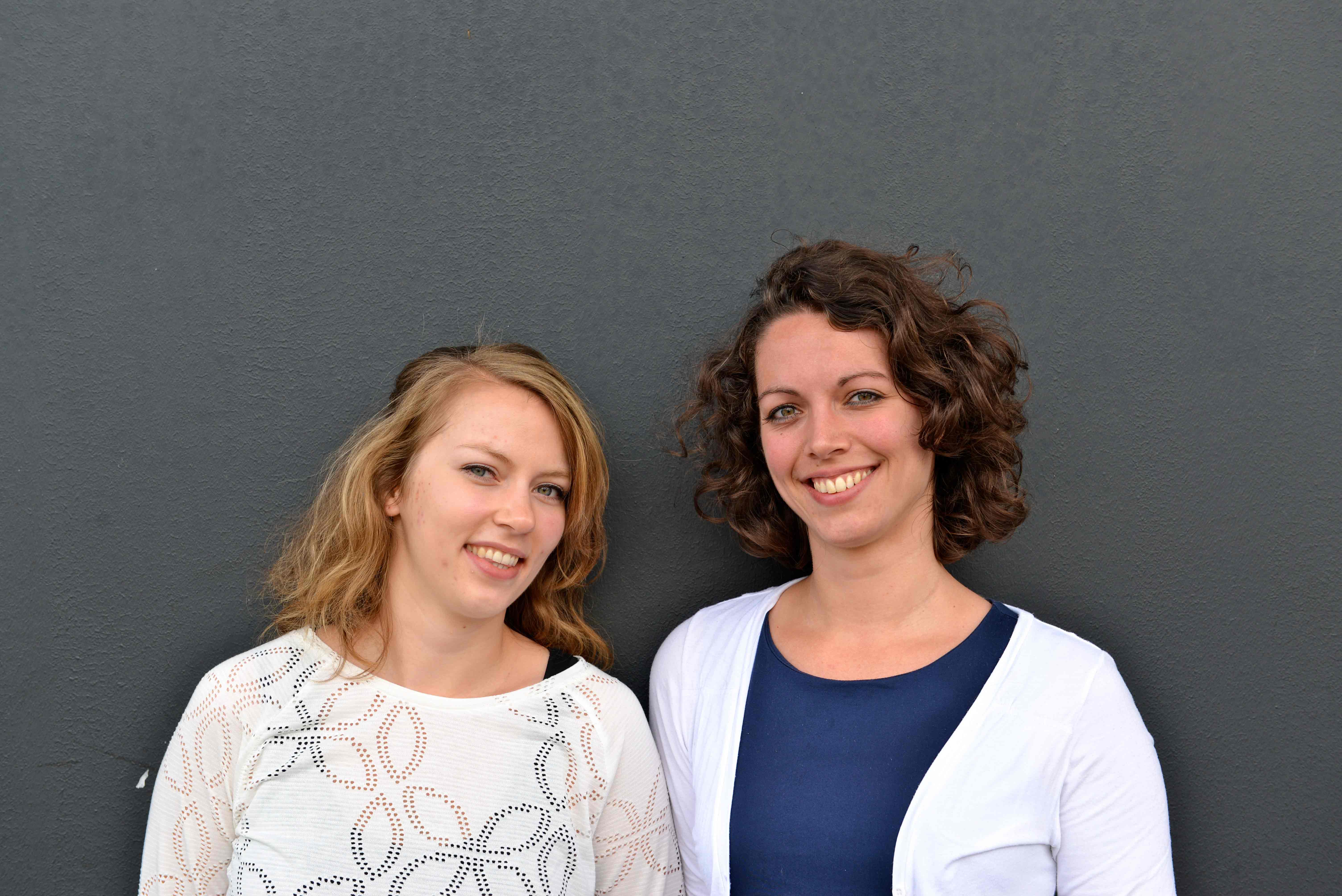
Guest Blogger: Tamar van Moolenbroek, product manager ProBiblio

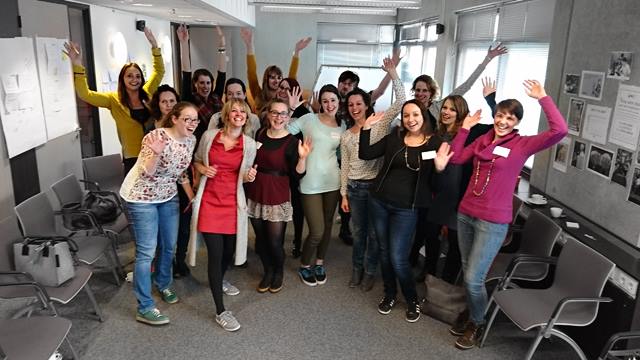
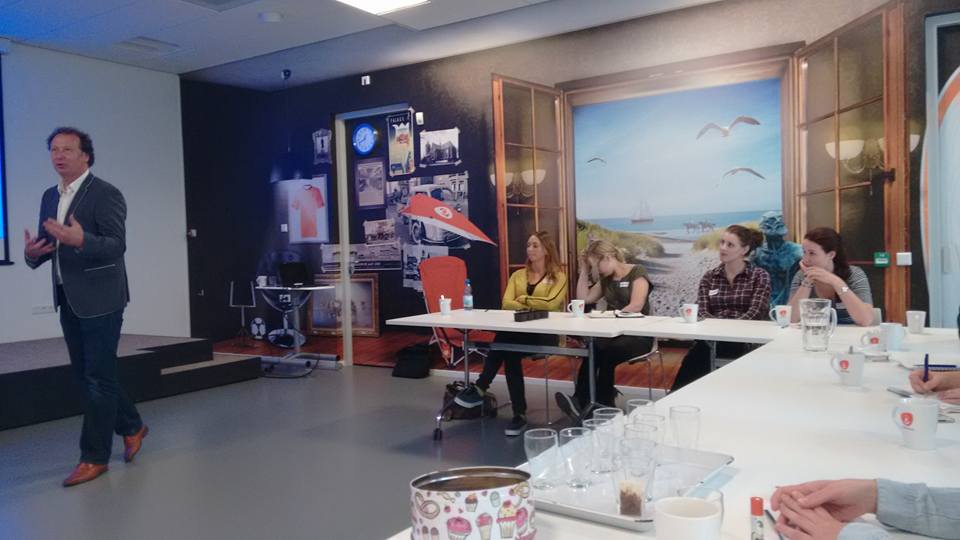
March 2016, a town near Amsterdam. Two young librarians (26 years old) are eagerly anticipating fifteen young colleagues that enthusiastically responded to the proposal to get together. Would these colleagues recognise their ideas and the need for mutual contact?

The meeting in March

The meeting in March

What is YLN?
Half a year ago, we formed a network with around 75 young employees from the public library sector. This included all sorts of employees – from communication employees to education specialists – from all layers of the sector: locally, provincially and nationally.

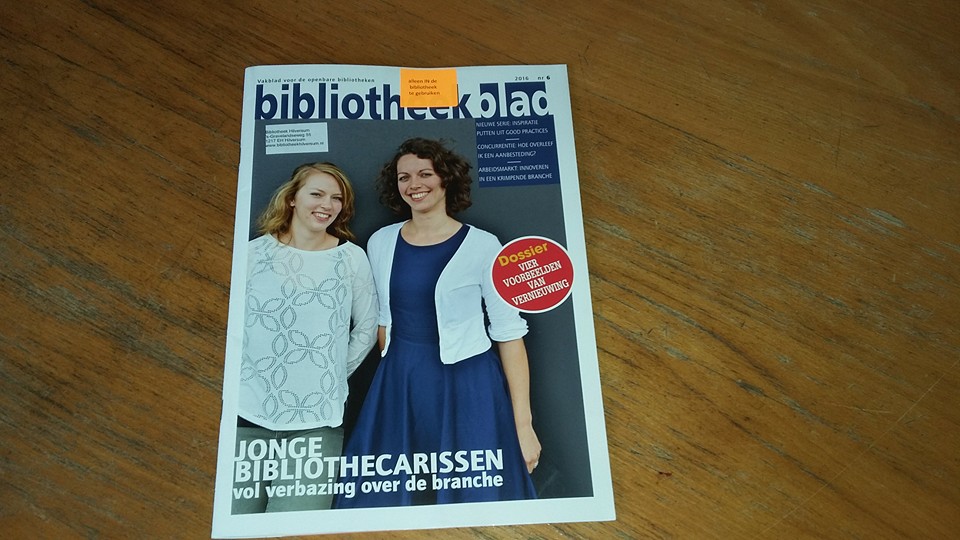
Our interview with the Library Journal: “Young Librarians: amazed about the branch”

Our interview with the Library Journal:
“Young Librarians: amazed about the branch”


What does YLN intend?
We want to achieve several things with the network. Common thread is the promotion of contact between young librarians, because, strangely enough, this barely existed. With this contact we hope to enthuse and inspire for our profession. From this contact, several other objectives emerge, such as sharing knowledge, strengthen ties with organisations in the sector, get items on the agenda, support existing initiatives and come up with new ideas.


What does YLN do?
We took up the promotion of contact in a very concrete way: we are in daily contact with each other through a Facebook group or through our group on Biebtobieb (see also the blog by Levien den Boer). Furthermore, we meet several times a year during regional and national meetings. In summary: at least twice a year we go to the pub together, and at least twice a year we hold an substantive meeting.

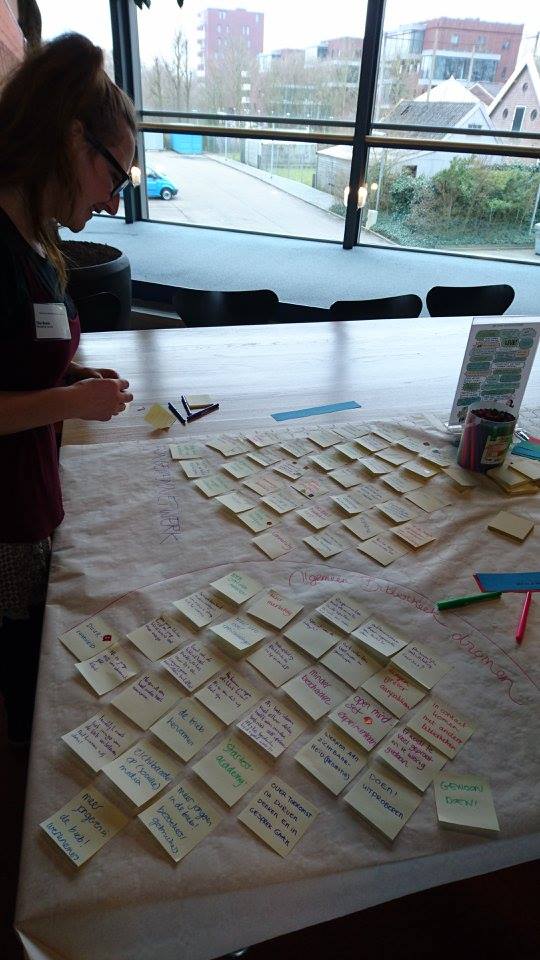
Coming up with ideas together

Coming up with ideas together

... a lot of ideas!

… a lot of ideas!

As far as the other objectives go, there is still a lot in the making. We are discussing within our group and with the library sector to find out what more we can do. Some members write blogs to tell about their experiences, others join the substantive working group or the national communication team. Still other members are busy making an information package for colleagues that are new to the sector. In this way, we are not only growing in numbers, but also in activities!

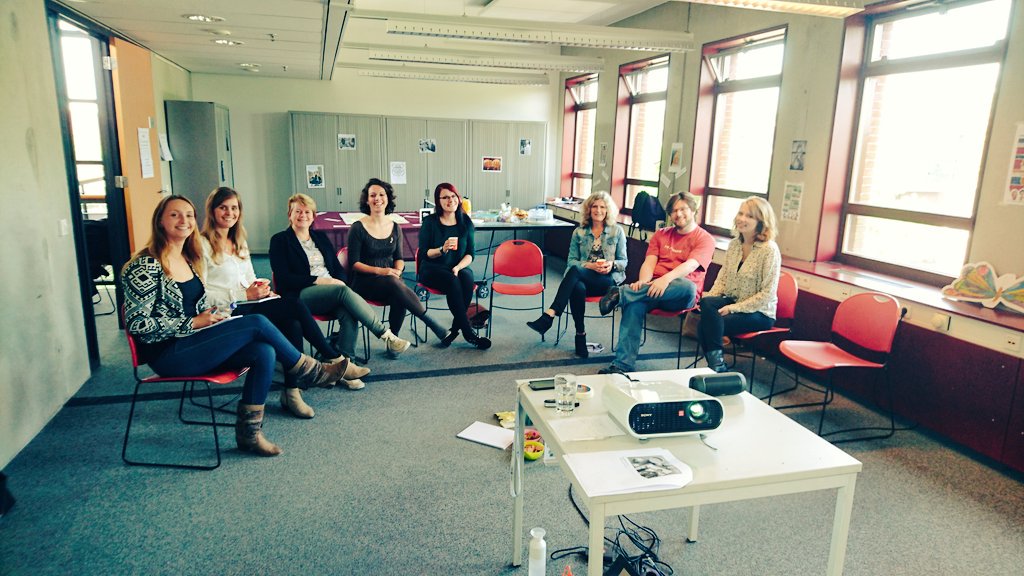
A substantive meeting (September 2016): ‘lecture’ by Prof. Dr. Huysmans (University of Amsterdam)

A substantive meeting (September 2016): ‘lecture’ by Prof. Dr. Huysmans (University of Amsterdam)

Curious about our plans?


Through our website

(https://www.facebook.com/dutchyounglibrarians/)

we will keep you posted.

Biebtobieb: sharing knowledge and ideas

levian


Guest Blogger: Levien den Boer, moderator National Knowledge Sharing at Koninklijke Bibliotheek – National Library of the Netherlands.

Although there are of course differences between the various (public) libraries in the Netherlands, they face similar questions, challenges and needs. In order to prevent them from reinventing the wheel and foster the sharing and co-creation of knowledge and ideas, the online platform Biebtobieb was created. Biebtobieb offers employees of Dutch (public) libraries and relating fields an online environment within which they can cooperate, pose questions, gather information and share their knowledge. By connecting various libraries and librarians, we aim to (co-)create knowledge and expertise that are greater than the sum of their parts.

The essentials of the platform
Biebtobieb was created in 2012 by SIOB (an institute for public libraries that became a part of the Koninklijke Bibliotheek in 2015) and SPN (the organ within which the provincial library organizations cooperate). It is an online innovation and knowledge sharing platform, built with open-source software Drupal, that features (to a certain extent) elements of social platforms like Facebook, LinkedIn and Yammer. Once users have created a profile, they can follow other users, join groups (both public and private), within which they can cooperate with colleagues throughout the Netherlands, create events or post personal contributions. Groups are formed around either a theme (for instance: youth, library architecture or refugees), an event (for instance: the National Library Congress) or region in the Netherlands. An overview of recent messages posted by the persons or within the groups you follow is presented in the form of a personal timeline. Groups also have a separate timeline which only contains the messages posted or shared in that specific group. Users can comment on, like or share each message and tag colleagues. They receive notifications through the platform and can opt for additional notifications and digests via e-mail. To stimulate online cooperation the platform features a Google Docs integration.


  • Facts and figures
    Number of registered users (as of October 6, 2016):  4551.
  • Number of groups (as of October 6, 2016): 369 (129 public, 246 private).
  • Total number of logins in 2015: 28.858.
  • Total number of messages posted in 2015: 3189.
  • Total number of likes in 2015: 1201.
  • Total number of replies in 2015: 2165
  • Nominated for a Drupal Splash Award in 2014.


More information
The live version of the platform can be found at: http://www.biebtobieb.nl/ (registration is not limited to Dutch residents, so feel free to create an account).

Special showcase page created by the software developer (in Dutch): http://biebtobieb.merge.nl/ .

Drupal Splash Award nomination 2014 (in English): https://www.youtube.com/watch?v=MbFP8-MA7j0 .

Contact
E-mail: [email protected]
Telephone: +31 70 314 0684
LinkedIn: https://nl.linkedin.com/in/leviendenboer .