Tag Archives: advocacy

The 10-Minute International Librarian #72: Be able to explain the costs of not having libraries

It’s normal to try and be positive in advocacy!

Decision-makers will often hear people complaining about not getting what they want, or asking them to come up with solutions.

It is understandable, then, that they are keen to find stakeholders who, instead of offering problems, bring answers.

However, it is always useful to be able to make clear that institutions and communities stand to lose if libraries are cut, or disappear altogether.

This can be a great way of focusing minds, and avoiding worst-case scenarios.

So for our 72nd 10-Minute International Librarian exercise, be able to explain the costs of not having libraries.

Think about what it could mean for education, research or culture. What opportunities would not be open for different members of your community?

What long term consequences could there be for development?

As ever, make sure you can make your arguments clearly and simply, so that they are easy to understand!

Do share your strongest arguments in the comments box below.

Good luck!


This idea relates to the IFLA Strategy! Key Initiative 1.1: Show the power of libraries in achieving the Sustainable Development Goals

As we publish more ideas, you will be able to view these using the #10MinuteInternationalLibrarian tag on this blog, and of course on IFLA’s Ideas Store! Do also share your ideas in the comments box.


Every Association an Advocate: Interview with Jean-Marie Reding, Luxembourg

Library associations have a key role in advocacy for our sector, able to take advantage of their role as civil society organisations to speak freely about what our profession and institutions need to succeed. It is also not only in larger countries that they can develop a capacity to do this.

To find out about the experience of a small country association, we talked to Jean-Marie Reding, Chair since 2003 of the Policy Corps at the Association of Luxembourgish Librarians, Archivists and Documentary specialists (ALBAD):

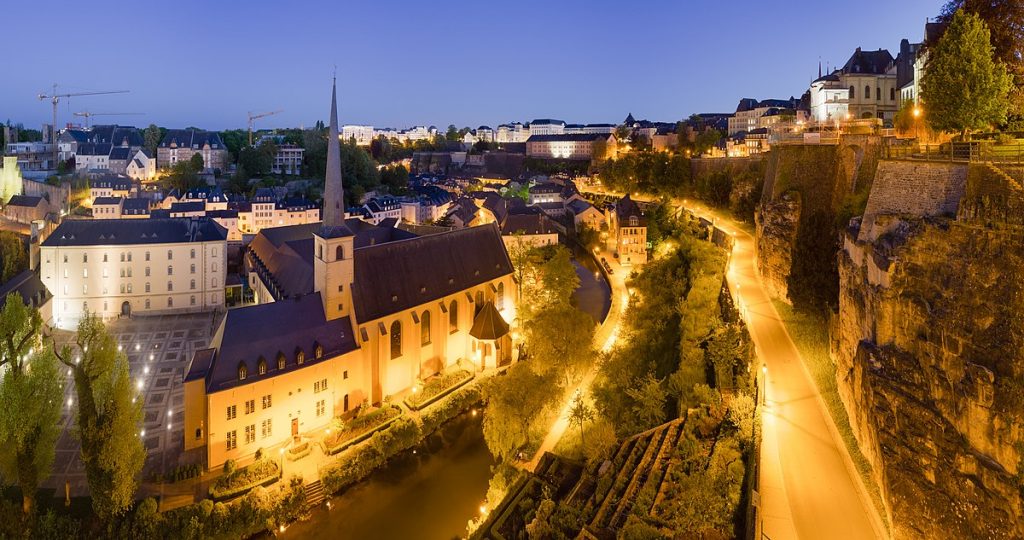
Panoramic view of Luxembourg city's Grund, at dusk, in 2010.

Luxembourg City. Photo: Benh Lieu Song, CC-BY-SA 3.0: bit.ly/3ALX5AA

How did ALBAD’s Policy Corps come together?

In 2003, one year before national elections, I, as newly elected ALBAD President, wanted to see “Libraries on the agenda” (slogan of IFLA-President Claudia Lux, 2005) in the election programs of our main political parties. In a Lilliput-state as Luxembourg political parties have very few staff; we couldn’t send questionnaires to them hoping for answers. So we contacted the democratic parties with a list, worked out by the ALBAD board, setting out current problems and asked for a visit to talk about it. For the composition of the ALBAD Policy Corps I chose two Board members who were members of a political party, accompanied if possible by one librarian, active in the field, who could explain the difficulties encountered “out there”, with real passion, making politicians’ hearts melt.

What are the advantages of having a group of people focused on policy issues?

Your Policy Corps has to be ready, if you get any requests from political parties between elections when someone needs free “biblio consulting” – with a group, this becomes easier. Moreover, if the Corps members are long-term colleagues, a well-oiled team, there exists the possibility to play right wing librarian against left wing librarian, affecting politically sensible book selection processes in libraries for example, which can be especially funny in meetings with populist parties.

How is it composed – do you have different experiences and skill sets represented?

The best librarians for this lobbying job are the ones belonging to a political party. It even doesn’t matter if they are from a public or academic library! These committed people are simply very interested in politics, know the different ideologies and the politicians to meet from the media (press, TV, etc), or are even personally close to certain politicians. They are talking the same “language”! Having knowledge about library history and especially legislation is important too of course.

How do its members manage to be both public servants, and engaged in politics?

As our Policy Corps members are members of the Executive committee (EC) of a librarian association too, they are automatically and democratically elected to speak in the name of the association. But you can also organise special elections for the Policy Corps. The most important thing is to be elected by a majority of members, and so become official representatives! Civil servants also take advantage of the role of representatives of an association (as for a union) – this means that they can even contradict their own library directors’ opinions! They just need to avoid revealing any internal information of their employers (library).

What sort of activities do you carry out to train yourselves to work most effectively with politicians?

During Executive Committee (EC) meetings the general objectives are fixed on paper, ready to be sent to political parties in the name of the association. EC meetings are also the platform for passionate debates, establishing No-Go-principles, finding a common political basis. Details are often discussed during a social event afterwards. The Policy Corps members are well connected and exchanging important political information by e-mail, from IFLA, EBLIDA and neighbouring countries. The political training is fortunately taken over by the political parties to which some Policy Corps members belong. The escorting “field librarians” just need to talk about their daily job and refer to the well informed Policy Corps members, sitting/staying next to them. This also worked in lobbying meetings with MEPs in Brussels (1 field librarian & 1 Policy Corps Member).

How does working in a smaller country affect the way you work with political parties?

The possibilities we have are different in a tiny country. But like in the USA (ALA Policy Corps in Washington D.C.), every Policy Corps needs to be close to the capital city of your country. This is the case in the Grand-Duchy of Luxembourg indeed, as the 3 permanent members are/were working in the capital.

What have you learnt about how to convince politicians to engage with libraries?

Really almost all politicians are (print-)booklovers! And they normally have their own private library. The most frequent question during political party meetings in the beginning is: How can I protect my books best? You have to reply in 10 seconds: No light, 18 C° temperature, 50% humidity! Then, making them speechless for about 30 seconds, make the connection immediately with the advocacy agenda: do you have all printed books ever published at home? The politician will answer: No, that’s not possible! Your reply: That’s why libraries still exist for 2 000 years …

What results have you seen from this engagement?

The ALBAD Policy Corps worked so well that all political parties contacted since 2003, gave us the opportunity for a meeting face to face, in their offices in Luxembourg-City. Afterwards some even asked us for text proposals for their election programs. 2004 was the 1st year in history that libraries became a part of the elections programs of all big parties. During the government coalition-forming process election programs are compared each another and intersections are put into the government program. So libraries got on the agenda! This is a huge success that we have repeated every five years since 2003!

An important point: you should publish the results, all the library related content of election programs in a special national election newsletter/magazine, for information for your association members of course, but especially, fixed for history, for the next lobbying activities.

What recommendations would you have for other countries?

1. Just copy the idea!

2. Start your lobbying activities at least 1 year before election day!

And 3. Respect the KISS-formula in meetings: Keep it simple, stupid!

Getting Involved in Cultural Heritage Advocacy: European Days of Conservation-Restoration 2021

The European Confederation of Conservator-Restorers Organisations (E.C.C.O.) sets aside a week every year to celebrate Europe’s cultural heritage and the professionals who work to preserve and provide access to it.

It is inspiring to see the preservation and digitisation of books, papers, manuscripts, photographs, and other documentary heritage materials feature during this week. IFLA especially highlights those working to preserve materials that make up the memory of the world, as libraries and library professionals are essential keepers of this cultural heritage.  We explored this further in our blog post for European Day of Conservation-Restoration 2020, which you can read here.

For this year’s European Days of Conservation-Restoration, a social media campaign highlighted good practices and the professionals and institutions involved in this work. However, it also explored other themes, such as heritage at risk, sustainability, and the importance of reaching out and building networks.

This provides a great example for cultural heritage professionals around the world of an accessible way to get involved in advocacy.

Storytelling for Advocacy

Cultural heritage provides a gateway to the vast collective knowledge of humankind; it inspires connection and fuels creativity and innovation.

Cultural heritage professionals can help promote recognition of the potential of cultural heritage for bettering society through engaging in advocacy on how their work makes a positive impact.

The importance of incorporating advocacy and storytelling into cultural heritage conservation practice was among the topics presented by IFLA in a keynote address to the Institute of Conservation (ICON) Book and Paper Group Conference 2021 titled: Inspiring and Informing Development: Advocating for culture in sustainable development.

An important theme of this address was that no one person is too small to make a difference.

The IFLA speaker urged cultural heritage professionals to act boldly – individually and within networks – as advocates, telling stories that help illustrate the value that cultural heritage has for people now and into the future.

Examples – European Days of Conservation 2021

Using online platforms to proactively reach out and tell stories can be effective means by which to connect with community members, policymakers, and fellow professionals.

Participating in celebrations like the European Days of Conservation-Restoration is an excellent opportunity to join voices with others and increase one’s reach.

The E.C.C.O. called for its community of European conservation and restoration professionals to take part in a social media campaign – highlighting stories that invite viewers into their workspaces and highlight the important role they have in safeguarding cultural heritage.

There were several fascinating posts that feature documentary cultural heritage. These posts bring conservation and restoration practice to life, and help other understand the work that goes in to ensuring these materials remain accessible.

Some examples include the Association of Conservator-Restorers in Bulgaria highlighting several institutions that specialise in conservation of works on paper; information-sharing on how documents are preserved from the Samuel Guichenon Collection, Historical University Library of Medicine, Montpellier University; and the National Archives of Malta demonstrates a treatment for paper that has been damaged by iron gall ink.

For more, visit E.C.C.O. on social media: Facebook & Twitter.

Sustainability, Cooperation, and Networking

Beyond highlighting good practice, a goal of this year’s European Days of Conservation-Restoration was also to raise awareness of key aspects of cultural heritage’s role in society, including access and sustainability.

Participants were encouraged to explore this through themes on the preservation of tangible cultural heritage in the view of climate change and the importance of reaching out beyond the sector – involving politics, education, training and research as pillars for cooperation towards sustainability and development.

The social media campaign took this opportunity to raise awareness of several initiatives that are linking cultural heritage with broader development intiatives, such as EU-funded project CLIMATE FOR CULTURE, the Joint Programming Initiative on Cultural Heritage and Global Change, and the Climate Heritage Network.

For example, as part of its #ClimateHeritage Mobilisation @ Climate Fridays webinar series, Climate Heritage Network delivered a webinar on the theme: Building Reuse is Climate Action. A wider audience was invited to attend this programme, which offered a compelling environmental case for building reuse and its part in the goal for zero carbon emissions.

IFLA is a founding member of the Climate Heritage Network. Follow more on IFLA’s involvement with Climate Heritage Network in the coming weeks in the lead-up to COP26.

Everyone can be an advocate

Joining networks, reaching out beyond the sector, and highlighting connections between cultural heritage practice and social issues like sustainability are all ways to get involved in advocacy.

Participating in events such as the European Days of Conservation-Restoration by taking part in social media campaigns and joining virtual events is a low/no-cost action that individuals or institutions can do to begin increasing their involvement in advocacy.

To go back to the key message in IFLA’s recent keynote address on advocating for culture in sustainable development, no one is too small to make a difference.

Library professionals around the world are encouraged to seek out opportunities to highlight their work, and to get in touch with IFLA HQ for help showcasing their own stories.

Contact: [email protected] for more.

The 10-Minute International Librarian #65: Be able to explain why access to information matters

Tomorrow is the International Day for the Universal Access to Information, which highlights the importance of access to information of all sorts for development.

However, this access is often only seen narrowly – for example around access to government information for the purpose of supporting transparency.

This is of course an important aspect, but does not cover all of the other types of information and uses that can contribute to better lives and stronger societies.

Access to information matters in agriculture, health, education, innovation, climate action and beyond, but is all too often seen as only a marginal issue, or even forgotten entirely.

Libraries of course know that this should not be the case, and that to achieve sustainable development, there need to be comprehensive, and properly supported strategies to ensure access to information.

A key challenge in our advocacy is to convince decision-makers, and those that influence them, of the same thing.

So for our 65th 10-Minute International Librarian exercise, be able to explain why access to information matters.

If it helps, imagine a particular person you need to convince, and adapt your arguments to match what you think will be most effective for them.

Just as in in our 13th exercise (develop your 1-minute pitch for libraries), you should try to make your argument as short and convincing as possible.

Don’t assume that your interlocutor understands what libraries do, and so try to make it real for them, underlining the impacts of your work.

You can share the arguments that work best in your experience in the comments below.

Good luck!


This idea relates to the IFLA Strategy! 1.1 Show the power of libraries in achieving the Sustainable Development Goals.

As we publish more ideas, you will be able to view these using the #10MinuteInternationalLibrarian tag on this blog, and of course on IFLA’s Ideas Store! Do also share your ideas in the comments box.

Dates for the diary: advocacy moments over the rest of 2021

A key challenge in advocating for libraries is that you can be working across a huge range of issues. Libraries are cultural, educational, scientific, and civic actors, all at once.

While this means that there are many situations in which libraries have a relevant contribution to make, it can also mean that it is hard to find a focus, or construct a programme of ongoing advocacy activities.

One thing that can help in this is to structure activities around key dates.

Sometimes, there is an important event, with major media interest, taking place. If you are ‘present’ – through social media, articles or op eds, or other tools – you can look particularly relevant for partners, as well as build awareness within the field.

At other times, a day has been declared to be an international observance, meaning that among global – and often national – institutions, there is a special focus on the relevant theme. By engaging, you can underline libraries’ relevance, as well as potentially build new partnerships.

This blog sets ot some key dates and observances between now and the end of 2021. You don’t need to plan something for each one of these of course, and you certainly don’t need to do anything big!

However, as above, even just by posting on social media, you can help show the connection between libraries and the major global issues these dates mark. And if you can do more, all the better!

In each case, there is also a note about IFLA’s own current plans.

8 September – International Literacy Day (link): a particularly relevant day for libraries, this is an opportunity to focus on showing our institutions’ contribution to building literacy (and literacies) at all ages. This year is focused in particular on closing the digital divide. Think about examples you can share that show how libraries help achieve the global commitment to driving universal literacy!

IFLA’s Literacy and Reading Section will be planning publications, and Headquarters will be sharing new research into how libraries feature in collected good practices. Hashtag: #LiteracyDay

15 September – International Day of Democracy (link): a great opportunity to set out how libraries are promoting healthy civic life and participation in decision-making, through everything from enabling parliaments to work effectively to facilitating access to open data, providing information literacy skills, and welcoming debates and discussions in the library. Hashtag: #Democracy

17-29 September – SDG Action Week (link): what is your library or association doing to deliver on the SDGs? Share it via the tools prepared for SDG Action Week by the UN-supported SDG Action Campaign. There are also lots of great tools for social media and beyond, helping you both to underline the need to deliver on the 2030 Agenda, and to show how libraries are making a difference! Hashtag: #Act4SDGs

26 September – 2 October – Banned Books Week (link (ALA) and link (Amnesty International USA)): the mission of libraries to provide access to the widest possible range of materials to their users does not sit well with censorship, be it offline or online. Banned Books Week is an opportunity to highlight the reality of restrictions on expression today and their impact, as well as to resist censorship.

IFLA’s Advisory Committee on Freedom of Access to Information and Freedom of Expression (FAIFE) will be involved, but take a look at the links to see what the American Library association and Amnesty International USA have planned. Hashtag: #BannedBooksWeek

28 September – International Day for the Universal Access to Information (link): only recently created as a UN-recognised day, the International Day for the Universal Access to Information grew out of work to promote rules on access to government information. It has since expanded to cover all information which can help people to develop.

This year, IFLA, through its regional office for Latin America and the Caribbean, is supporting this year’s celebrations by organising an official event in Buenos Aires. Follow this – and the other events – and use the day to highlight the importance of libraries’ work to provide access to information! Hashtag: #AccessToInfoDay

October – Urban October (link): starting with World Habitat Day on 4 October, and closing with World Cities Day on 31 October, Urban October is focused on the importance of working at the local and regional levels in order to deliver on development, led by UN HABITAT. There is a strong focus this year on climate change and climate resilience, with COP26 coming up (see below!). You can register events on the Urban October website also if you want to organise something! Hashtag: #UrbanOctober

24 October – World Development Information Day (link): this day is about the importance of sharing information in order to raise awareness of and interest in development challenges around the world. As such, it is a perfect opportunity for libraries to underline their own role in supporting learning and engagement in the wider world! IFLA will make posts on the day – you can also! Hashtag: to be announced

24-31 October – Global Media and Information Literacy Week (link): this is another recent addition to the UN calendar, but has been run by UNESCO already for a number of years with strong library engagement. IFLA will be looking to contribute to global events, and we encourage others to hold their own activities or gatherings in order to promote media and information literacy, and the role of libraries in delivering it. See already our save-the-date post! Hashtag: #GlobalMILWeek

27 October – World Day for Audiovisual Heritage (link): recognized by UNESCO, this is an opportunity to recognise the uniqueness and the importance of audiovisual heritage, what it brings to societies, and what is needed to safeguard it. IFLA will be marking the day, and we hope that libraries and associations working with it will join the effort to raise awareness to ensure audiovisual heritage gets the attention it deserves. Hashtag: #AudiovisualHeritage

1-12 November – COP26 (link): delayed from last year, this is a key meeting in delivering on the Paris Agreement on climate change, where governments and others will meet to discuss accelerating climate action. IFLA, as a member of the Climate Heritage Network, will be closely involved in underlining the role of culture and cultural institutions in progress. There is likely to be major attention to climate change issues during this time, and so it’s an important opportunity both to show what libraries can contribute, and to join wider calls for action! See our blogs about climate change, and the work of our Section on Environment, Sustainability and Libraries for more. Hashtag: #COP26, #ClimateHeritage

9-24 November – UNESCO General Conference (link): this is the major biennial meeting of UNESCO’s Member States, taking the opportunity to set the budget and the agenda of the organisation, as well as to discuss key current trends. With libraries engaged in many of UNESCO’s priorities, IFLA engages across a wide range of the Organisation’s work. In advance of the event, we will be encouraging members to get in touch with their UNESCO National Commissions in order to share library priorities. Find out more in our news piece about the Year of Creative Economy, and our guide to the 2005 Convention on Cultural Diversity. Hashtag: #UNESCO

6-10 December – Internet Governance Forum 2021 (link): the Internet Governance Forum (IGF) is an opportunity for governments, experts and stakeholders to talk about key issues in the way that the internet is run today, and what improvements could be made to support development. This is an area of major interest for libraries, both given our use of the internet to support access to information, and the relevance of our values in this space. You will be able to join (online or in person at this stage) to listen into the perspectives shared and issues raised – including a side-event on libraries! – or even look out for national IGF meetings. Hashtag: #IGF2021

10 December – Human Rights Day (link): while the theme of these year’s Human Rights Day is not yet known, this is always an opportunity to highlight the connection between the activities of libraries and the delivery of human rights for all. This of course includes the right of access to information, but also to education, privacy, culture and science. IFLA will be marking the day, working with our Advisory Committee on Freedom of Access to Information and Freedom of Expression – think about what you can do! Hashtag: #StandUp4Human Rights
The 10-Minute International Librarian #63: Memorise a high-impact reference

Too often, decision-makers will tend to take libraries for granted, and not spend enough time or effort thinking about them.

This is of course a lost opportunity, given how much integrating libraries into policy planning can help support wider policy goals.

It’s therefore important to be able to start a conversation.

A great way to do this is by being able to get your interlocutor to engage their braincells by being able to say something powerful or unexpected.

So for our 63rd 10-Minute International Librarian exercise, memorise a high-impact reference.

It could be a quote, a fact, or a statistic – what is important is to make it short and powerful.

You could focus on something that highlights the need for libraries – such as literacy rates, the need for community spaces, or volumes of heritage at risk.

You might also focus on the impact that libraries can, or are having – the connection between the strength of libraries and positive policy outcomes, or even a story.

Once memorised, you can use it in advocacy or in wider conversation to get people thinking about the importance of libraries, and what they can do to help.

Let us know your favourite references in the comments below.

Good luck!


This idea relates to the IFLA Strategy! Key Initiative 1.1: Show the power of libraries in achieving the Sustainable Development Goals.

As we publish more ideas, you will be able to view these using the #10MinuteInternationalLibrarian tag on this blog, and of course on IFLA’s Ideas Store! Do also share your ideas in the comments box below.

The 10-Minute International Librarian #62: Think how to convince someone (in a language they understand)

Being able to win people’s support is so often vital in being able to fulfil your mission in a library.

It can be about convincing colleagues to join you in a project, winning the endorsement of a manager inside or outside of the library, or getting changes to wider laws and policies.

This can unlock resources or new possibilities!

But convincing people can take some preparation, both in terms of your message, and how you convey it.

So for our 62nd 10-Minute International Librarian exercise, think how to convince someone (in a language they understand).

To do this, you need not only to be clear about what it is that you want, but also to reflect a little on how to present it effectively.

What sort of vocabulary would the person you need to convince respond to? Are there buzzwords you can use, or themes you can raise that will get them more interested?

Think also about what tone will work – formal or less formal?

Take a look at – or think about – how the person you are looking to convince communicates themselves, and what seems to work with them.

Let us know about your experiences in the comments box below!

Good luck!


This idea relates to the IFLA Strategy! Key Initiative 1.1: Show the power of libraries in achieving the Sustainable Development Goals.

As we publish more ideas, you will be able to view these using the #10MinuteInternationalLibrarian tag on this blog, and of course on IFLA’s Ideas Store! Do also share your ideas in the comments box below.