Category Archives: General

Bright idea for young asylum seekers

IFLA_Lo-Claesson


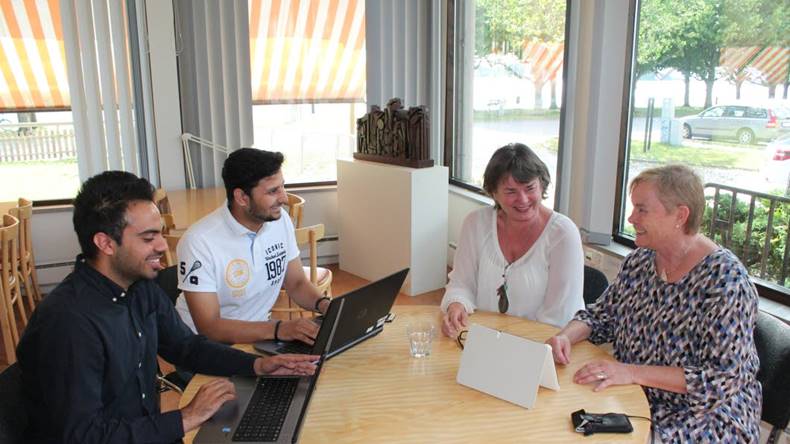
The Swedish Motala library has received 670 000 SEK to a project where the newly arrived young people will teach seniors manage computers and how the internet works.

The money comes from the non-profit organization Enter Sweden, which since 2010 runs the project IT Guide Sweden. The mission is that newly arrived young people teach seniors Internet using computers, tablets and phones, while the young people come in close contact with the Swedish language and learn more about Sweden.
Motala & Vadstena Tidning/Pelle Johansson

Motala & Vadstena Tidning/Pelle Johansson

– We will recruit and train the newly arrived young people who read the language introduction program at Motala secondary schools. They will then be on hourly employee and given the task of helping seniors. This includes to teach them to surf the web, how to pay bills and how to create an account on Facebook, says Ms Lundberg, manager Enter Sweden.

Two immigrants who today are IT guides will serve as trainers and mentors to the students who will participate in the project.

– It feels really exciting and we know from experience how much the newcomers can learn about Sweden through meetings with seniors, says Library Director Birgitta Hellman.

– We expect to be off and running with it-cafe on Saturdays in October and then we hope to expand to branch libraries. It can also be a collaboration with the elderly care.
Systematic Public Library of the Year 2016 – Shortlist announced

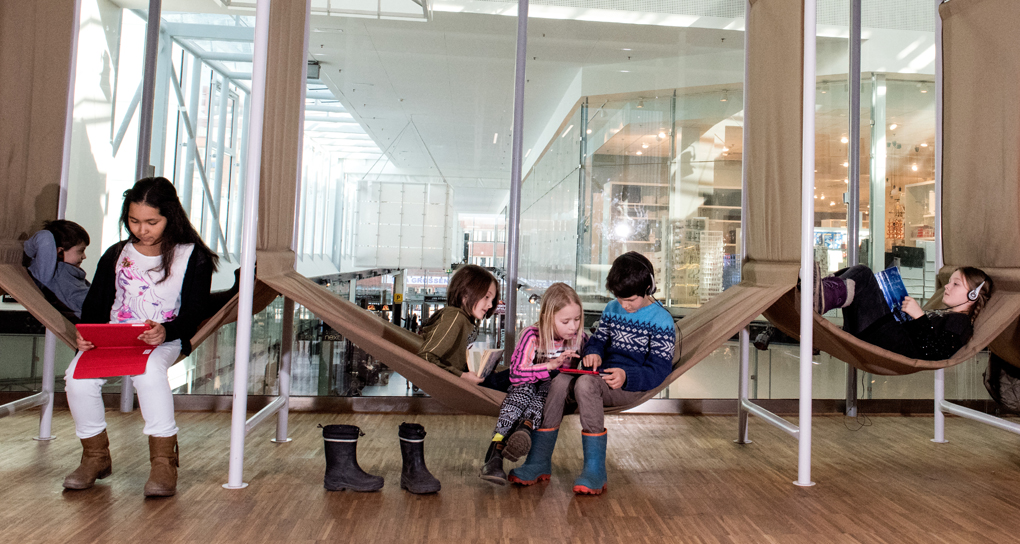
Winner of the 2015 Systematic Public Library of the Year Award, Kista Library in Stockholm. Photo: Kista Library

Winner of the 2015 Systematic Public Library of the Year Award, Kista Library in Stockholm. Photo: Kista Library

Four libraries from Australia, the US, and Denmark, respectively, have been nominated for the Systematic Public Library of the Year which is awarded to the world’s best new public library.

The presentation will occur at the IFLA WLIC   in Columbus, Ohio, USA on 15 August  as part of the Public Library Section’s program.

The four nominees are:

•Chicago Public Library, Chinatown Branch, USA
•Dokk1, Aarhus, Denmark
•Geelong Library & Heritage Centre, Australia
•Success Public Library, Australia

The international panel of judges were highly impressed with the nominated libraries  expressed the following about the four nominated libraries. Read their comments here.

The ‘Systematic – Public Library of the Year’ award is part of the ‘Model Programme for Public Libraries‘ project of the Danish Agency for Culture and Palaces and Realdania, and the prize is sponsored by the IT firm Systematic.

The purpose of the program is to develop the library of the future, so it takes into account, among other things, digital developments, user demands, local culture, and the desire to accommodate diverse population groups with an open and functional architectural expression.

The library must be a newly-built or refurbished in buildings that have not previously been used as a library. The opening of the new library must have taken place in the period between 1 January 2014 and 1 June 2016. The prize is for $5000.

Congratulations to the nominated libraries.


Interesting use of statistics when planning library program at Huddinge Library, Sweden

IFLA_Lo-Claesson


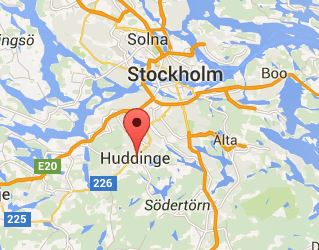
Prior to the development of a new library program, Library Director Nick Jones and the library responsible at Huddinge library analyzed library statistics and inserted it in a broader context. They have taken into account socioeconomic factors, public library use (non-library users), and geography to better plan future needs for library services.

Socio-economic factors will determine how prone someone is to use the public library services. Socio-economically disadvantaged groups use them generally to a lesser extent. The differences in use are greater in the digital services than in the physical libraries.

People living in socio-economically weaker sections of the municipality are generally less likely to travel and / or move to visit the public library.

There is a marked reduction in the use of public libraries in the proportions of the population living outside a radius of 500 meters where from area libraries and 1,500 meters from the main municipal library. Equal access to public libraries is offered today to 43.2% of Huddinge’s population, i.e. those living inside these radii.

Capture

One can positively affect this radius of equitable access to supply, facilities, opening hours and by placing public libraries in environments where they are integrated with other social and commercial services. However, this requires resources.

The perceived availability of public libraries as a public place is adversely affected when the public library is located in close proximity to the school premises.

30% of those who currently do not use public libraries would like to do it.

30% of those who use public libraries today would like to make it even greater extent.
(Facts from Peter Alsbjer’s blog)

Nick Jones is available to answer questions about the statistical work and can be contacted at [email protected]


Effective Summer Learning – a new report

btn-logo


Are libraries positively improving the lives of the children they serve and how will they know? These are two questions at the heart of a meeting convened by the Urban Libraries Council (ULC) when library leaders and education, philanthropy and non-profit leaders came together to discuss how to assess the effectiveness of library summer learning programs.

ULC’s new report, Public Libraries and Effective Summer Learning: Opportunities for Assessment and the Executive Summary summarizes the discussions and includes strategic concepts, emerging models and tangible action steps to initiate assessment of library summer learning outcomes.

Since 2013, ULC and the National Summer Learning Association have been working together to explore how public library programs could support  kids’ summer learning needs. This is work has continued via support from our funding partner, the Institute for Museum and Library Services and our strategic partner, the Metropolitan Group, a collaborator on all of the work that contributed to this report.

Take some time to read about the examples and best practices which demonstrate how public libraries are maximizing summer learning opportunities and achieving learning gains for youth.

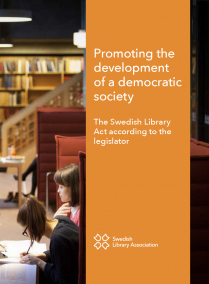
Promoting the development of a democratic society

IFLA_Lo-Claesson


Omslag-engelska-209x284

The Swedish Library Association has now translated the report on the Swedish Library Act Promoting the development of a democratic society into English. The report summarizes the reasons for the provisions of the Swedish Library Act. The aim is to highlight what the parliament and the government wanted to achieve with the law and make clear what it is all about beyond the sometimes terse and somewhat technical wording of the various paragraphs.


Experts in the library – Swedish Library Association Expert Networks

IFLA_Lo-Claesson


The Swedish Library Association has gathered different kinds of library skills in expert networks. These networks are a resource and a knowledge base on matters concerning specific areas and subjects in libraries. They also offer updated and relevant information about different types of libraries.
The members, often active in practical work, in the respective networks have expertise in specific areas and share ideas and skills. Thus the knowledge is kept alive and current in a variety of library areas. Expert networks are also an opportunity for those working in libraries to develop and exchange knowledge. The networks are open to all who are individual  members of the Swedish Library Association.

The networks are an appropriate part of the compound as a consultative body and are involved in lobbying to authorities. Experiences and tips are exchanged on various platforms, by email lists and social media. At the network meetings lectures are offered in different areas.

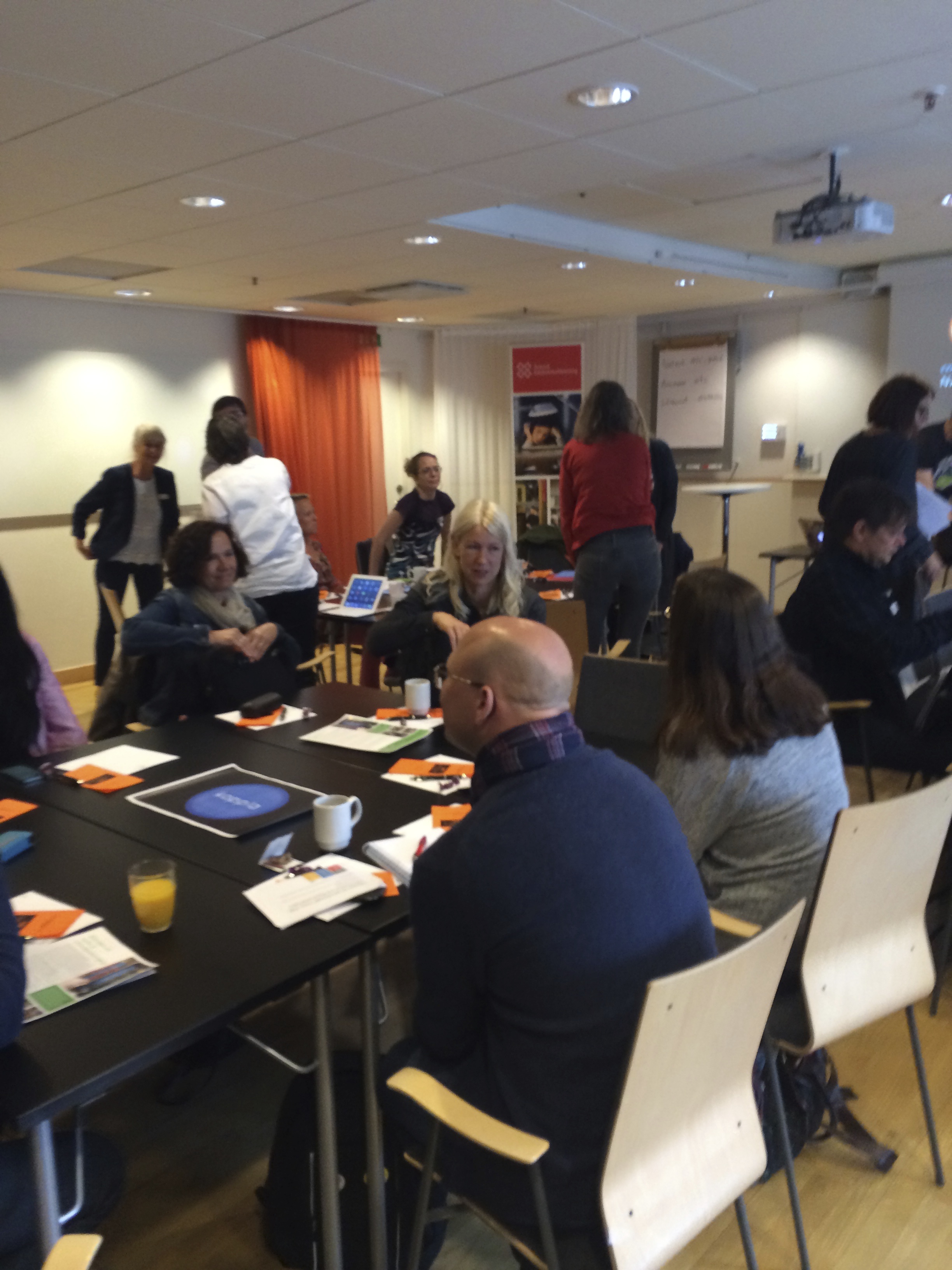
Participants at an expert meeting. Photo by Jenny Nilsson.

Participants at an expert meeting. Photo by Jenny Nilsson.

Some examples:
The Network of Experts on School libraries, has among other things highlighted the PISA investigation and how the statistical calculations were made, especially when it comes to reading comprehension. The Swedish Library Association is since many years an advocate for school libraries, concerning establishment, staffing and development. In this work, the network also plays a big role.

The Expert Network for prison libraries, library activities at prisons and detention centers. Among other things, they had lectures and exchange of experiences with Norwegian colleagues, lectures on women in the criminal justice and study visits the prison institutions.

The Expert Network for Children’s Libraries discusses for example children’s reading and the IFLA guidelines for children’s libraries.
The expert networks on Copyright, LGBTQ issues in libraries, e-books and the library’s role in the multilingual areas are some additional examples. The latest expert network was formed in early May and concerns libraries’ work with newly arrived asylum seekers.

There is also an Expert Network for IFLA, where Swedish delegates and visitors to IFLA’s conferences can prepare and share experiences on the conferences and on work that different members of the committees do.

Expert networks are based entirely on members’ commitment and exchange of experiences, skills, tips and discussions. They can also give suggestions on conferences that the Swedish Library Association should organize.

I personally am a member of several of these networks and think it is a great asset and resource.
Lo Claesson, Vaggeryd Public Library, Sweden

Library Services to Immigrants and Refugees

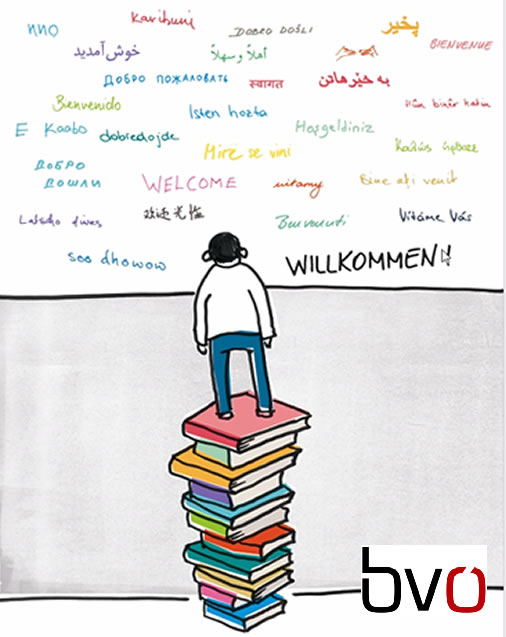
bvoe-willkommen
The Public Libraries Section was delighted to be part of a recent webinar on Library Services to Immigrants and Refugees which took place on 31 March 2016. IFLA Continuing Professional Development and Workplace Learning and the New Professionals SIG partnered with the American Library Association to present this one-hour webinar. An online resource is now  available for everyone to revisit and listen anywhere at any time.
View the webinar recordings:

  • Introduction by Loida Garcia-Febo. Loida is an IFLA Governing Board Member, coordinated the event and shared early findings and initial recommendations about programs, topics, and services based on results of her early research about public libraries serving immigrants and refugees in the U.S.A.
  • Jan Richards, Secretary and Information Coordinator  IFLA Public Libraries Section, and Manager of Central West Libraries in Australia, shared best practices and models from different countries compiled by her Section which you can find on the document titled “Responding! Public Libraries and Refugees”. You can read more about their publications and projects on the IFLA Public Libraries website.
  • Jukka Relander, President of the European Bureau of Library, Information and Documentation Associations (EBLIDA), and President of the Finnish Library Association shared insights from the library community in Europe. EBLIDA has developed a strong campaign to promote services to these populations and you can stay updated by following its website which features libraries from different European countries serving refugees.
  • Jack Hang-tat Leong, Chair of IFLA Library Services to Multicultural Populations Section, and Director of University of Toronto Libraries in Canada, spoke about the IFLA/UNESCO Multicultural Library Manifesto Toolkit published by his Section.