Category Archives: General

welcomegrooves

welcome

In order to provide an accessible and appealing opportunity for refugees and immigrants to get into the local language, German libraries are starting to participate in the “welcomegrooves” project.

Welcomegrooves is a collaborative effort of more than 70 volunteers from the German creative industries and related sectors. Together, they have developed six lesson units “Learn German with Music”. In cooperation with refugees, these units have been translated into 23 languages. For the sake of user-friendliness, they can be downloaded as MP3-files onto mobile phones/devices as well as used online. For both, libraries provide facilities and support.

The idea of welcomegrooves is to give a warm welcome to the people who found shelter in Germany and to help them to familiarise themselves with their host country.

Thanks to Guido Jansen from IFLA National Committee Germany for passing on this information.

The Library as an Oasis

IFLA_Raymond-Santiago


The 2015 Miami Book Fair International recently ended its 32nd edition. The eight day literary feast featured over 450 authors reading and discussing their work.

For me the highlight of this year’s Fair was an invitation to participate in a presentation by Professor Wayne Wiegand, historian and author of the just published Part of our Lives:A People’s History of the American Public Library.

In his book Prof. Wiegand examines the history of the public library though the voices of library patrons culled from interviews, newspaper reports, biographies and other written records.  He delves into why the  public library is such a well loved institution throughout economic, social and political upheavals.

A primary reason for this ongoing love affair is the fact that public libraries continue to adapt to serve the needs of their communities by recognizing the importance of having a place that welcomes everyone, especially waves of new immigrants.

During his presentation and discussion I was struck by the ongoing similarities and challenges faced by U.S. librarians of the past and current worldwide members of this Committee. How timely for us to have chosen as the topic of our upcoming IFLA pre-conference, A Sanctuary in the Time of Need.  Just as Prof. Wiegand describes the history behind the importance of having  a place that offered acceptance for generations of immigrants to the United States, we are hoping to share  current  best practices of how libraries and librarians throughout the world are opening their doors and creating that “new” safe place of acceptance for today’s families.


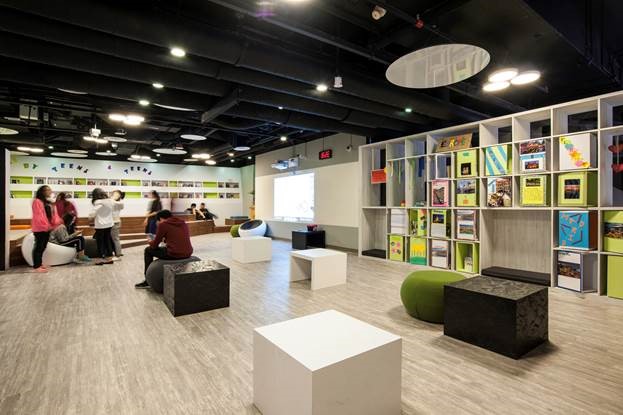
Reopening of Pasir Ris Public Library, the first Mall Library with a dedicated Teen Space in Singapore

Photograph - Public Libraries Standing Committee-Jane Wee

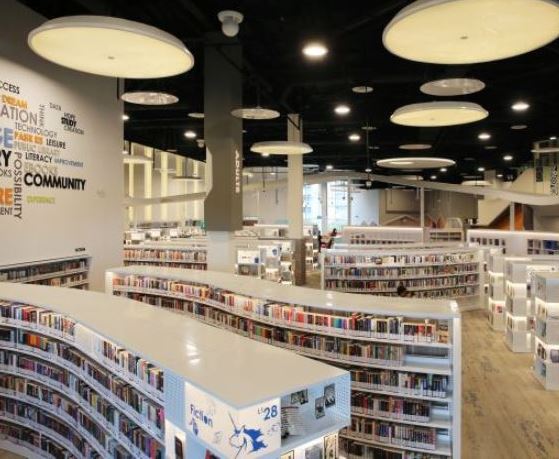
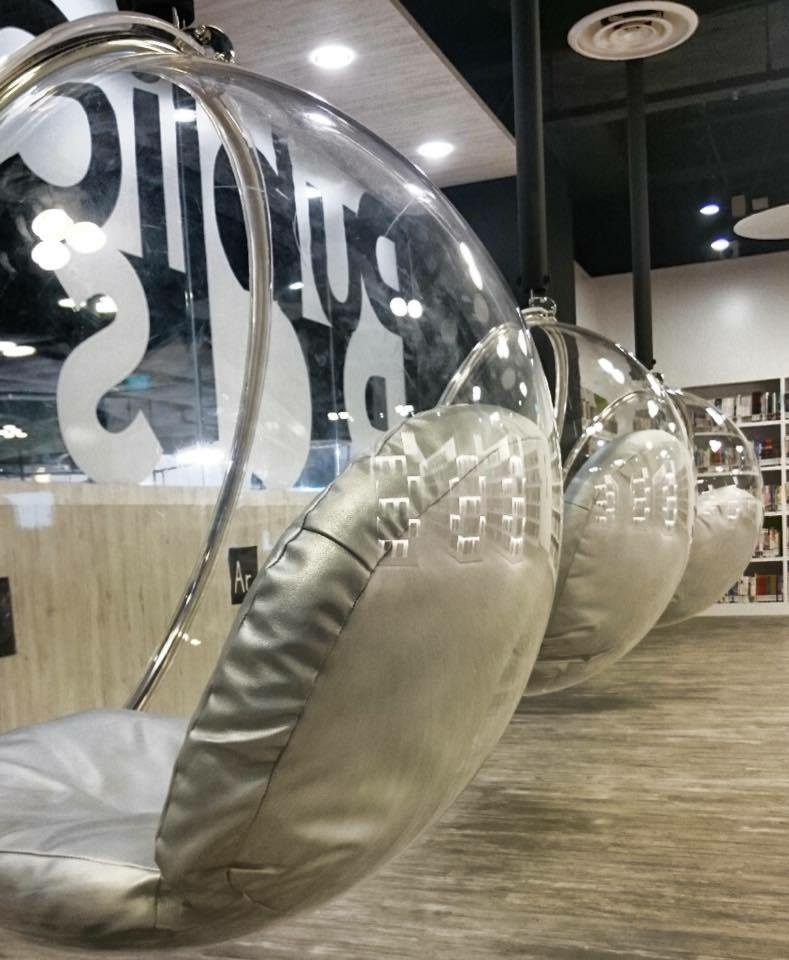
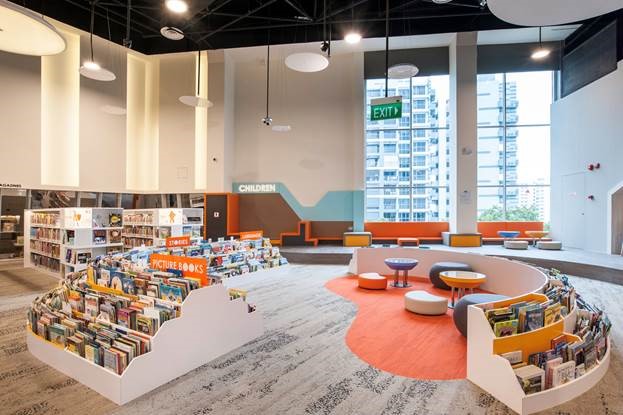
Pasir Ris Public Library reopens its doors to the public on 28 November 2015 after nine months of renovations. The library features versatile and distinct spaces to meet different user preferences and needs, enhancing the reading and learning experiences for all patrons.

Bird-Eye

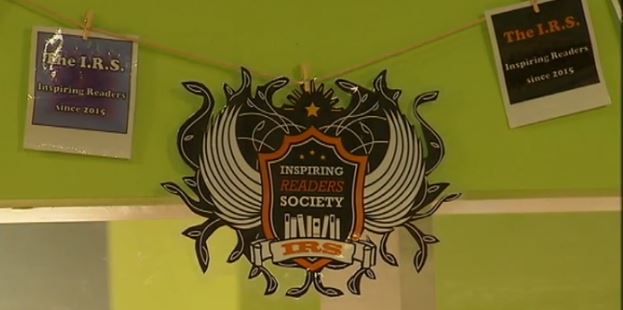
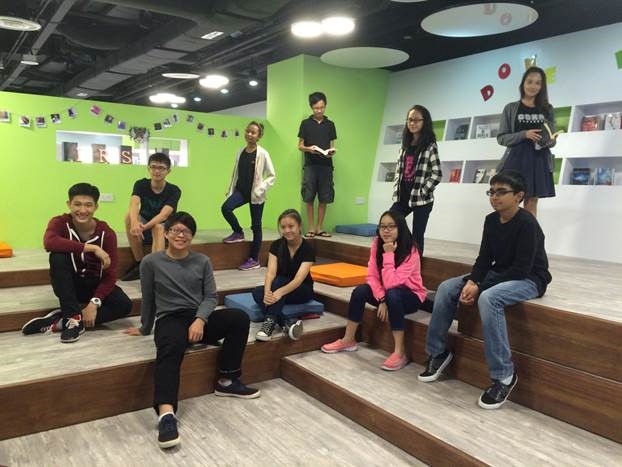
It is now the first mall library with dedicated spaces for teenagers that have been created by their peers from the Inspiring Readers Society (a name which the pioneer team of 39 members, aged between 13 and 19 collectively decided). The aim of the society is to encourage engagement in content discovery, reading and discussions with their peers while also creating a sense of ownership of the library spaces among the teens.

IRS

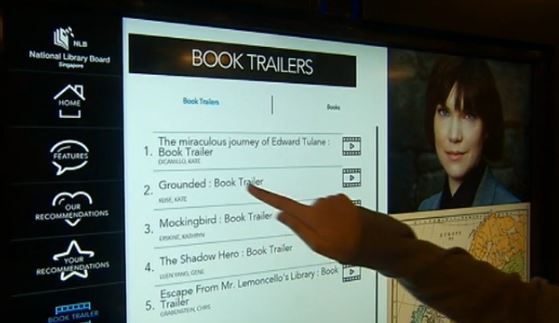
These teenagers will be co-creating video trailers that recommend books that they like, made available for viewing by other teens visitors at the Book Tree in the library.

Pic2

They will be organising regular Hangout Sessions in the Mezzanine, where the members will share with other teenagers about any topic relating to a recommended book.

Teens

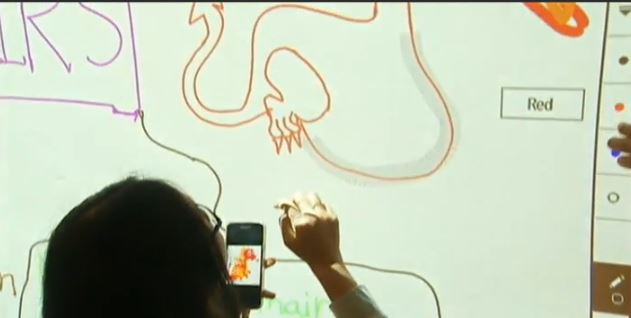
Teens and adults alike can interact with a Doodle Wall, where they can draw using their fingertips with the help of an interactive projector to facilitate live discussions through the use of visualisation. There are three such Doodle Walls in the library, the other two being located at the Programmig Area and the Early Literacy Section.

DoodleWall

Teens’ Mezzanine, conceptualised through feedback from teens and the public, was specially designed with movable furniture to enable teens the flexibility to create an environment conducive for in group activities such as group discussions and brainstorm sessions.

Pic1

Seats

Spaces to engage the wider community

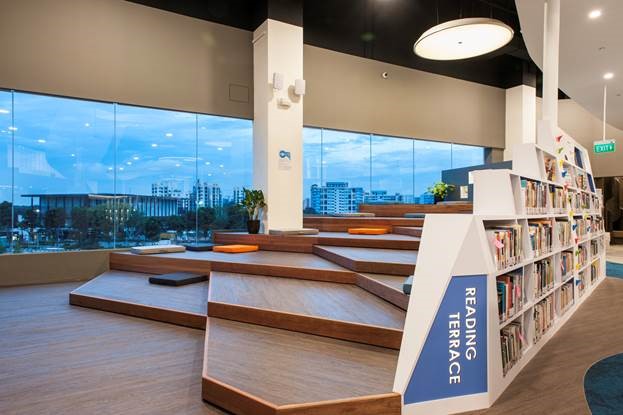
Reading Terrace, with windows overlooking the Pasir Ris Park, features staggered platforms for casual reading and the use of natural light.

Terrace

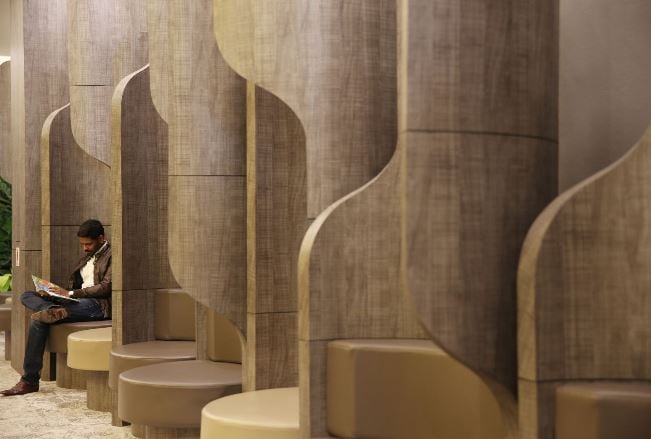
Intense readers can indulge in solitude and a good book at the Quiet Reading Lounge with individual nooks.

QuiteReading

Nestled with comfortable casual seating, the Children’s Deck enables parents to emotionally bond with their children while engaging them in the world of knowledge and building the love for reading.

EarlyLit

Pasir Ris Public Library, located at the White Sands Mall is one of the 26 public libraries in Singapore. It was first opened to public on 6 October 2000 and currently served a population size of about 137,500.


Celebrating Singapore’s ‘growing up’ years of endeavours at work and play through a showcase of Legal Deposit Publications

Photograph - Public Libraries Standing Committee-Jane Wee

Singapore celebrates our 50 years of independence this year in 2015. We are indeed a very young country.

The celebrations had been ongoing in Singapore for the whole year. And like any other organizations in Singapore, the National Library Board of Singapore (NLB) had a series of exhibitions, reading festivals and film festivals, book launches and web archive launches since January 2015 to commemorate the nation’s jubilee year.

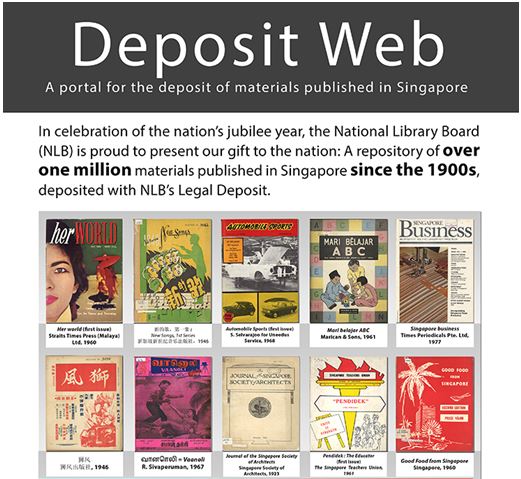
And on 20 November 2015, we launched PublicationSG, an online catalogue of over one million materials published in Singapore and deposited with NLB’s Legal Deposit. Contents would be available to the public upon their request. This collection includes printed and audio-visual publications such as books, annual reports, music scores, magazines, journals, posters, brochures, yearbooks, audiobooks, music sound and recordings. They cover a wide range of topics from fashion to food, festivities of bygone years, school and kampong days of our forefathers to trends in the entertainment world, popular hobbies and sporting pursuits, and many more.

From 20 November 2015 to 8 January 2016, we are showcasing a display featuring these treasured Singapore publications from our Legal Deposit Collection at the National Library Building. This display covers a wide range of titles from fashion to food, festivities of bygone years, school and kampong days of our forefathers to trends in the entertainment world, popular hobbies and sporting pursuits, a reminisce about Singapore’s ‘growing up’ years of endeavors at work and play.

DWeb01

Empowering kidsREAD Volunteers

Photograph - Public Libraries Standing Committee-Jane Wee


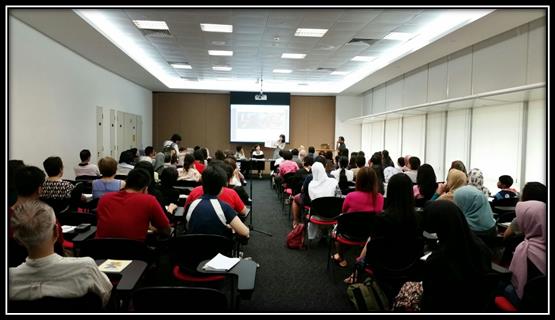
The Public Library Services of National Library Board Singapore (NLB) held a 2nd kidsREAD Symposium on 31 October 2015, attended by close to a hundred kidsREAD volunteers. The symposium is part of the kidsREAD training framework which aims to facilitate the development of our volunteers, providing them with a platform and opportunity to be exposed to a variety of perspectives, and engage experts on issues in relation to their role as kidsREAD volunteers. Topics covered in this Symposium included:
• Choosing the Right Picture Books for Children;
• Visual Literacy as a Learning Tool in Reading Picture Books;
• Reading Wordless Picture Books; and
• Exploring the Humour Genre in Children’s Literature.

KidsRead

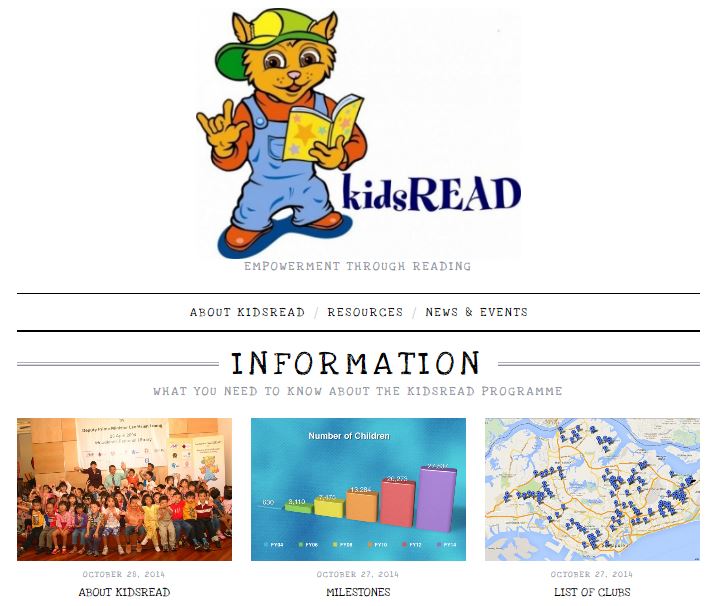
The National kidsREAD programme is a nationwide reading programme in Singapore officially launched on 23 April 2004 by then Deputy Prime Minister Lee Hsien Loong. kidsREAD is a collaborative effort by NLB together with the People’s Association (PA) and five self-help groups to promote the love of reading and cultivate good reading habits among young Singaporeans, specifically children from low-income families. The target audience of kidsREAD is children between the ages of 4 and 8, regardless of race or religion.  Volunteers are the lifeline of kidsREAD. They read aloud stories to children to inculcate good reading habits from young and help them discover the joy of reading. The main aim for volunteers is to get the children interested in books and to make reading a fun and enjoyable experience.

KidsRead-2

Volunteers can choose to volunteer at any of the reading clubs that have been set up island wide. The schedule is dependent on the reading club the volunteer chooses to be attached to. Some reading clubs run on weekdays and some on weekends. As at 2014, there were 254 active clubs with more than 1,500 volunteers.

To equip these volunteers for their roles, NLB constantly holds training and workshops in storytelling and reading sessions for them. Volunteer Resource Guide provides suggestions on how each session can be carried out, and best practices are being shared across the clubs and also among volunteers. As with all projects involving volunteers, sustaining volunteer involvement is one key challenge as their motivation can be easily influenced by phase of life developments, lifestyle changes and other competing interest. NLB strives on to sustain this meaning programme run by volunteers through organising annual appreciation events to appreciate our committed volunteers and learning activities such as workshops and symposiums specially organised for them.

More information on kidsREAD can be found on their website.

Malmö City Library’s new children’s activity

IFLA_Torbjorn-Nilsson


With more than 300,000 inhabitants, Malmö is Sweden’s third largest city. The city, which is linked to Denmark by the Öresund Bridge, connects Sweden with the rest of the world, both mentally and physically. People from all corners the globe live here – some 160 nationalities are represented, and as a natural consequence of this, many languages are spoken in the city. In addition to being an international hub in northern Europe, Malmö is also a young city. The average age of the Malmö resident is 38.6 (compared to the Swedish average age of 41.2) and just over a fifth of the city’s residents are under 18.
okänt

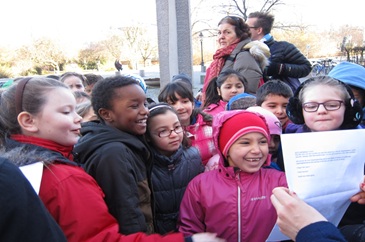
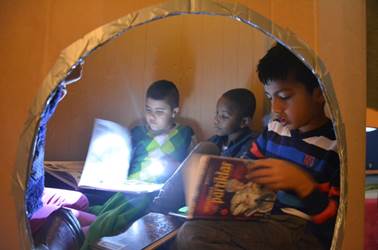
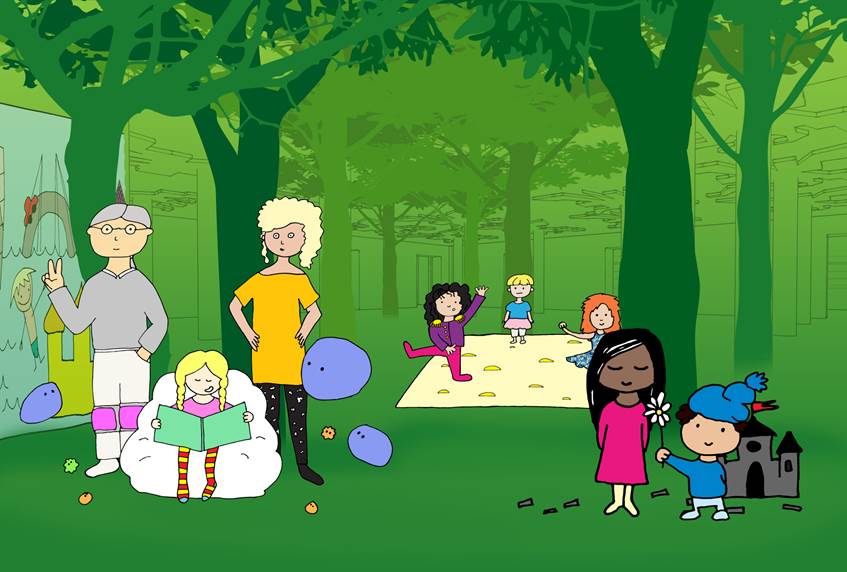
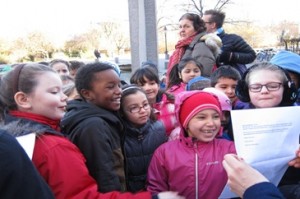
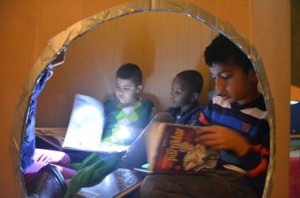
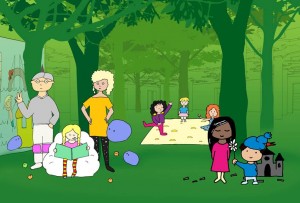
Children aged 0–8 are a group that is growing faster than other age groups in an expanding Malmö. According to calculations, 13% of Malmö’s population will be aged 8 or younger, come 2017. Children are a priority group for the City of Malmö and for the City Library, and now the time has come to focus on activities aimed at younger children and their parents and guardians. The work takes as its starting point the need and right of the children of Malmö for reading, learning and play. The ambition is for the children’s library to be a physical, digital and social space for the young children of Malmö and their parents and guardians. The new children’s library known as Lilla Slottet, or “The Little Castle” in English, is scheduled to open in 2016.
IMG_0040

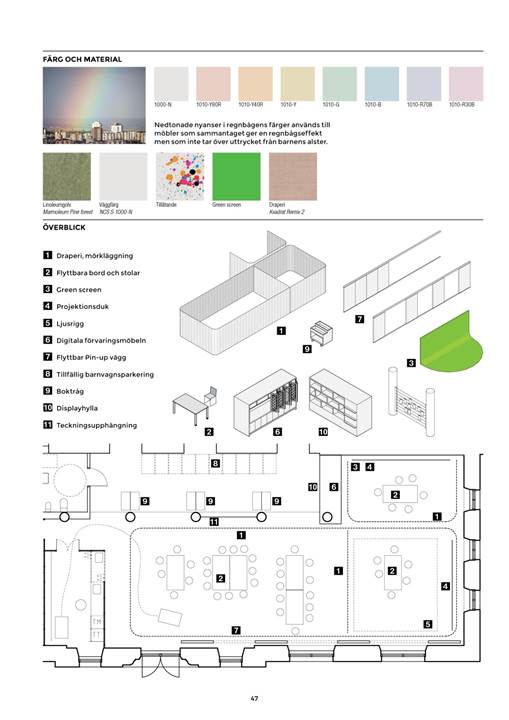
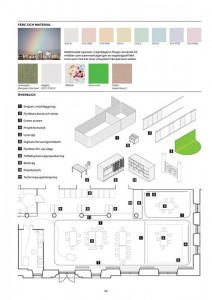
In order to inject new elements, ideas and expertise into the process, we have sought a high degree of user involvement, external monitoring, connection to research and collaboration with partners relevant to the project. All of these contributions in the form of knowledge, inspiration and ideas underpin the concept and the programme description of the Lilla Slottet project that was developed. Diversity and multilingualism are a source of richness for Lilla Slottet, and the environment should highlight, reinforce and affirm Malmö’s diverse population. The promotion of literacy and the intercultural perspective permeate the work and the environment of Lilla Slottet in which children are actively supported in their literacy development. With a common platform, the staff of Lilla Slottet have created clarity and coherence on which to build the day-to-day operation.
okänt 1

Active hosting: An inclusive, intercultural and norm-critical hosting, where all children and adults are welcomed when they step inside Lilla Slottet. We know our target audience and our surroundings – and this knowledge permeates everything we do as well as our collections.

Experimentation and participation: We employ an intuitive and experimental approach to our movement. We seek a high level of participation and therefore include both children and adults in activities as much as possible.

Presence and tolerance: By taking a preventive approach to our work in the environment, we avoid limiting pointers and overclarification. Increased visibility and active presence create a sense security and calm. We see the individual and his or her needs.
okänt 2

Mobility in the rooms: A high level of activity leaves creative and positive traces that coexist alongside and in harmony with the more traditional order of the library.

Lilla Slottet is scheduled to open in May 2016, and you are all very welcome to visit us then.

LGBTQ at Malmö City Library

IFLA_Torbjorn-Nilsson


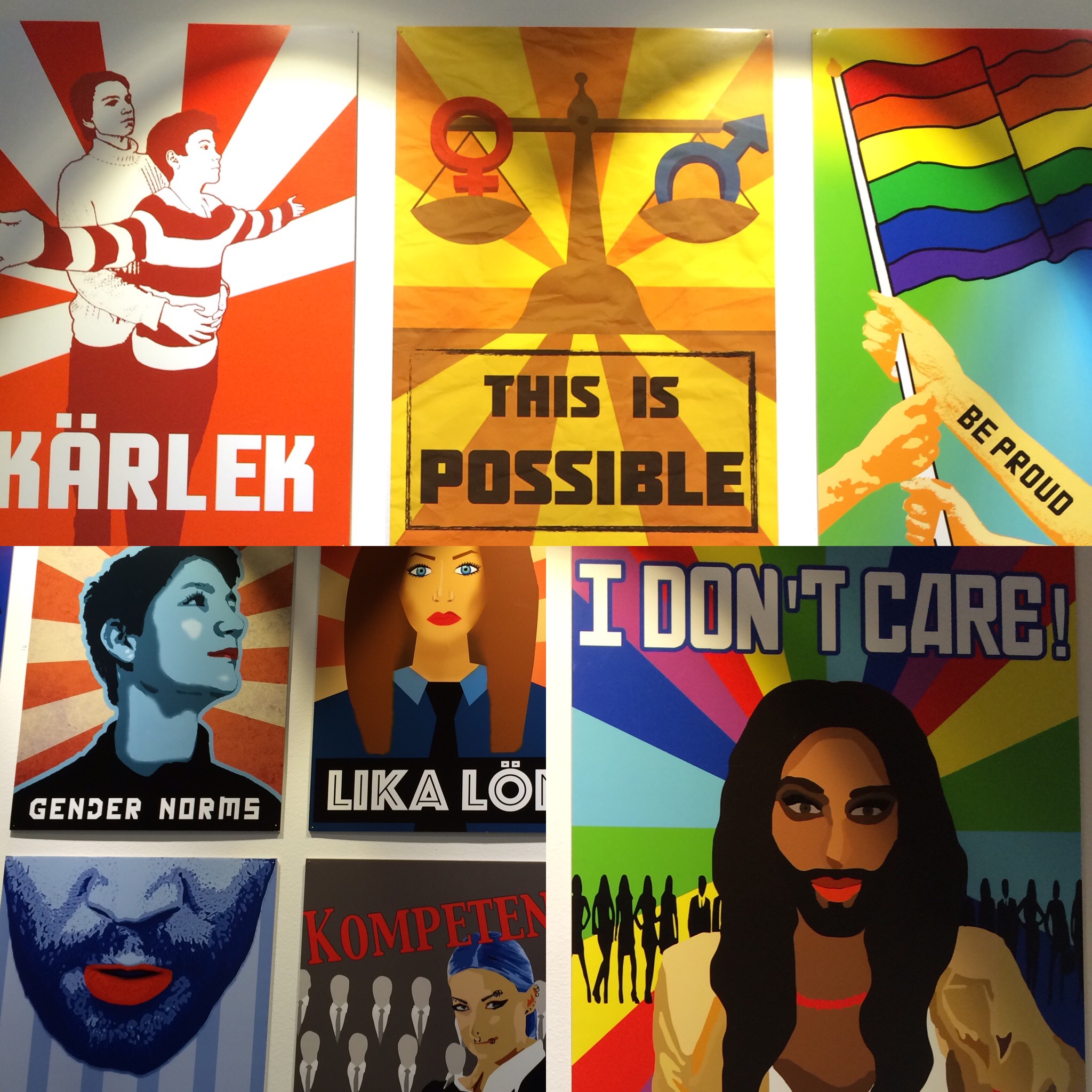
Malmö City Library is Sweden first big city library to become LGBTQ certified. More than 125 employees receive training in new mindsets and skills for meetings with lesbian, gay, bisexual, transgender and queer people. The training, that is carried out by RFSL (the Swedish Federation for Lesbian, Gay, Bisexual and Transgender Rights) will be completed in November 2015.

image3


Working with LGBTQ issues in libraries is to stand up for all people’s equal rights and in various ways work with the concrete meaning of this in our daily lives. The aim of this is an open and inclusive library environment. During this training we who work at Malmö City Library learn more about LGBTQ (Lesbian/ Gay/ Bi/ Transgender/ Queer) issues and deepen our knowledge of literature and films in this area as well. The aim is a better meeting with all people of Malmö.

”We work actively for everybody’s right to their own expression beyond the standards.”
For each individual, this means two and a half days of training. Alongside this training, we work with LGBTQ issues in everything from policy documents to marketing.


image1

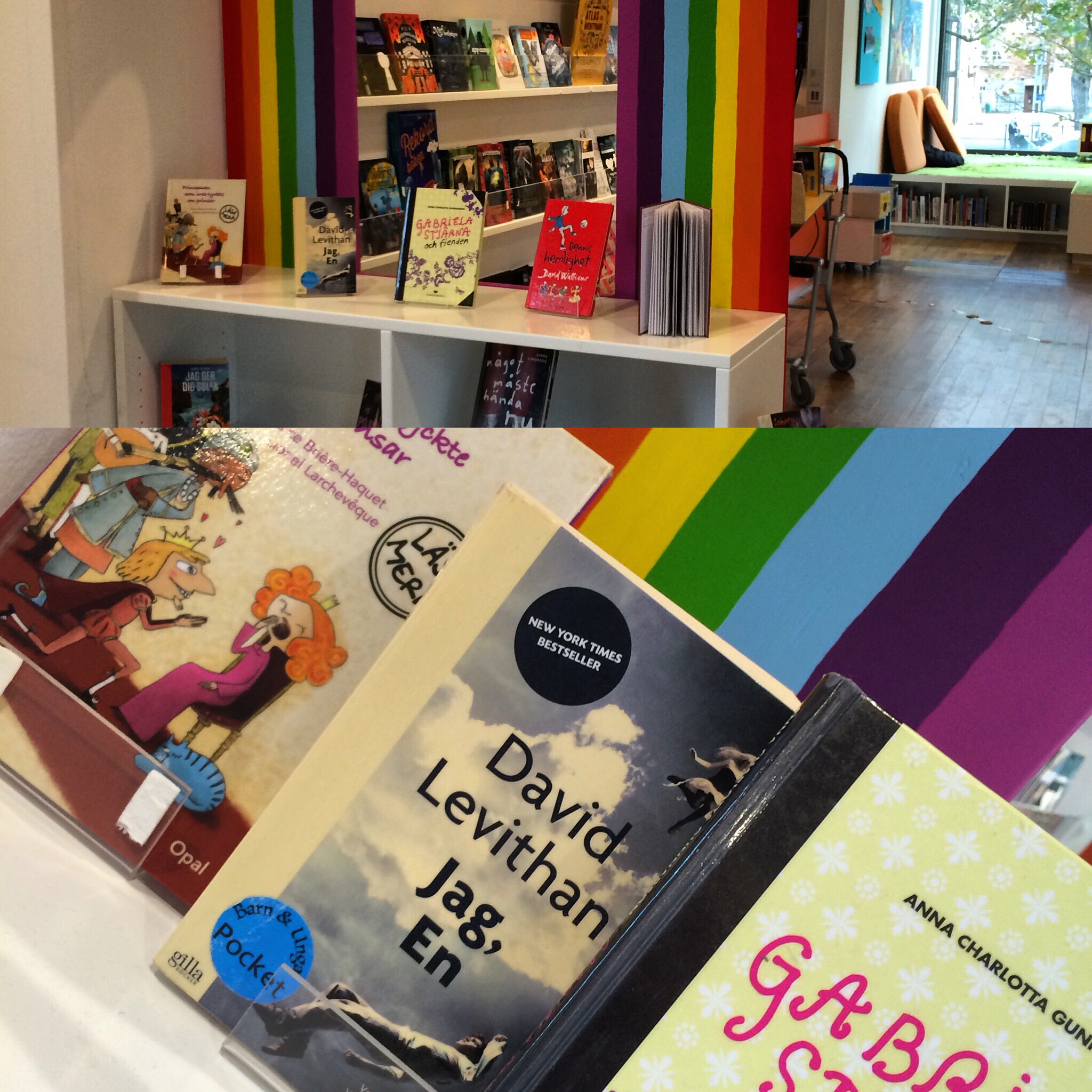
With regard to practical library work, this entails, among other things, improving our ability to find literature with LGBTQ content and make visible to the visitor where this literature is located, for example by creating rainbow shelves.

image2JPG

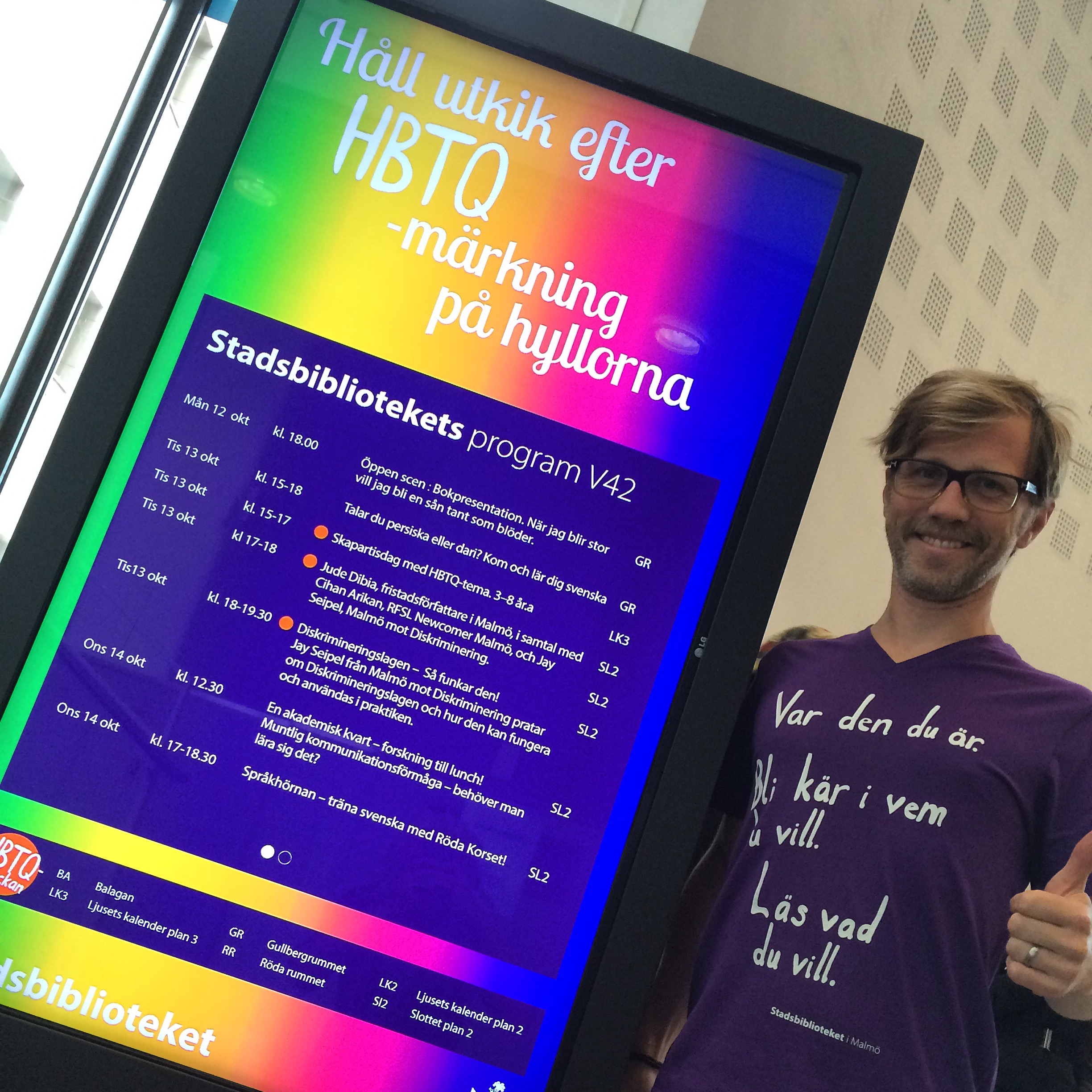
On October 12–18, an LGBTQ week was organised at Malmö City Library, with, among other things, a book and comics fair that focussed on LGBTQ.  A game designer told us about queer games and a conversation took place between Malmö’s Free City Author and LGBTQ activist Jude Dibia, Cihan Arikan from RFSL Newcomer Malmö and Jay Seipel from Malmö mot Diskriminering (Malmö Against Discrimination).