Category Archives: General

Refugees Welcome: library membership cards for refugees in Berlin—first numbers after four months

IFLA_Sarah-Dudek

Deutsche Version

The Public Libraries Section has collected many examples of how public libraries have responded in practical ways on the refugee situation in Europe.

I want to focus on one example since I work for the Central and Regional Library of Berlin. In 2015 about 79.000 refugees came to Berlin, 24 % refugees from Syria. The Association of Public Libraries in Berlin (VÖBB) responded and is the first German Library Association which provides library membership cards to refugees without demanding an official certificate of registration. A temporary permission of stay or a lodging certificate is sufficient. In most of the libraries in Germany a certificate of registration is needed in order to get a library card. But refugees cannot have such a document in the first months in a new country. That means that they cannot check out items from the public library, they cannot use most of the computers or make use of the digital content the library provides. This unsatisfying situation has changed with the “welcome library card” in Berlin: The card is free-of-charge. It is valid for 3 months. Refugees are allowed to check out up to 10 items at a time from any public library in Berlin and access digital services such as e-books and music streaming.

And that is the history in a nutshell: in March a VÖBB-working-group got the task to suggest a measure that would enable refugees to make full use of Berlin Public Libraries. In June 2015 the VÖBB decided to have the new welcome library membership cards (and technically a new patron group). In September the the new patron group was configured in the library management system of Berlin Public Libraries, in October flyers in seven languages were distributed in refugee homes: in German, Albanian, Arabic, English, Farsi, Macedonian, and Serbian.

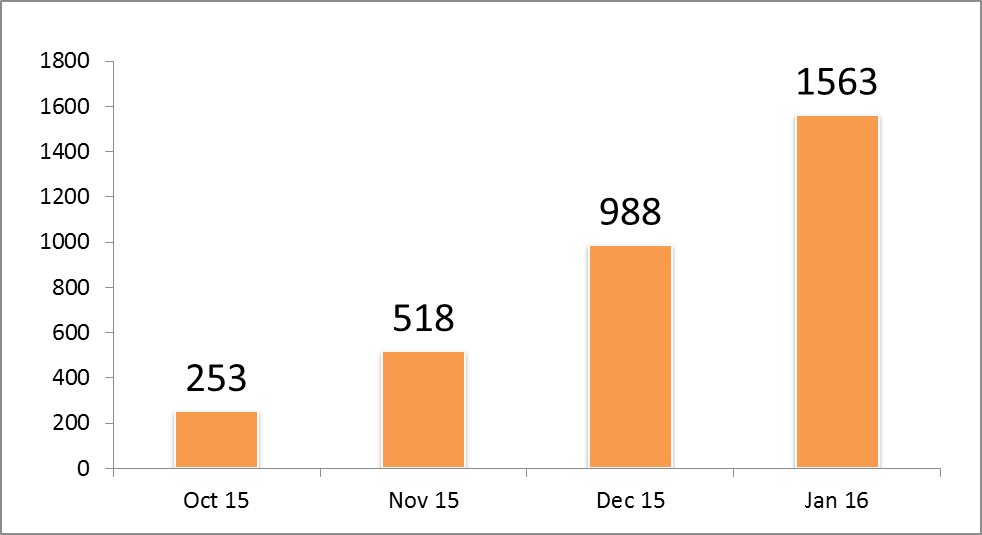
Here are the figures of the first three months. There are constantly more refugees signing up for a library membership card, but there is still a lot of potential:
2016-02_Blogpost 2 PLS Blog_Grafik en

Refugees Welcome: Bibliotheksausweise für Geflüchtete in Berlin – erste Zahlen nach vier Monaten

Die Sektion „Öffentliche Bibliotheken“ hat viele Beispiele dafür gesammelt, wie Öffentliche Bibliotheken ganz praktisch auf die Flüchtlingssituation in Europa reagiert haben.

Ich will mit den Öffentlichen Bibliotheken Berlins ein Beispiel herausgreifen, da ich für die Zentral- und Landesbibliothek Berlin arbeite. 2015 kamen circa 79.000 Geflüchtete nach Berlin, 24 % sind aus Syrien. Der Verbund der Öffentlichen Bibliotheken Berlins (VÖBB) hat darauf reagiert: Er ist der erste deutsche Bibliotheksverbund, der Bibliotheksausweise für Geflüchtete ohne amtliche Meldebescheinigung oder Aufenthaltserlaubnis (also Neuankömmlinge) anbietet. Eine Aufenthaltsgestattung oder die Unterbringungsbescheinigung der Erstaufnahmestelle ist ausreichend. In den meisten Bibliotheken in Deutschland benötigt man eine amtliche Meldebescheinigung, um sich anzumelden. Aber geflüchtete Menschen können diese in den ersten Monaten im neuen Land gar nicht haben. Das heißt also, dass Geflüchtete keine Medien entleihen können, sie können meist nicht die Computerarbeitsplätze nutzen und haben keinen Zugang zu digitalen Inhalten der Bibliothek. Diese unbefriedigende Situation ist in Berlin durch die „Willkommensausweise“ verändert worden. Der Bibliotheksausweis ist kostenlos und drei Monate gültig. Es ist möglich 10 Medien gleichzeitig zu entleihen und digitale Angebote wie E-Books und Musik-Streaming zu nutzen.

Die Geschichte, die zu dem Ausweis führte, kurz zusammengefasst: Im März 2015 wird eine VÖBB-Fachgruppe beauftragt, geeignete Maßnahmen zu entwickeln, um geflüchtete Menschen in den Öffentlichen Bibliotheken Berlins willkommen heißen zu können. Im Juni entscheidet der VÖBB, die neuen Willkommensausweise einzuführen (das heißt technisch im Bibliotheksmanagement-System eine neue Nutzergruppe anzulegen). Im September starten die Bibliotheken mit den neuen Bibliotheksausweisen für Geflüchtete, im Oktober folgen dann Flyer in sieben Sprachen, die in Erstaufnahmeeinrichtungen verteilt werden: auf Deutsch, Albanisch, Arabisch, Englisch, Farsi, Mazedonisch, und Serbisch.

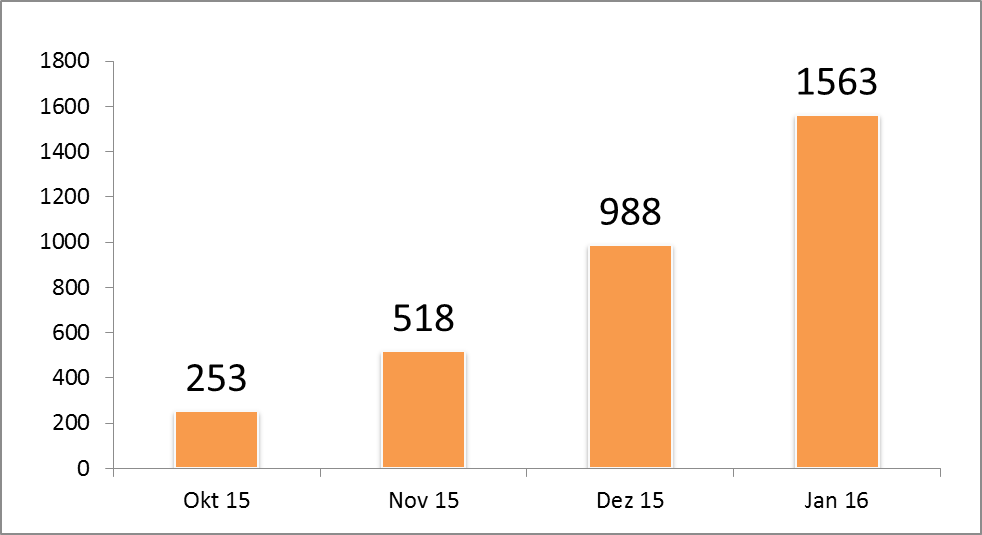
Hier sind die Zahlen nach den ersten drei Monaten. Es werden immer mehr der neuen Bibliotheksausweise ausgegeben, aber es gibt angesichts der Gesamtzahlen an geflüchteten Menschen in Berlin mit Sicherheit noch viel Potenzial:

2016-02_Blogpost 2 PLS Blog_Grafik dt

Love is in the air!

February has long been a time to celebrate love (think Valentine’s Day), but increasingly it’s also a time for the community to demonstrate love for their library.

National Libraries Day

In the UK the 6 February is National Libraries Day. Now in its fifth year, the annual celebration highlights the importance of libraries as vitally important public services which are loved by individuals and communities everywhere.

logo

Meanwhile in the US February is Library Lovers Month based around Ilovelibraries.org, an initiative of the American Library Association (ALA), designed to keep America informed about what’s happening in today’s libraries. Ilovelibraries.org promotes the value of libraries and librarians, explains key issues affecting libraries, and urges readers to support and take action for their libraries.

Face

In the southern hemisphere Australian librarians  have claimed Valentines Day (14th February) and made it their own – Library Lovers Day ! They argue that not everyone receives flowers and chocolates on Valentines Day but everyone can use their library. This year Library Lovers Day will celebrate 10 years since it was launched.

cropped-logo

The IFLA Section on Metropolitan Libraries and AIB (Associazione Italiana Biblioteche) have the pleasure to announce A Corto di Libri, AIB/IFLA International Short Film Competition about Libraries for 2016.

A Corto di Libri honors short films which focus on libraries and the profession of librarian. Four winners will be chosen in the Fiction, Documentary and Advertising sections, and in the new IFLA prize “Metropolitan Libraries” whose main subject must be public libraries of large urban areas.

In addition to the awards for the sections winners, €1000 of video-making equipment will be awarded to the winner of the IFLA  “Metropolitan Libraries” category.
Deadline: April 30, 2016

Find all the information about the award guidelines, application form etc here


A Hackers’ Library: What They Talk About When They Talk About Public Libraries

IFLA_Sarah-Dudek

Deutsche Version

At the end of December the Chaos Communication Congress (CCC) took place for the 32th time—this time again in Hamburg. The Chaos Computer Club calls it the annual four-day conference on technology, society and utopia“. 12.000 hackers and computer experts came together to take part in about 130 lectures and workshops (see the recordings on https://media.ccc.de/c/32c3, many in English).

So what? What are the connections to public libraries?

Unfortunately there are not many—although libraries have widely open access policies, many digital resources, provide makerspaces, and even lend hardware such as Arduino, MaKey MaKey Kits, and wifi hotspots.

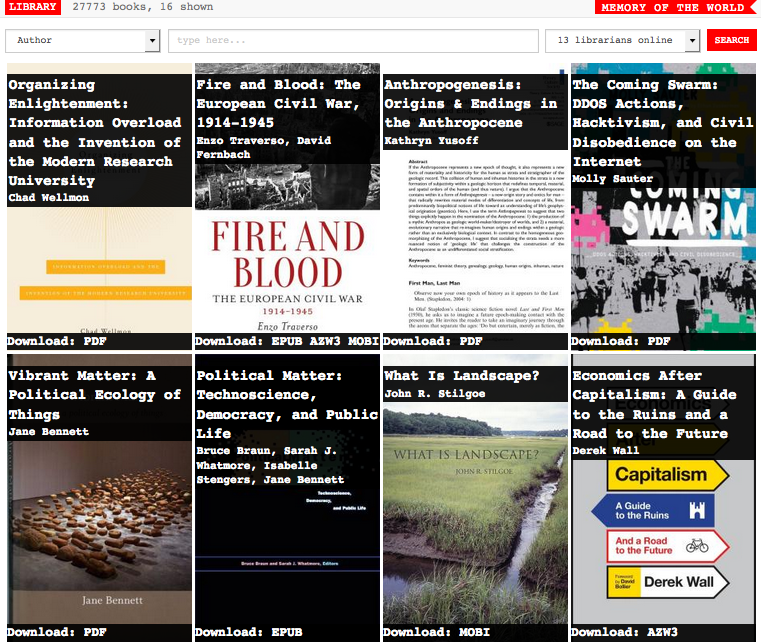
There was a presentation by Marcell Mars with the title „Public Library/Memory of the World. Access to knowledge for every member of society“. I was surprised that public libraries found their way to the programme of the CCC. But no, wait a moment: it is a presentation on Marcell Mars’ own shadow e-book-library. He just takes the notion of Public Library as the “universal space of free exchange of all knowledge” and turns himself and his friends into librarians.

Mars’s project has taken this broad consensus [on public libraries] as the basis for Public Library and on-line book sharing project which promulgates the utopian 
hacker ethic of the universal space of free exchange of all knowledge by 
seeking to fuse a number of existing internet based projects for either 
managing or exchanging electronic publications (such as Calibre) along with
his own plug ins to create a peer 2 peer culture for the exchange of books.” (http://new-tactical-research.co.uk/blog/1012/)

It is nonetheless very interesting to see how a library a hacker invents looks like. The „public library“ is a „distributed internet infrastructure for amateur librarians“ sharing their e-book-collections (and very likely not caring about any copyright rules).

So how shall an OPAC look like? On www.memoryoftheworld.org you see their approach: mere covers and a direct (!) link stating the format (PDF, EPUB, etc.) to the full text (of course there are search functions as well).

Bildschirmfoto 2016-02-01 um 16.50.54

By the way: as a software for the backend e-book-management Marcell Mars uses Calibre: http://calibre-ebook.com/


Eine Bibliothek der Hacker: Wovon sie reden, wenn sie von Bibliotheken reden

Ende Dezember fand der 32. Chaos Communication Congress (CCC) statt – diesmal wieder in Hamburg. Der Chaos Computer Club bezeichnet den Kongress als die „jährliche viertägige Konferenz zu Technologie, Gesellschaft und Utopie“. 12.000 Hacker und Computerexperten trafen sich, um an 130 Vorträgen und Workshops teilzunehmen (die Aufzeichnungen der Vorträge finden sich auf https://media.ccc.de/c/32c3).

Was hat das mit Öffentlichen Bibliotheken zu tun? Worin bestehen die Verbindungen?

Leider gibt es bislang nicht allzu viele – obwohl Bibliotheken weithin Open Access Policies haben, eine Vielzahl an digitalen Ressourcen, Makerspaces besitzen und sogar Hardware ausleihen wie z. B. Arduino, MaKey MaKey Kits und WLAN-Hotspots.

Aber es gab einen Vortrag von Marcell Mars mit dem Titel “Öffentliche Bibliothek / Gedächtnis der Welt. Der Zugang zu Wissen für jedes Mitglied der Gesellschaft”. Ich war überrascht, dass Öffentliche Bibliotheken ihren Weg ins Programm des CCC gefunden hatten. Aber nein, Moment mal: Es handelt sich um einen Vortrag zu Marcell Mars’ eigener Schatten-E-Book-Bibliothek. Er übernimmt nur das Konzept der Öffentlichen Bibliothek als „universeller Ort des freien Austauschs von Wissen” und macht sich selbst und seine Freundinnen und Freunde zu Bibliothekar_innen.

Mars’ Projekt nimmt den breiten Konsens zu Öffentlichen Bibliotheken als Basis seines ‘Public Library’-Projekts, des Projekts des Online-Büchertauschs. Er verkündigt die utopische Hacker-Ethik des universalen Ortes für den freien Austausch allen Wissens, indem er eine Anzahl bereits bestehender internetbasierter Projekte zur Verwaltung oder zum Austausch elektronischer Publikationen (wie Calibre) mit einem eigenen Plug-in verknüpft, um eine Peer-to-Peer-Kultur des Austauschs von Büchern zu schaffen.“ (http://new-tactical-research.co.uk/blog/1012/)

Nichtsdestotrotz ist es sehr interessant sich anzuschauen, wie eine Bibliothek aussieht, die ein Hacker erschafft. Die „Public Library“ ist eine „verteilte Internet-Infrastruktur für Amateur-Bibliothekar_innen“, die ihre E-Book-Sammlungen tauschen wollen (und sich wahrscheinlich nicht besonders um irgendwelche urheberrechtlichen Regeln scheren).

Wie sollte ein OPAC also aussehen? Auf www.memoryoftheworld.org ist der Hacker-OPAC zu sehen: bloße Cover und ein direkter (!) Link, mit Hinweis auf das Format (PDF, EPUB, etc.), zum Volltext (natürlich gibt es darüber hinaus auch Suchfunktionen).

Bildschirmfoto 2016-02-01 um 16.50.54

Übrigens: Als Software für das Backend der E-Book-Verwaltung nutzt Marcell Mars Calibre: http://calibre-ebook.com/

Two new Australian reports

Two new Australian public library reports were released by the State Library of New South Wales (NSW) late last year. NSW is Australia’s most populous state whose capital is Sydney.

Web 1

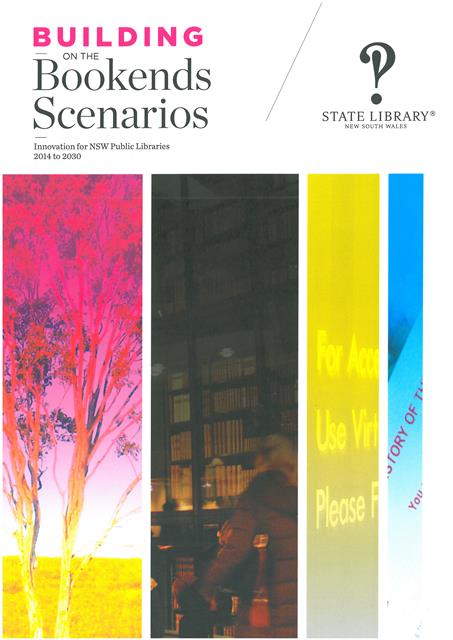
Building on the bookends scenarios explores how the future of NSW public libraries might unfold over the next twenty year, specifically examining how longer term developments in the external environment may impact on the provision and perceived value of public library services. This builds on an earlier project undertaken in 2009 and highlights the rapid change during this time.

Web 2


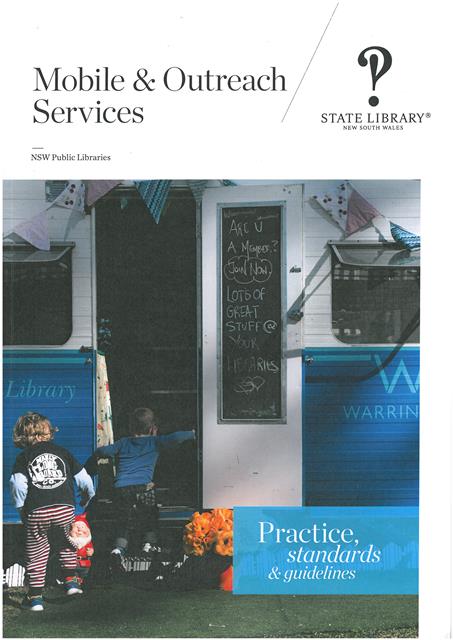
The State Library also commissioned a project to explore the mobile and outreach services that are currently offered by NSW public libraries. The report identifies the range and scope of NSW public library mobile and outreach service models; explores the strengths, weaknesses, benefits and opportunities of different outreach models and provides good practice guidelines for outreach service models in NSW public libraries.


Report on the State of Libraries in Germany – English version released

Capture


From Guido Jansen, Head, International Cooperation with the German Library Association comes news of the release of an English translation of the latest edition of the German Library Association’s Report on the State of Libraries.

This concise yet authoritative publication assesses the status quo and lists the German Library Association’s related positions and demands.

In addition to offering selected facts & figures, the report highlights the most urgent issues libraries are currently facing in Germany, suggests appropriate measures and solutions and provides supportive statements by politicians from the federal and European level.

Topics covered include e-books, media & information literacy, school libraries, library services for refugees, improved public library funding for the provision of social services and the design of a sustainable library landscape.


Evaluating Public Libraries

IFLA_Ljiljana-Sabljak


The main theme of the 10th Croatian Conference on public libraries, held in September/October 2015, was Evaluation of public library activities. Sessions differed, from those focusing on the measuring of public library performance and libraries’ impact on the community to the development of a standard quality assurance system for library services. Croatian librarians also had an opportunity to attend a lecture by Lotte Hviid Dhyrbye and August Becker on The Economic impact of public libraries in Denmark in November.
It is beyond any doubt that public libraries play an important role in contemporary society, but in order to maintain their social position stable it is necessary that they keep conducting systematic surveys, collect data on library performance and the impact that they have on both individuals and communities and regularly present all the results of such monitoring procedures to policy- and decision-makers, who, based on their insight into all these statistics and indicators, may make sure that libraries are provided with sufficient financial resources.
Do you know of any other studies on the impact of public libraries? How do public libraries in your country measure their impact and do they present their results to wider public? Can you see any changes afterwards?