Category Archives: General

Gratitude and Growth: My IFLA WLIC 2025 Experience with the ARL Attendance Grant

This is the second contribution from our grant winners about their experiences at the IFLA WLIC 2025 in Astana!

This post is by Lucan Lopez Eugenio, currently working as a librarian at the University Library, University of the Philippines Diliman.

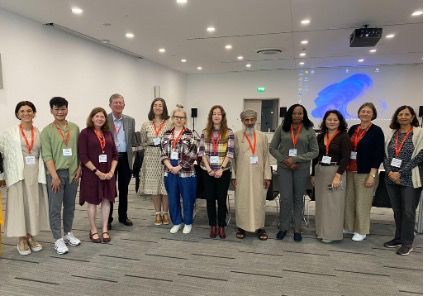
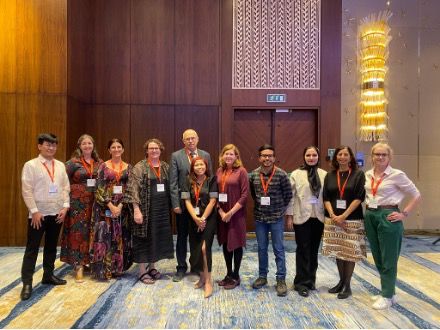
I am deeply grateful and overjoyed to have been selected as one of the six recipients of the IFLA Academic and Research Libraries (ARL) Attendance Grant 2025, generously sponsored by SAGE. Submitting my first application for the ARL grant, I did not expect to be selected, which made the experience even more meaningful. Receiving this grant allowed me to attend my very first IFLA World Library and Information Congress (WLIC), held in Astana, Kazakhstan, from August 18 to 21. Without the ARL’s generous support, this milestone in my professional journey would not have been possible.
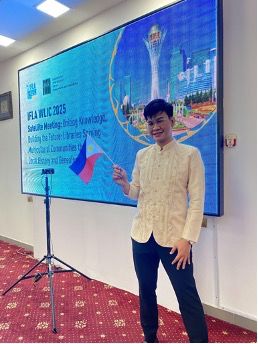
 

 [click to zoom-in]

My heartfelt gratitude goes to the ARL Section, its Chair, Mimi Calter, and the dedicated members who supported this initiative. I am also pleased to acknowledge Jayshree Mamtora and Lily Ko for overseeing the selection process for the Asia region. This recognition is not only financial support but also an affirmation that early-career professionals like myself have a place and a voice in the global LIS community.
 

 [click to zoom-in]

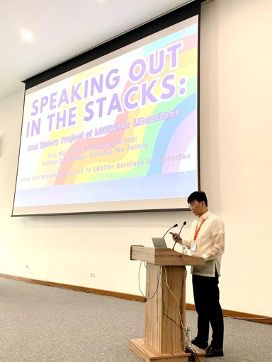
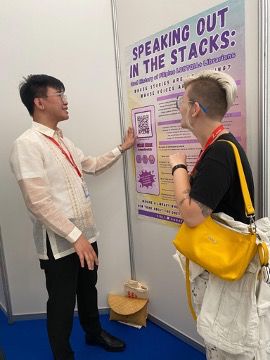
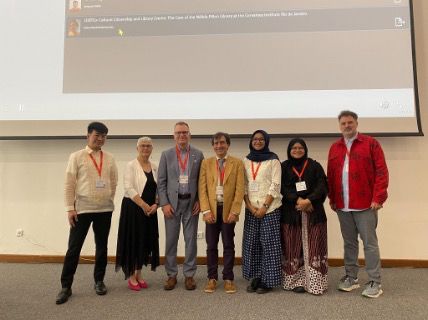
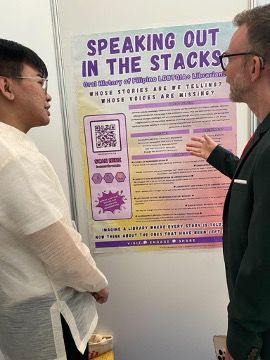
The Congress itself was an inspiring and unforgettable experience. I had the privilege of presenting two works during the event. The first was my master’s research project, “Speaking Out in the Stacks: An Oral History Project of LGBTQIA+ Librarians,” which I presented both in poster format and at the LGBTQ session. This project is very close to my heart, and I sincerely appreciate my adviser, Prof. Benedict S. Olgado, for his guidance throughout the research.
 [click to zoom-in]

Second, I co-authored the paper Connecting Through Collections: The University of the Philippines Archives’ Role in Local History, which was presented at the satellite meeting of the Library Services to Multicultural Populations and Local History & Genealogy Sections. Working alongside colleagues Ericka May R. Fernando, Sheryl T. Gerodias, Maria Criselda D. Pabalan, Mae Lanie M. Caro, and Eimee Rhea C. Lagrama was a rewarding experience that emphasized the significance of archives in preserving community memory and identity.
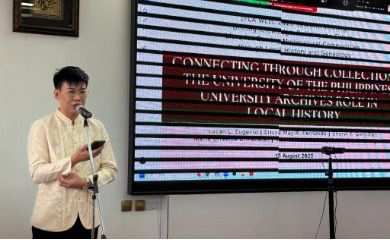
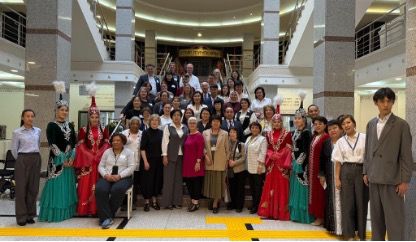
 

 [click to zoom-in]

Beyond my own presentations, attending different sessions deepened my understanding of the pressing issues libraries face today. Discussions on inclusivity illustrated how national libraries are working to reflect the full diversity of their nations, particularly through born-digital content such as social media, oral histories, and user-generated materials. I also learned about strategies for serving multilingual and multicultural communities, including the use of new technologies and innovative approaches to community engagement. These exchanges broadened my perspective on how libraries can respond to evolving definitions of diversity while continuing to provide meaningful and accessible services.
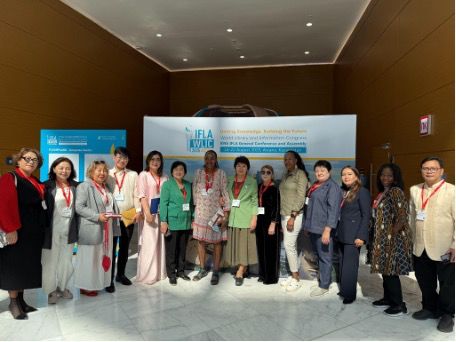
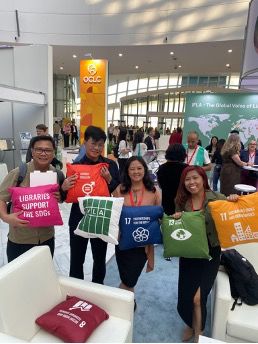
 [click to zoom-in]

The session on integrating AI in information literacy explored how libraries can leverage artificial intelligence in their teaching and services. I found the discussion on ethical considerations and on preparing communities to engage critically with emerging technologies particularly timely and relevant.

As an ARL grantee, I also attended the ARL Hot Topics session, which featured discussions on the evolving roles of libraries as agents of national development, including advancing research, supporting education, and serving as hubs for engagement and discourse.
 [click to zoom-in]

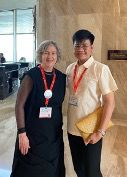
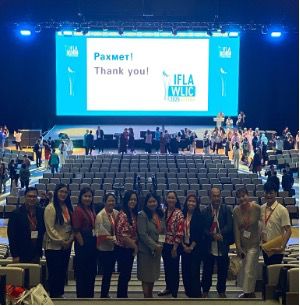
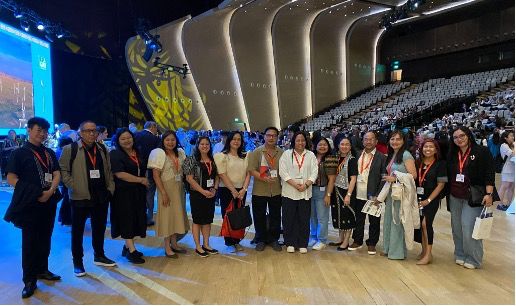
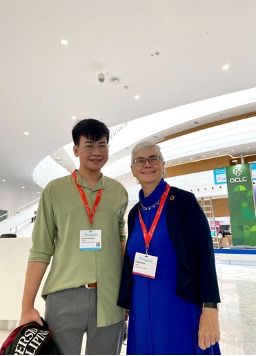
What made the Congress even more memorable were the people I met and the connections I built. I had the chance to learn from and exchange ideas with colleagues such as Joseph Hafner, Michael Nordeman, Zu Sendor, Prof. Jonathan Hernandez, Prof. Jennifer Brannock, Prof. Takashi Nagatsuka, Cherie Bush, Alain Zayan, Elisabet Rundqvist, and Dr. Xiaofang Zhang. Meeting fellow Filipino librarians from the University of Santo Tomas, EESM Bookstore, and the National Library of the Philippines for the first time was also an enriching experience, as was connecting with colleagues from Qatar and the UAE. Ms. April Manabat warmly hosted me and generously showed me around Astana, which made my stay even more special.
 [click to zoom-in]

This experience, made possible by the ARL Attendance Grant, has been both humbling and empowering. It not only gave me the chance to present my work and represent my institution but also offered the opportunity to engage in global conversations on inclusivity, multiculturalism, technology, and the future of libraries.
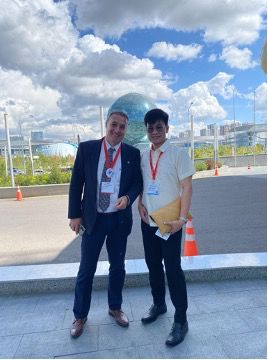
 [click to zoom-in]

Back in the Philippines, I am determined to put my learnings into practice by advancing oral history and community archiving projects, incorporating AI and information literacy into local contexts, and developing inclusive programs that reflect the diversity of our communities. I also look forward to sharing these insights with colleagues, students, and the wider LIS network in the Philippines so that the impact of this experience extends beyond me.

Being an ARL grantee at my very first WLIC is an experience I will always treasure. I returned home inspired, motivated, and eager to contribute further to our global LIS community.

Ұлкен рақмет to the IFLA Academic and Research Libraries Section for this opportunity!
 

My reflections from IFLA WLIC 2025 in Astana.

This is the first contribution from our grant winners about their experiences at the IFLA WLIC 2025 in Astana!

This post is by Ángel Guzmán Contreras, MA, who is currently pursuing his PhD in Library and Information Studies at the National Autonomous University of Mexico.

Just as the young and ambitious city of Astana aspires to be a hub between continents and cultures, the IFLA World Library and Information Congress served as a global meeting point for librarians. This year’s Congress in Kazakhstan’s capital brought together professionals from all over the world to exchange experiences, to share research, to explore both the differences and commonalities that enrich our field, and to engage in dialogue about the future of libraries and information sciences. Attending for the first time as an IFLA ARL Attendance Grant awardee was both a privilege and a profoundly deep learning experience. I’m very thankful for being able to be part of this experience.

Visiting Astana for the IFLA WLIC has been truly inspiring. The city’s bold growth, with its striking new buildings and evolving public spaces, reminds us as librarians of our own mission to grow and build. Just as Astana’s futuristic architecture points forward with confidence, we too are called to look ahead, shaping libraries that serve not only the present, but the future of our communities.

I had the wonderful opportunity to meet participants from every continent, strengthen friendships with librarians I had met before, and reconnect with colleagues I had lost touch with long ago. Equally unforgettable was the hospitality of our Kazakh hosts, who truly embodied the spirit of the steppe. Their warm welcome, generosity, and eagerness to share their culture through music, food, drinks, dance, and traditions made the Congress not only a professional gathering but also a rich cultural experience that will undoubtedly deepen our sense of connection.

I was particularly interested in the focus on recent technological advances, especially the use of Artificial Intelligence. The discussions explored ways in which AI can be implemented in libraries, the ethical boundaries of its use, the potential risks it poses, and how to utilize this tool effectively. These sessions reminded me that librarians have a responsibility not only to adopt new technologies but, more importantly, to understand them critically, carefully considering their benefits and potential downsides, and ensuring that these tools genuinely serve the communities we support.

One of the most thought-provoking presentations I attended was delivered by C. Syamili from the University of Calicut, India. The session explored how a regional conflict is represented and misrepresented across media platforms. Using qualitative content analysis, the study highlighted techniques of digital propaganda, viral disinformation, and coordinated narrative shaping. I found this particularly striking. In a world where information is increasingly weaponized, her research highlighted a challenge that librarians must actively address: disinformation not only distorts reality but also shapes the future of societies. As information professionals, we have a responsibility to safeguard truth, promote critical literacy, and ensure that communities can navigate information responsibly.

The presentation also reinforced my own doctoral work on disinformation and migration, demonstrating that whether in conflict zones or along migration routes, the deliberate distortion of narratives poses a profound threat to human-informed society — dignity and a threat we are all called to address.

I leave the beautiful city of Astana with renewed motivation to continue working on the rest of my PhD, equipped with new tools provided by the IFLA WLIC, enriched by the insightful comments of colleagues, librarians, and friends, and inspired by the meaningful connections and cultural exchanges I experienced throughout the Congress.

See you all next year in Busan!

Quiet Powerhouses: Leadership Lessons from an Academic Library in a Nigerian University of Technology

This post was generously contributed by Professor Adefunke Sarah Ebijuwa, University Librarian at Ladoke Akintola University of Technology (LAUTECH), Ogbomoso, Nigeria, and a Member of the IFLA Academic and Research Libraries Section.

Introduction

I often say that working in a university library in Nigeria isn’t for the faint-hearted, but leading one at a university of technology? That’s a calling all on its own.

As the University Librarian at Ladoke Akintola University of Technology (LAUTECH), I operate in a space where passion, pressure, and purpose intersect. It’s a role that requires resilience, vision, and unwavering belief in the transformative power of information services, especially within an institution rooted in science and technology, situated in a region where infrastructure and funding can be unpredictable.

This reality constantly prompts me to ask: How can the academic library stay relevant, not just in theory but in practice? How do we lead confidently in environments where constraints are the norm, yet expectations remain high?

At LAUTECH, a state-funded university of technology in Ogbomoso, I oversee the Olusegun Oke Library and its subsidiaries, including the Medical Library and the College of Agriculture and Renewable Natural Resources’ Library in Iseyin. Together, they form a growing academic hub serving over 30,000 students and researchers across twelve faculties and colleges, encompassing Engineering, Arts and Social Sciences, Computing, Pure and Applied Sciences, Health Sciences, Agriculture, and Renewable Natural Resources.

Between Constraint and Commitment

The constraints are real. From modest budget provisions to occasional power outages, we operate in an environment that demands ingenuity and continuous adaptation. Challenges, including but not limited to delayed subscriptions and fluctuating internet bandwidth, sometimes impact the momentum of our innovation.

To enhance internet connectivity across the campus, the University installed fiber optic cables, providing reliable internet access to all users.

In response to these realities, we have developed a culture of doing more with less —a strength we view not as a limitation, but as a unique asset.

To lessen the impact of power outages, we invested in alternative energy sources.

During the COVID-19 lockdowns, we swiftly launched an e-library portal, an initiative that now averages over 10,000 monthly remote sessions, providing uninterrupted access to learning and research for our users. These interventions were not luxuries; they were necessities. And necessity, as always, remains the mother of our innovation.

A Frontline Role in Academic Support

At a University of Technology, the library is not just background scenery. It is a frontline academic partner, a collaborator in teaching, a guide for research, and a bridge between data and discovery. Beyond providing access to information, we empower users to evaluate sources, cite responsibly, explore AI tools ethically, and follow emerging research trends.

In a world flooded with information, we teach them to think critically because access alone isn’t enough. Understanding is what empowers. We also support academic staff through research visibility tools, ORCID registration drives, and assistance with article publication. As global research demands increase, African scholars need practical, context-specific support, and the library is well-positioned to provide it.

A Broader Professional Lens—IFLA and the Power of Global Solidarity

My journey with the IFLA Academic and Research Libraries Section has been an incredible source of insight and encouragement. Participating in IFLA-related activities, whether as a blog reader, contributor, or observer, reminds me that our challenges are not unique. More importantly, they reaffirm that the insights we bring from our context are deeply valuable. Sometimes, what we need is not external solutions, but a platform to share what we’re already doing well. IFLA provides us with that platform. Engaging with colleagues worldwide has strengthened my conviction: although we work within different systems, our mission is the same—to make libraries central to learning, equity, and transformation. That gives me hope, and it sharpens my determination. Looking ahead, there is still much to accomplish.

We need increased funding, better policy alignment, faster systems, and ongoing staff development. However, we should also take a moment to acknowledge our progress. We are not where we used to be. Based on my experience at this university library, which is part of a University of Technology, progress here is deliberate, not accidental.

So, what’s it like to lead a library in a Nigerian university of technology? It is demanding. It is deeply local, yet globally connected. It requires vision, patience, and resilience. But above all, it involves belief: the belief that what we do matters, that our users deserve the best, and that our role as academic librarians is not just relevant, but essential. And yes, I still dream big, because the future of African libraries is not just possible; it’s inevitable. It is powerful.

Human Touch in the AI Era: Why Emotional Intelligence Matters for Libraries

This post was generously contributed by Jannatul Islam Muna, a Library Circulation Officer, and Shaharima Parvin, a Senior Assistant Librarian, both of whom are with the East West University, Dhaka, Bangladesh.

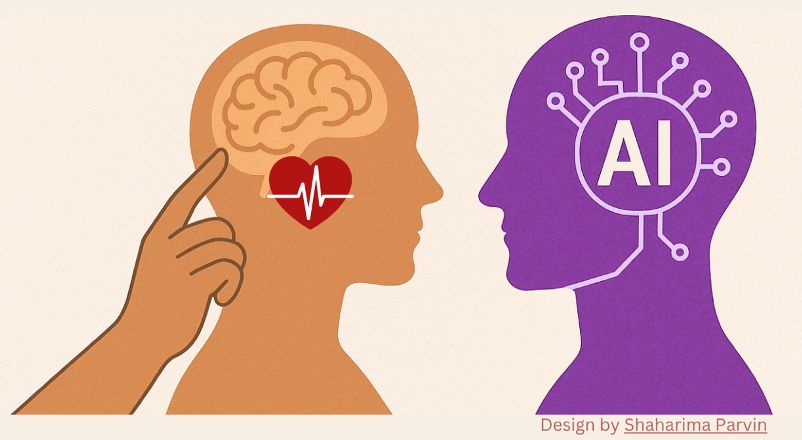
In this rapidly transforming era, where the world is shifting from the digital age to Artificial Intelligence (AI), we can now see the impact of AI in every sphere of life. AI is assisting us in numerous ways, and libraries are also integrating AI tools into their services. In the workplace, we strive to acquire essential skills to transform our workplaces, including integrating machine learning, Natural Language Processing (NLP), innovative chatbot services, big data analysis, and more. Still, we sometimes overlook the importance of developing essential soft skills, including emotional intelligence, teamwork, leadership, communication, conflict resolution, and stress management. In libraries, we need both soft skills and hard skills.

Regarding emotional intelligence, Maya Angelou once said, “I’ve learned that people will forget what you said, people will forget what you did, but people will never forget how you made them feel.” The term Emotional Intelligence (EI) was first coined by Peter Salovey and John D. Mayer in 1990, describing it as “a form of social intelligence that involves the ability to monitor one’s own and others’ feelings and emotions, to discriminate among them, and to use this information to guide one’s thinking and action. Emotional intelligence refers to the cognitive abilities that help humans understand the feelings of others with self-awareness. People who are emotionally intelligent consistently strive to regulate their emotions, are motivated and self-driven, empathetic towards others, and self-aware of their strengths and weaknesses. They also possess good social skills. In libraries, especially academic libraries, librarians serve the diverse needs of university communities. Librarians also need to serve many users at a time patiently which requires stress management, patience under working pressure, self-regulation mostly emotional regulation, ability to manage anxiety, courage to develop other skills such as confidence, positivism, service orientation, teamwork, problem solving, critical thinking, conflict resolution, communication, learning mindset, tech management and decision making.

Though AI has become increasingly prevalent, human qualities have become more valuable than ever.  AI automates repetitive tasks, allowing librarians to focus on innovative services, user engagement, and community outreach. Additionally, if we observe that AI can answer basic factual questions through chatbot services, the empathy that is needed can only be provided by librarians. Students or users visit the library for guidance, reassurance, suggestions for various purposes, where human interaction is more required than AI. A librarian with emotional intelligence can handle a student patiently and wisely who is anxious, stressed, and overwhelmed.

In the age of technology and AI, especially among the young generation, they can become overwhelmed. In such cases, an emotionally intelligent librarian can play a vital role by patiently empowering students with library resources and services. AI can perform routine tasks, but when it comes to community engagement, it requires more emotionally intelligent librarians who can provide emotional support and reassurance that help build genuine connections and trust. In developing countries, although the world is changing with the evolution of technologies, many students still experience anxiety about technology use, particularly those in the librarians’ work environment. Academic libraries provide research support, where they must assist faculty and students simultaneously with their research projects. Therefore, they require being more proficient, efficient, creative, and self-controlled learners. Although many libraries are utilizing AI research tools such as SciSpace, Semantic Scholar, Research Rabbit, and EndNote with AI plugins, creativity, unique ideas, and their presentation still require a human touch, which librarians can provide efficiently.

EI and AI must be balanced to ensure the library’s efficiency and a human-centered environment.  If we rely solely on AI, users will be disappointed by not experiencing human connections, as many crave genuine human interaction, and there are also concerns about trust. On the other hand, if we neglect technological advancement, we can face prompt service errors. For that reason, we need to balance EI and AI more effectively. Moreover, librarians’ or employees’ feelings can be deteriorated in several ways, such as organizational needs and skill mismatch, proper evaluation of performance, work satisfaction, and effective communication. Research has shown that emotionally intelligent librarians are consistently motivated to adopt innovative ideas and create a better workplace. To achieve this balance, libraries need to train their staff in emotional intelligence skills, which include empathy, active listening, and conflict resolution. Academic libraries play a significant role in their communities, and in this regard, they have an opportunity to demonstrate that technology and humanity can work together effectively. By embracing AI to improve efficiency and enhancing EI to strengthen personal connections, libraries can become smarter, smoother in service, and more inclusive in their purpose.

References

Landry, L. (2019, April 3). Why emotional intelligence is important in leadership. Harvard Business School Online.https://online.hbs.edu/blog/post/emotional-intelligence-in-leadership

Sadiku, M. N. O., Olaleye, O. D., & Musa, S. M. (2020). Emotional intelligence in the workplace. International Journal of Trend in Research and Development (IJTRD), 7(1), 272-275. http://www.ijtrd.com/papers/IJTRD21980.pdf

Salovey, P., Woolery, A., & Mayer, J. D. (2003). Emotional intelligence: Conceptualization and measurement. In G. J. O. Fletcher & M. S. Clark (Eds.), Blackwell Handbook of Social Psychology: Interpersonal Processes (pp.279-307). Wiley-Blackwell.  https://doi.org/10.1002/9780470998557.ch11

What it’s like to be an IFLAddict

This exciting and humorous post is by  Jérôme FRONTY, Senior curator, Music department, Bibliothèque Nationale de France, Paris, France, [email protected]

As the Astana, Kazakhstan, IFLA Congress is nearing,    and as I’m preparing myself to leave the (fantastic) IFLA ARL Section after two terms, and taking over a new position at IFLA as Division Chair (Division A) I realize that I have been with the Federation for 15 years now and that I should tell a few light-hearted stories, or musings, to newcomers and old-timers alike. Just to make sure I am not a serious person (if anyone doubted it). So here it is, sorted out (we are librarians, after all) in Latin (see letter M below for non-Latin languages) alphabetical order. 

A is for Abrazo. Special welcoming posture typical of IFLA long-timers. Had been offset during the « new normal » of the pandemic. I’m glad it is back.

B is for Beethoven. Yes. I managed to bring him as a blog post on the IFLA ARL Section blog, see here.

C is for Cross-fertilization. Could sound obvious, but in fact, not that much. There are so many entities and specialties within IFLA, and so many people are so busy, that it can be tempting to do things in the business as usual way. There are structural ways to do it, such as joint sessions during congresses. But maybe other ways, like sharing best practices.

D is for Deadline. We love this at IFLA. Your action plan is due on such date, etc. But also: the next congress will be here or there. Entails great planning work.

E is for Ethics. One of the outgoing Professional Council achievements is a Code of conduct, typical for a large organization like IFLA, and that was lacking so far. Nice step. But ethics go a long way, I do believe, in many aspects.  Sharing the IFLA experience beyond the privilege of being part of it should be one of them.

F is for Funding. The F-word. It is obvious, and problematic at the same time. Improved transparency at the Federation level, and some sense of visibility as to what the future will be for IFLA make us more comfortable. At the individual level, the IFLA ARL Section has been a great provider of grants to enable emerging countries colleagues to join the congresses, year after year.

G is for Great. There is no need to make librarians great again. They are. But you need to make it known. Hence « the global voice of libraries ». It’s called advocacy.

H is for Headquarters. When you pay a visit to The Hague, as some of us did on the occasion of the Rotterdam congress (2023) you have a hard time reconciling the global reach of IFLA and the tiny offices that the Dutch national library generously allocates to its headquarters (this is back in… 1972, and this is now in 2025). That’s good. See letter R below.

I is for IFLA Express. A bit of nostalgy here. This was back in 2010 (Gothenburg, Sweden). A daily newspaper was indeed circulated onsite within the congress center, and translated in all languages. Hence “language teams” working so hard and timely that they almost saw nothing of the WLIC. I was one of them and did this again for some years. IFLA Express became part of the congress website (here is the archive of the Singapore one, in 2013). Then any Web browser became a translator on its own. You know the story. But see letter M, again, below.

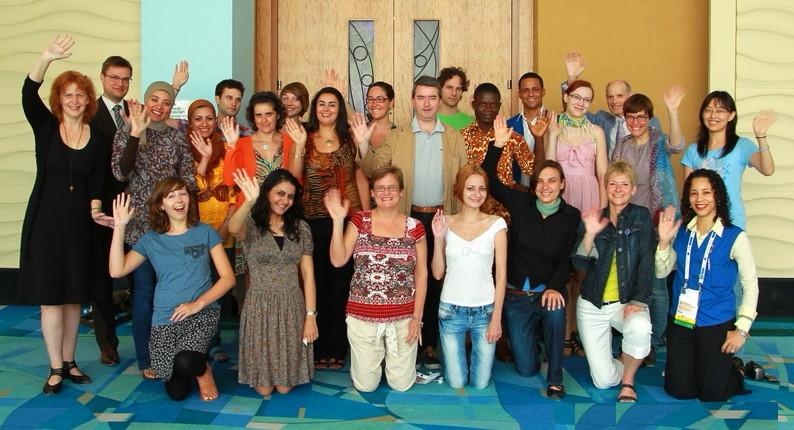
IFLA Express team, 2011 WLIC, San Juan, Puerto Rico, photo Ross Becker                                                                             [click to zoom-in]

J is for Joy. Yes. “Here we work a lot, but we do have a lot of fun”. This was the welcome address of an eminent American colleague chairing one of the Sections I Joined. A good principle, and a good practice, I feel.

K is for Kids. Or should be. A library where there are too many adults in the room lacks something. Several professional units address this as a librarianship dimension, and there is a lot to do: school libraries, libraries for children, and so on. And some colleagues have children, as I do. Of course. But hey, I have never met children on an IFLA congress site.

L is for Library. You saw this one coming.

M is for Multilingualism (and multiculturalism). It used to be very high on the agenda of IFLA, and the Federation has pride in having more (6 + English) official languages than the UN (5 + English). Translation in Arabic, Chinese French, German, Russian and Spanish is still obvious for main policy documents. Now, where do we want to go from here when browser and/or AI-generated translation (simultaneous or not) is ubiquitous is an open question, not just technical I think.

N is for Neutral. This is a tricky one. In a way, we are neutral, and should be. This is about tolerance, and an IFLA congress is about learning people’s styles and cultures and professional environment in a way you may never see at home. But we are also heavily involved. And fighting for causes. There are many. Including Internet access neutrality.

O is for OMG. Oh my God. During an off-hour, all-time-zones call I had to do from home, at one moment I turned the camera to the Christmas crib in my living room (for some, an old Provence-linked tradition in France, whether you are Christian or not (but there is a Religions in Dialogue unit at IFLA)). I felt some surprise. There were so many different cultures around the screen, that being yourself meant, in fact, being the elephant in the room. See letter N, above.

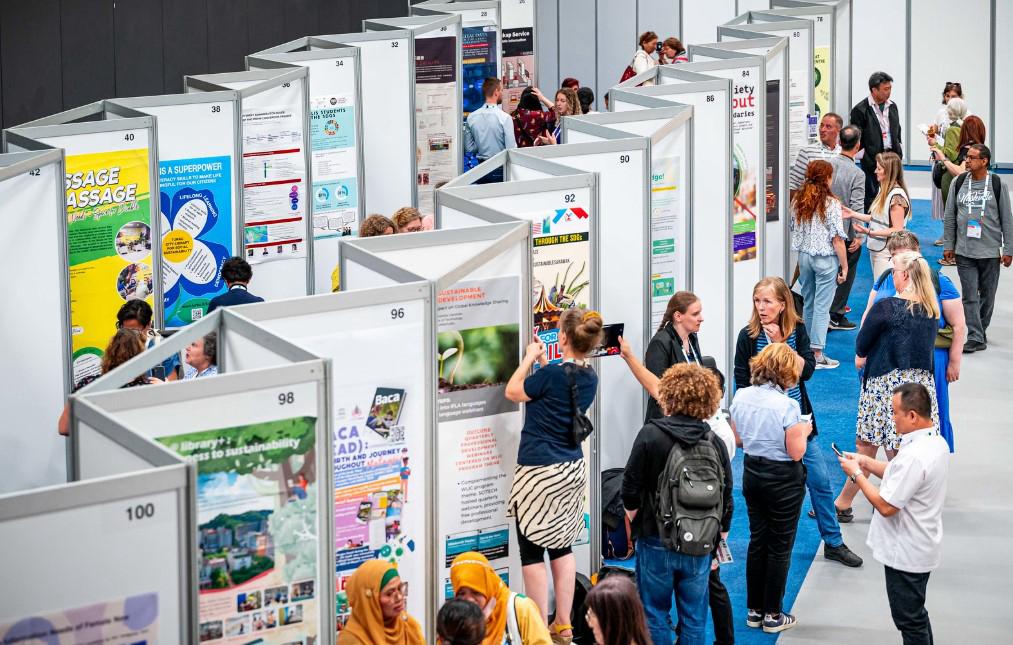
P is for People. A number of challenges and issues we address as librarians deal with technology, and one of our raisons d’être surely is helping people tackling the tools providing (or preventing) access to information and doing so, their personal development, which means, their freedom. So, in fact, it is not about technology. It is about people.

  IFLA Posters Session, 2023 WLIC, Rotterdam, The Netherlands, photo Matteo Cogliatti                                                                [click to zoom-in]

Q is for Q & A. I liked this kind of vademecum (here is the Lyon, France, one, 2014) that was provided to new delegates, so that they had both a sense of what a congress is like, how it works, and how to behave in there. Maybe we should keep it, and also do the same for virtual events, which do have, in fact, their rules and their codes.

R is for Regions. The regional structure (Regional Council) is one of the clearest innovations of the new governance structureinstalled by IFLA in 2021. It does not contradict the fact that all professional units (Sections, SIGs, etc.) are generally global (some are more than others, to be fair). But it introduces a matrix in the organization, and some sort of reality-check between the global and the local levels (see letter C above).

S is for Satellites. Satellite meetings are events around a given congress (this one was hosted for the IFLA ARL Section at Erasmus University in 2023). It might be tricky, because it has to benefit from the main congress aura, without eating up its sponsors or attendance base. But it’s always a great way to give a focused, local dimension to your event. My advice: make it fully-funded and based on a strong local team.

T is for Time. It does matter. 2027 will be the 100th anniversary of IFLA. We are here for the long run. But during each and every general assembly, there is a silent moment for the ones that have passed away since the previous similar meeting. It is one way of feeling they live on with us, and that we live on with what they achieved with IFLA and with us.

U is for U-turn (no). Librarianship is about progress. There is no, there should not be a way back. Or, isn’t there? See the banned books. See the burnt libraries. But also, in our practices. Yes, we do a lot of planning. IFLA loves action plans (ha! due 1st of August, remember?…). But running so many performance indicators, are we still able to think out of the box?

V is for Virtual. Environmental considerations on the one hand, habits developed during the pandemic on the other hand, may look like strong cases AGAINST a physical congress. In fact, if we choose the IFLA ARL Section as a proxy, not quite. Last year (a non-congress year) we made a number of virtual business meetings and some webinars. Still, some of us met physically in Istanbul for a Division-level meeting, to which, believe me, nothing compares.

W is for WLIC. Newcomer or not, anyone will be able to decipher it, and also, know that it stands both for the (often) annual conference and general assembly. Now, whatever your language, if you are able to pronounce this acronym, I owe you a beer.

X is for X. The Unknown. “Prediction is very difficult, especially if it’s about the future!” You know the half-serious statement of this Nobel laureate, Niels Bohr. But at IFLA it is a serious joke, within and beyond the Trend report, because librarianship is also about anticipating the future, in many ways (as a curator of heritage documents, my prime material is, in a way, the future of their access, meaning and posterity).

Y is for Yes we can. So far, I’ve seen only one US president sending a brief (friendly) message to all IFLA Congress delegates. Guess who. A clue: Columbus, Ohio, 2016. See letter N, above.

Z is for Zoom. That’s just one of the tools. For meetings, webinars (here’s IFLA ARL December 2024 one), many things. Then Basecamp. Infinity. Repository. WordPress (CMS). Mailchimp. You name it. It is not the least of cultural habits, at IFLA, to make you an early adopter of the best tools available worldwide (and I’m saying this as an ink-and-paper, back-of-the-envelope guy). Then, see letter P, above.

But also (of course): A for Astana, B for Books (or Bureaucratic), C for Completely irrelevant, etc. etc.

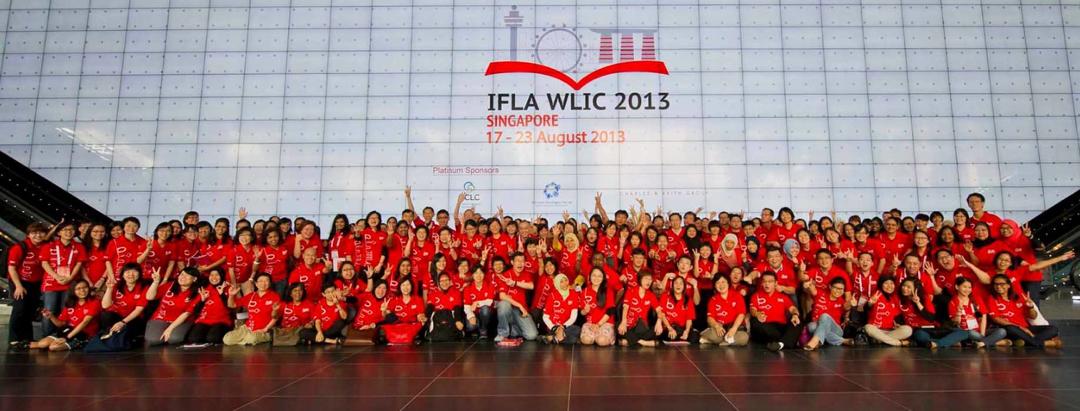
                                  IFLA volunteers, 2013 WLIC, Singapore, photo IFLA HQ                                                                                                  [click to zoom-in]


IFLA Academic and Research Libraries Standing Committee Election Results are Final!

This post is by Mimi Calter, Vice Provost & University Librarian, Washington University in St Louis, and IFLA/ARL Committee Chairperson.

IFLA’s 2025 election season is now completed, and I am pleased to announce the full roster of members for the IFLA Academic & Research Libraries standing committee for 2025-27.

The committee has seven continuing members with two years remaining on their four-year terms. These members have been actively involved in the committee’s programming, and we will rely on them to continue the committee’s work in the future. They are:

  • Miriam Linda Akeriwe
  • Mimi Calter
  • Adefunke Ebijuwa
  • Adriana Cybele Ferrari
  • Joanna Hare
  • Sarah Kaddu
  • Bianca Amaro de Melo

Additionally, we have four members returning for a second four-year committee term. They are:

  • Antonio Cobos Flores
  • Karen Downing
  • Lily Ko
  • Tuelo Ntlotlang

Finally, ten new members will officially join the committee in August at the WLIC. They are:

  • Ejla Ćurovac
  • Joseph Frank Rogani
  • Nicky Agate
  • Randa Al Chidiac
  • Siviwe Feketshane
  • Soledad Lago
  • Héloïse Etienvre
  • Kerstin Schoof
  • Liudmyla Trotsenko
  • Mari Hopland

Our committee has representation from 19 countries, and we look forward to bringing that global perspective to our work.

Introducing Evidence-Based Library and Information Practice for Kazakhstani Librarians: A Humble Attempt

  This post is generously contributed by April Manabat, RL, MLIS, a Senior Expert Librarian at the Nazarbayev University, Astana, Kazakhstan.

With the ever-changing informational landscape not to mention the continuous struggle to demonstrate value, librarians are now encouraged to be evidence-based in making decisions to ensure smooth library operations. Being evidence-based requires librarians to conscientiously make decisions supported by evidence to comprehend their users’ needs, thus, improving their service delivery. Coupled with local knowledge and professional expertise, the use of research evidence is crucial, further bridging the gap between research and practice in librarianship (Koufogiannakis, 2015).

A Humble Attempt

In December 2024, The NU Library’s Eurasian Academic Libraries Training (EALT) made a humble attempt to introduce evidence-based library and information practice (EBLIP) or evidence-based librarianship (EBL) among Kazakhstani librarians. The training was attended by more than 50 librarians across the country who were eager to develop their professional competencies and learn the best practices intended to improve their library services in their respective institutions. The attendees were composed of librarians taking various roles such as managers and directors who were expected to prepare various related reports either on monthly or quarterly basis (60%) and had been asked to make decisions constantly (80%). Unfortunately, while most of them used and analyzed local knowledge such as statistics, feedback, and observations (40%) and trusted their knowledge and experiences (20%) in making decisions, none of them mentioned that they used scientific research data to back up their decisions.

An Insightful Discussion on Evidence

The discussion was indeed insightful. During the discussion, the librarians were introduced to the essential concepts of evidence-based library and information practice (EBLIP) highlighting its six steps: Articulate, Assemble, Assess, Agree/Apply, Adapt (Koufogiannakis & Brettle, 2016), and Announce/Advocate (Thorpe, 2021). Kazakhstani librarians believe that evidence is needed to ensure that decisions are based on facts rather than on outdated ideas, unfounded opinions, and prejudices. They also noted that using evidence creates dignity and credibility of the profession, thus, increasing its value. Most of the librarians agreed that the use of factual information such as statistics, reports, and analysis were considered essential to ensure the validity of evidence. However, while they understand the pivotal role of evidence in making decisions, they also noted that some evidence might not be available for them due to confidentiality; they find it difficult to identify or choose which evidence to use; evidence might be prone to manipulation and outdated, thus making it unsuitable to use; some were finding it difficult or lazy to search for evidence; and lastly, its tedious and time-consuming.

During the workshop, librarians were asked to articulate the problems in some given cases using the PICO (population-intervention-comparison-outcome) method which originated from evidence-based medicine (EBM). This is the first step in EBLIP. While most of the librarians understood the importance of defining the problem in each context, they found it difficult to identify the problem, assemble the evidence, and apply the evidence in making decisions.

Moving Forward

While EBLIP has been a talked of the town in the profession for quite some time now, it seems to be a relatively new topic among Kazakhstani librarians. There is a noticeable interest among librarians on EBLIP, however, there is a lack of knowledge and understanding of its application in the library setting. This is a good opportunity for librarians to develop their decision-making skills in various capabilities. Understanding the value and importance of being evidence-based in making decisions should not be ignored by any professions, librarians included. More than collecting statistics, descriptively analyzing them, and creating typical accomplishment reports when asked, librarians should be encouraged to demonstrate their value and uphold the credibility and dignity of the profession with the use of evidence to support them. After all, librarians and information professionals are expected to demonstrate their knowledge and skills in searching, evaluating, and using information (aka evidence) effectively to make informed decisions.

References

Koufogiannakis, D. (2015). Determinants of evidence use in academic librarian decision

making. College & Research Libraries, 76(1), 100-114. doi:https://doi.org/10.5860/crl.76.1.100

Koufogiannakis, D. & Brettle, A. (2016). A new framework for EBLIP. In A. Brettle & D.

Koufogiannakis (Eds.), Being Evidence Based in Library and Information Practice (pp. 11–18). Facet. https://doi.org/10.29085/9781783301454

Nazarbayev University Library. (2024). Eurasian Academic Libraries Training 2024.

https://library.nu.edu.kz/ealt

Thorpe, C. (2021). Announcing and advocating: The missing step in the EBLIP model.

Evidence Based Library and Information Practice, 16(4), 118–125. https://doi.org/10.18438/eblip30044