Tag Archives: SDGs

What Makes Libraries Unique in Achieving… SDG 8

DA2I means being able to find – and seize – new opportunities for work and entrepreneurshipSustainable Development Goal 8 is the second of the SDGs to be explored this year. It focuses on promoting sustained, inclusive and sustainable economic growth, full and productive employment and decent work for all.

Through their work to provide access to information in communities, including to some of their most vulnerable members, libraries can be a gateway to opportunity. Both indirectly – through promoting inclusion and wellbeing – and directly through training and job-search support – our institutions can make a real contribution to delivering on SDG 8.

Labour and employment ministries therefore have an interest in effective libraries.

But what arguments can you use to convince them?

Here are three ideas showing why libraries have a unique role in achieving SDG 8:

  • Because employment schemes only work if people know about them: like any market, the job market only works when people know about the opportunities out there. Yet half the world’s population does not have internet access or aren’t confident online. Libraries are not only places where people can connect, but also can receive support and guidance on where to find possibilities to help them find jobs.
  • Because those who need support most can be the hardest to reach: for many, going to a job centre is associated with stigma. Others, especially those from marginalised groups, feel uneasy going into official buildings, or even are not entitled to formal support. Libraries are often seen differently, with people readier to use them. As such, they can provide an excellent place to provide services to many of the most vulnerable in society.
  • Because skills matter: developing new and more advanced skills is a necessity for everyone, not only in order to respond to technological and economic change, but also to find better quality, more fulfilling work. Yet those who have left school risk can risk struggling to reconnect to education. Libraries not only offer training themselves, but can be a gateway to other forms of adult and non-formal education.

For more see the chapter on SDG 8 in the 2019 Development and Access to Information (DA2I) Report by Stefania Lapolla Cantoni, Researcher at cetic.br.

Professional Units and the SDGs – How IFLA’s Committees are Contributing to Work on the 2030 Agenda

Professional Practice and Sustainable Development: How IFLA’s committees support engagement on the Global Goals

IFLA has placed the United Nations Sustainable Development Goals at the centre of much of its work.

They are a regular reference in our advocacy for libraries, and have provided a great way of structuring our thinking about the role of our institutions in the world today.

At the national level, many library associations and library and information workers have taken up the resources provided through IFLA’s International Advocacy Programme to launch their own work.

This makes sense. The SDGs – and the wider 2030 Agenda that contains them – are the most comprehensive, ambitious policy agenda out there.

Many governments and development agencies have explicitly made them a key pillar of their activities. Others may not refer to them so openly, but will not disagree with the framework they set out, and the subjects they highlight.

But what can cross-border professional communities – IFLA’s professional units – do? There are already some great examples here as well! This blog offers some general themes, building on work already done in 2015.


Spreading the Word

A number of IFLA’s sections have embraced the Sustainable Development Goals in sessions at the World Library and Information Congress. This has provided a great opportunity to explain the Goals and their relevance to different parts of the global library field.

Taking the perspective of a specific type of library, a specific service, or a specific user group can be a means of making the SDGs relevant. At the same time, this provides an opportunity to show how the SDGs can be used by library and information workers in the area to advocate for the work they do.

Talking about the SDGs is important – indeed, it is a key UN objective. The more libraries can show that we are using our potential to spread the word, the stronger a partner we become.


Building the Evidence

In our work at the global, regional and national levels, real-life examples of how libraries deliver on the SDGs (and other policy objectives) play a key role. They appeal to decision-makers, given their human aspect. When accompanied by evaluation, they are even stronger.

Individual professional communities within IFLA can be excellent sources of these examples, given that they bring together some of the most knowledgeable people about particular library types or services, from different parts of the world (or something like that).

Already, a number of the stories featured on IFLA’s Library Map of the World SDG Stories page are based on examples from papers submitted to sessions at WLIC. But there is lots of potential for sections to use the rest of the year to find more , for example among nominees for prizes or awards!


Driving Delivery

As highlighted in IFLA’s Core Values, access to information, guaranteed by high quality library services, is a key means of improving lives and promoting equality.

It follows that the work done by IFLA’s sections to enhance professional practice also enhances the capacity of libraries to support users. This is central to fulfilling the role given to all stakeholders in the 2030 Agenda to do their bit to deliver on the SDGs.

Standards, guidelines, toolkits and collections of best practices help the field to achieve Goals, from safeguarding cultural heritage (SDG 11.4) through preservation standards to reducing inequalities through guidelines for services to people with special needs (SDG 10).


We’d love to hear your ideas about how different sections are working with the SDGs, or of course to answer any questions.

2019 World Refugee Day

World Refugee Day 2019: Libraries are for everyone

20 June is World Refugee Day, a day to mark the support to the thousands of families who flee their homes every day. Around the world communities, individuals, schools, businesses and institutions such as the libraries are showing solidarity with refugees.

Arriving to a new country is never easy! A different culture and language can be a big challenge for refugees. Libraries can help make their arrival easier by welcoming them to the community.

Libraries opening their doors for refugees

Libraries such as The Multilingual Library in Norway have been actively involved in providing books in different languages. The library is a national centre of expertise for multicultural library services and has put together promo-packages that other libraries in Norway can borrow.

The packages include posters, postcards, bookmarks and balloons. It also includes books in many different languages that the borrowing library can use to make displays and to promote the fact that libraries welcomes people who speak languages other than Norwegian, a fact that many people still don’t know about.

The efforts by the Multilingual Library has been very successful. The materials and books have fed into about 160 promo-packages and are often reserved for months. The package has been strongly promoted on another international day, The International Mother Language Day, to highlight the variety of people that the library serves.

In Germany, Cologne Public Library has created a Sprachraum – literally a language room. The room is a meeting place for intercultural exchange and learning for refugees and people with a diverse background. It dedicated to hosting activities and events, book reading and to practice the German language.

The Sprachraum is run by volunteers, who actively engage with refugees, making sure that they feel welcomed to the community.

Libraries sharing experience and knowledge

Libraries worldwide serve diverse community interests, and function as learning, cultural and information centres.

This work is particular supported by the IFLA Library Services to Multicultural Populations Section, that brings together libraries and institutions who are interested in how libraries can take an active role in supporting refugees and library users with a multicultural background.

The Section is striving to share its experience in library services to ensure that every member of our global society has access to a full range of library and information services.

If you are interested in knowing more about how libraries are serving refugees, you can contact the MCULTP Section.

Development Accelerators: How Libraries and Access to Information Unblock Development

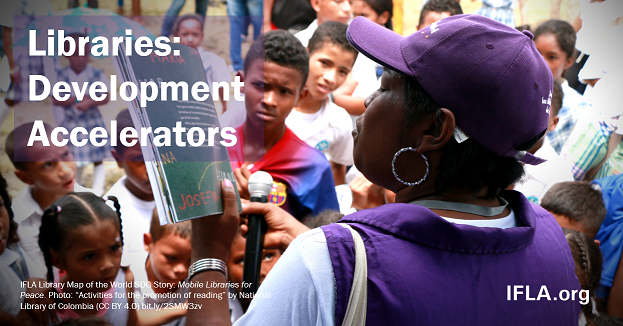
Libraries: Development Accelerators

The objectives set out by the United Nations’ 2030 Agenda are as ambitious as they are necessary in order to ensure the sustainability of our economies and societies.

A clear implication is that business as usual is not a possibility. Instead, there need to be both new resources and new policy approaches in order to accelerate progress and bridge divides. This in turn requires reflection on how best to invest time, effort and money for results.


The Role of Accelerators

This is what lies behind the concept of Development Accelerators, as promoted by the United Nations Development Programme (UNDP), as part of the Mainstreaming, Acceleration and Policy Support (MAPS) initiative. This was conceived as a means of planning the work of United Nations country teams, as well as supporting national and local action.

Within this framework, development accelerators ‘encompass key interventions, provisions, services, or programmatic areas (such as social protection or tobacco control) that simultaneously make positive impact across multiple SDGs (Sustainable Development Goals) or targets in a given context’.

Accelerators respond to ‘bottlenecks’ – situations or factors which slow down progress across a number of fronts.

The above quote comes from a study published recently in The Lancet, looking at examples of development accelerators in South Africa, with a specific focus on young people suffering from HIV.

The study highlights the contribution of policies such as promoting safety at school and direct cash transfers, which appear to lead not only to better mental health and freedom from abuse, staying in school, and sticking to treatment routines.


Access to Information as an Accelerator

The concept of development accelerators appears to describe well the contribution of access to information and libraries to social, economic and cultural progress.

Access is key to enabling better decision making – about education, employment, agriculture – at the level of individuals. It is also essential for the effectiveness of government initiatives targeted at the public – without it, programmes are unlikely to reach those who need them most.

Access at the governmental level enables better policy-making through the possibility to use evidence, and of course supports transparency and accountability to parliaments and people.

It also allows for the sort of international research collaboration that is needed to understand and respond to climate change.

It follows that a lack of access creates a bottleneck, with individuals unable to fulfil their potential and seize opportunities, governments taking poor decisions, and researchers producing incomplete or duplicative work.


Unblocking the Bottleneck: Libraries

Libraries a key means of delivering this accelerator, as places where everyone is welcome to come, read and learn.

One building, with the right resources and staff, can help one user find health information, another a job opportunity, and another fill in forms to access eGovernment services.

Others may come to read to their children, to improve their literacy skills, others may come simply to enjoy the company of other people, strengthening the inclusiveness of the community.

All of these outcomes correspond to SDG targets, underlining this potential.

Clearly strong libraries deliver even more in conjunction with other policies such as those in support of good internet infrastructure, equitable and effective education, equal societies and protection for fundamental freedoms. Indeed, together, these policies can reinforce the effectiveness of each other.


The second Development and Access to Information Report, due out in just over two weeks, will provide further examples of what access – and libraries – can do to contribute to success across the board.

We encourage UNDP and all others engaged in sustainable development policy planning to work with libraries to deliver the access that can help accelerate progress.

New Opportunities: Libraries and the United Nations in 2019

Libraries and the United Nations in 2019

As those who were able to attend the relevant sessions at the World Library and Information Congress in Kuala Lumpur heard, 2019 will be a big year at the United Nations for libraries. There will be a focus on Sustainable Development Goals that are particularly relevant for our institutions, and key steps will be taken towards a review both of the overall 2030 agenda, and the indicators used to measure progress.

But it’s also an important year for the UN itself, with new structures now in place. These also have implications for the way libraries engage with the SDGs at the national level. This blog sets out some of the key moments and opportunities in the coming year.


A High Level Political Forum Focused on Core Library Business

Each year, the UN selects a number of SDGs as a focus for the High Level Political Forum. These also shape the preparations for the event, and even voluntary national reviews.

This year, the focus is on education (SDG4), employment and growth (SDG8), equality (SDG10), climate change (SDG13) and strong institutions, including access to information (SDG16). These are all areas where it does not take too much effort to build understanding of how libraries make a difference to individual’s lives and societal progress.

These themes will each be the subject of a ‘thematic’ meeting. While education has already taken, place, SDG 8 will be the subject of a meeting on 4-5 April in Geneva, Switzerland, SDG10 of one in Accra, Ghana on 27-28 March, SDG13 will be addressed on 1-3 April in Copenhagen, and SDG16 is provisionally on the agenda on 3-5 April in Rome, Italy.

These will discuss key challenges and progress made, and set out recommendations for how the world can do better and acheive the goals set out in the 2030 Agenda.

There will also be five regional meetings: for Europe and North America (21-22 March, Geneva), Asia-Pacific (27-29 March, Bangkok), Arab Countries (16-18 April, Beirut), Latin America and the Caribbean (22-26 April, Santiago), and Africa (16-18 April, Morocco, tbc).

These give the chance to take a regional perspective, looking at the specific issues in different parts of the world, as well as facilitating peer learning. They are also great opportunities to meet with national officials leading on coordinating SDG implementation.

IFLA will be looking to take the chance to be heard at the High Level Political Forum – and the thematic and regional meetings. We hope that local libraries will also be involved! But all libraries can also contribute by reminding national SDG teams of the contributions they make in these areas.

We’ll be in touch with ideas for how to do this!


A Review of the 2030 Agenda and Indicator Framework

Four years on from the agreement of the SDGs, the original text agreed by member states provided for a review of the agenda as a whole. We are now at that stage, offering an opportunity to think again about how work around the SDGs is organised and implemented.

In parallel, an expert group made up of governments and representatives of various UN agencies will hold a consultation about updates to the set of indicators used to measure progress against the SDGs.

In both of these processes, it will be important both to defend what is good about the SDGs – not least the reference to access to information – but also work to improve things. Civil society organisations – not least IFLA and library associations – could have more voice, and voluntary national reviews could be more inclusive. We also need better indicators of access to information across the board.

A key point will be the SDG Summit, held in September as part of the UN General Assembly, which will set out a political declaration, present a number of voluntary commitments and reaffirm the 2030 Agenda as a whole.

We’ll be in touch at key moments in the year to explain how you can help convince your governments of the need to promote the changes libraries need to make the 2030 Agenda better still.


New Contacts, New Possibilities

The UN is a huge organisation. In addition to its core elements (including the Sustainable Development Division within the Department of Economic and Social Affairs), there are many agencies and other bodies linked to it, not least the UN Development Programme (UNDP).

Many of these do work in different countries, operating offices, supporting projects, and raising awareness.

In order to promote greater consistency in this work, the UN agreed to give more power to the ‘resident coordinators’ – the top member of staff in each country, to help them coordinate better. This is part of a broader reform strategy,  covering internal organisation, responsibilities and funding.

The resident coordinators will have a particular role in focusing support efforts linked to the SDGs (taking this over from local UN Development Programme representatives), and will also have more formal powers and funding, making them an even stronger potential contact for library associations.

Especially in countries where there are a number of UN projects in place, the new resident coordinators are potentially very useful contacts for libraries and library associations. They will be happy to know that local institutions are promoting the SDGs, and could help ensure that libraries benefit from projects aimed at implementing them.

You can find details of the coordinator in your country – and other relevant contacts, by clicking on the map at the bottom of the UN country activities page.


2019 will be a year of opportunities to underline the value of libraries. We will only need to make sure we are ready to seize them. IFLA will work with its members to ensure that this is the case.


You can find further information on libraries and the SDGs on the IFLA website. See in particular our briefs about Voluntary National Reviews, and Data and the SDGs,  our timeline, and our webinar from September 2018 (in English, French and Spanish).

In order to get involved yourself, take a look also at our toolkit, our poster ‘This Library Supports the SDGs’, and our infographic setting out all of the SDG targets where access to information is implicitly or explicitly mentioned. You can find some great ideas for advocacy around the SDGs in the slidepack from our session at WLIC 2019, and look out for our ‘10-Minute Library Advocate‘ guide coming very soon!

Sustainability of Libraries : the Myanmar Experience

Making it Sustainable

We are happy to present a guest blog by Dr. Thant Thaw Kaung, Executive Director, of the Myanmar Book Aid and Preservation Foundation (MBAPF):


It’s easier to get on show business, the hard part is to stay there. Nobody stays famous forever.

— Chris Rock


We are seeing so many people are enthusiastic to open new libraries these days in Myanmar, however very few are committed to maintain them until they become successful.  Myanmar Book Aid and Preservation Foundation (MBAPF), a not-for-profit, non-governmental organization which is a library advocacy and support local organization, has been helping hundreds of Myanmar public and school libraries since its launching year in 2008.

Over the past 10 years, we have been donating books to over 900 libraries and helping to modernize 150 public libraries and nearly 100 school libraries.  The objective of this article is to show what are the key factors in maintaining the libraries in business.

In other words, dos and don’ts for sustaining public libraries are going to be discussed, based on our pragmatic experience in Myanmar.
 

Map of Myanmar showing where Beyond Access projects took place

Map of Myanmar showing where Beyond Access projects took place

Brief History of Public Libraries in Myanmar

Myanmar has literacy rates of over 90%, is one of the highest among Southeast Asian countries.  This can be due to the fact that Myanmar has a strong monastic education system even before the British annexation (from 1886-1948). Education is given high priority in Myanmar culture.

However, successive military governments have neglected education and hence those who are born after 1960s are facing many challenges in getting a good education.  At the same time, the role of public libraries were downgraded and they were used only as a propaganda arm of the government under the socialist and military government.

However, thousands of community based libraries were unofficially set up after the year 2000. This means that  they cannot get official registration status by the government.  From 2006 to 2010, government promoted the opening of thousands of public libraries and even forced local people to have one library in each village. In short, the government went for “number or quantity” than “quality”.

At one point, the government used to boost that Myanmar had 55,755 libraries across the country but in reality, there were only 6,000 public libraries.  Many of them closed down, as they were unable to offer a proper service and they did not match with community needs.

MBAPF and The Asia Foundation conducted a survey on “Landscape survey of Myanmar public libraries” in 2013 and found out that only about 6,000 libraries really exist.  Out of that number only about 440 public libraries were run by the Information and Public Relations Department under the Ministry of Information, with the rest all operated under local communities.  Community libraries are operated by volunteer youths, influential persons from the community, monks, village leaders and literary advocates.

Beyond Access Myanmar Project for Public Libraries

With the liberalisation and reform of the telecom sector in 2011, the people of Myanmar started to enjoy an affordable internet. In 2013, MBAPF launched the Beyond Access Myanmar project with a US based developmental organization called IREX (Information Research and Exchange), Ooredoo Myanmar and the government’s Ministry of Information.

Beyond Access Myanmar supported three main facilities; free internet and devices sponsored by Ooredoo Myanmar as CSR project and capacity building training were arranged by IREX.  In 2015, we were fortunate to engage with University of Washington (Seattle, USA) and were able to develop a curriculum called Mobile Information Literacy (MIL) which matches directly with community needs as over 80% of people go online with their smart phones.

Just five years on, there are nearly 300,000 people using tablets and over 30,000 people who surfed the internet for their first time in their lives.  According to monthly surveys, 45% of people said that they look for the latest news and information, 32% says that they would like to access digital literacy skill training at the libraries, and another 23% says that they would like to get better jobs.  Beyond Access Myanmar has been implemented with regard to the following global public library trends:

  1. Libraries for everyone
  2. Technology hubs in the digital world
  3. Libraries are welcoming
Photo of participants in the Tech Age Girls Project

Tech Age Girls Project, Myanmar

Around 2015, we learned that the ratio of technology users at libraries between boys and girls is 2:1.  Therefore, IREX and MBAPF launched another project called Tech Age Girls (TAGs) Myanmar project which is designed to train technology, leadership skills, soft skills and project management skills to girls aged between 16-20 through our Beyond Access Myanmar library network.

Each year, 100 TAGs were trained in competition style through 20 libraries (5 TAGs from each library).  20 outstanding TAGs were invited to Yangon to meet with women leaders from civil society, politics and entrepreneurs so that these TAGs become active women leaders.  At the end of the project, each of them has to implement a community project which can be of benefit to their communities.

A wide range of community projects were carried out, ranging from technology trainers at community centres, and some active women leaders have been operating mobile libraries.  Many of these TAGs become trainers at their respective libraries.  In other words, one year’s trainees become next year’s trainers. They even volunteer to run TAG projects, even without our support, because they feel that this is what they need in their community. In other words, ownership was developed among the TAGs.

By the end of 2017, IREX’s sponsorship on Beyond Access Myanmar ceased.  However, MBAPF was able to find other partners such as Microsoft, ISIF Asia, Ooredoo Myanmar and sponsors to continue the project.  Therefore, from 2013 to 2018, Beyond Access Myanmar has maintained its momentum and even scaled up from 55 libraries to 150 libraries across the country.

I will now discuss what are the success factors of Beyond Access and public libraries in Myanmar. Even though IREX support on Beyond Access has ceased, we are continuing other projects with IREX.  For example, IREX and MBAPF partnered to launch a project in 2018 called “Navigator” which is providing information via traditional means as well as through Facebook Chatbots to migrating workers (including already migrant workers) to get the right information through our rich Myanmar community libraries.


Let’s Read Project for School Library Revitalizing Project

RoomToRead, a well-recognised international development organisation which provides support to many schools globally, chose MBAPF as its local partner for revitalising school libraries in Myanmar. This project was launched in collaboration with the Myanmar Library Association, MBAPF, the Ministry of Education, Daw Khin Kyi Foundation and RoomToRead in 2017.

The initial pilot project was targeted at 20 school libraries, but now reaches 71 libraries after just one year, with collaboration from other partners and sponsors.  Myanmar has over 47,000 schools out of which just over 26,000 have separate library rooms.  Moreover, there has not been any teacher librarian training even though some schools have allocated one teacher as librarian, but they cannot handle the library properly as their duties are overloaded with teaching. This is why most of the school libraries are barely active.

Public or community libraries should have the following factors to ensure the sustainability of their libraries. These factors also apply in other types of libraries such as school libraries, academic libraries and special libraries.

  1. Fresh resources
  2. Regular activities
  3. Ownership
  4. Partnership
  5. Capacity building to librarians
  6. Monitoring and Evaluation
  7. Institutionalization


  1. Fresh Resources

Resources are needed for books, periodicals, facilities and even staff.  Newly arrived books (fresh books) are needed all the time.  The decoration of the room, book shelves and reading tables have to be fresh and attractive.  Staff or librarians have to be welcoming and attentive to the users.
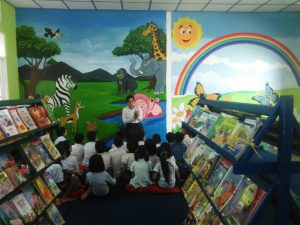
Photo of participants in Let's Read Project, Basic Middle School No. 7, Innsein

Let’s Read Project, Basic Middle School No. 7, Innsein

When we launched the “Let’s Read” project with RoomToRead, together with Ministry of Education, we split our budget for purchase of newly published books into 6 months apart so that we can buy new arrivals.  Moreover, we tell the school libraries to display only 70% of the books that they receive and keep the remaining 30% in store.  These books from store will have to be displayed 4 months later.

Furthermore, during the capacity building training and orientation to librarians, we emphatically informed the librarians that children are fast readers and that all the books in their libraries will be read by them in 6 months’ time.  Therefore, they need to find ways how to get new books.  Moreover, we always mentioned to our participating librarians that our normal project life cycle is around 2-3 years only.  We will support the heavy duty of the initial setup phrase and after the project lifespan, they need to look out for ways to get continuous support.

Since librarians know in advance that our support won’t be there forever, they started to look for future supports from community support groups.  In the case of school libraries, they started to talk to Parent Teacher Associations and School Support Groups.  In most cases, they have been able to get fresh books without our support.


  1. Regular Activities

Another key factor in making libraries sustainable is to do regular activities or programmes.  For example, if a community library or school library can arrange an activity or programme on a regular basis, they will attract people from the community and will have full support from them.  Activities can be literary talks or book review discussions, or technology training or discussion at a community library.  But the important thing here is the activity must be regular.  For example, a community library can host a book review discussion on last Friday of every month.

In a school library setting, if students can spend one period a week at the library, librarians can tell stories or practice reading aloud or shared reading activities with students together.  Again, this activity has to be regular.  The best way is to put a library period in the curriculum or time-table of the school.  MBAPF has been able to negotiate with the Ministry of Education to put one library period per week in all “Let’s Read” project school libraries.  By doing this, students are already aware of their library period time and prepared to go there.


  1. Ownership

This is one of the major factors in making libraries sustainable.  We always mentioned that any resources (books, furniture, shelves and digital devices) that we supported should belong to the community or school library. We mentioned up front that we will not be replacing devices or materials that were damaged or lost.  In the case of books, we trained the librarians how to handle books carefully in order to avoid tearing them apart.  In turn, librarians then show library users – especially children – how to flick through books with care.  At the same time, ownership creates meaning – “These books belong to you and you need to handle with them care”.

We have reported of loss of only 5 tablets out of over 1,000 devices that we donated in past the 5 years. Moreover, librarians know that we won’t be there forever to support them and hence they need to find ways to support by themselves or need to stand on their own feet.  They know that MBAPF will provide the initial heavy part only.

For example, we supported 4 tablets, free internet and training to a library in Mon State.  Once the library received the tablets, they started to invite students from nearby schools.  Since the community saw that so many students are using tablets, they raised funds to build a separate room for ICT training with 25 desktops.  Our initial investment is only about USD 500 to this library plus training.

When we launched the “Let’s Read Project” for school libraries, we mentioned to principals and teacher librarians that we were going to support books, shelves, carpet, reading tables and training.  Then, we asked what sort of things they can find from supporters to match our initial support.  We showed a few slides of some good examples from Indonesia and Vietnam where RoomToRead library rooms were decorated with wall painting by Parents-Teachers Association and School Support Groups.

All the 20 pilot libraries agreed to do the same by decorating by themselves.  In fact, we have a budget for decorating these rooms but since we were able to get matching support from the school’s side, we can reallocate this funding to purchase of more books and even expand our project size from 20 to 25 schools.  With their own contribution from the schools’ side, they are taking more responsibility rather just accepting donation from sponsors.

At the same time, we asked principals and teacher librarians to ask students to volunteer at the school library.  The principals have to acknowledge these volunteer contributions at the schools morning assembly time.  This work is extremely successful as many students started to volunteer at the school by sorting out the books and also helping the checking-out of books.  With the development of this sense of ownership, these school libraries can stand on their own feet.  At present, some school libraries are even opening up on weekends to attract other community people and other students.  This gives the reciprocal effect as many community people saw this good cause and they started to contribute books, shelves and reading tables.


  1. Partnership

Finding the right partners and maintaining the relationship is an art in this world.  Libraries can not be sustainable if partnership is lacking.  Partnership has to be transparent with mutual respect, the taking of responsibility and accountability.  It can be bilateral or multi-stakeholder.

As MBAPF is a local Non-Governmental Organization, our partnership structure works along two dimensions.  The first one is partners and sponsors who are willing to help our Myanmar libraries.  They can be international developmental organisations, universities, corporations, government ministries and other local civil society organizations.  The second one is partners who are willing to get support from us.  We have to select carefully for those recipients from us as they have to meet the requirements of their local community.  With these two dimensions, MBAPF acts efficiently and effectively to reach the goals of community as well as expectations of sponsors and partners.

The first dimension or supply side is based on trust building and transparency. MBAPF has to work constantly to look out for potential partners and sponsors of our project in order to ensure the sustainability of our projects.  This can be made through participation in various conferences, workshops, presentations and meetings.

At the same time, we have to understand the objectives of these sponsors.  For example, when we tried to look out for potential partners for free internet (data) and devices in 2013, we tried to meet with all the telecom operators in the country.  Some operators are trying to set up telecentres and in fact, they have to invest heavily on infrastructure such as buildings.  Therefore, we were able to convince Ooredoo Myanmar to use the existing infrastructure which Myanmar has as a hidden treasure of over 6,000 community based libraries.  Ooredoo can even cut cost as they don’t have to build extra buildings.
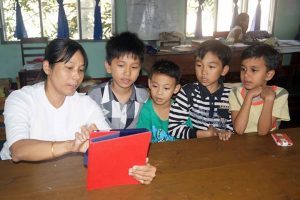
Participants in a Mobile Information Literacy class at Taungoo IPRD Library

Participants in a Mobile Information Literacy class at Taungoo IPRD Library

In 2015, we engaged with the Information School and Technology and Social Change (TASCHA) from University of Washington.  They have developed a digital literacy curriculum which we later customised into a Mobile Information Literacy curriculum, as over 80% of people in Myanmar go online using their smart phone.  In other words, we always try to match with demand side of the equation.

At the same time, we have to know our areas of strength also. When we were developing out school library revitalisation project under the Let’s Read project, we had to build a support group in communities where teacher librarians needed help.  Through this, we have already developed our Beyond Access Myanmar library project and we can identify strong and outstanding community librarians who can work with nearby schools.  We can even identify a lot of useful information from community librarians about which schools have open- minded people and which schools are passionate about school libraries.  That is why, we were able to select our initial 20 pilot school libraries. We are really grateful for our community librarians’ input into this.

The second dimension or demand side is also hugely important. The size of libraries, the number and type of members that they are serving, what programmes they are running, the presence of ICT tools and a scalable model are all important points to consider whether a community library can be a recipient of sponsorship.

MBAPF gives highest attention to human factor involvement of a community or school library.  This includes commitment and passion from librarian (in case of school library, commitment from principal as well), openness to new ideas, and a will to work with other community networks (in case of school libraries PTA and School Support Group as well).  These factors will decide the success or failure and at the same time the sustainability of a library.  I describe partnership is an art because it is very delicate.

With the right partnership from both supply and demand side, we have seen so many success stories.  When we launched Let’s Read project in 2017, we have already had a very good network of community libraries since we have been working with them since 2013.  Therefore, we have partnered with active community libraries to carry out the Monitoring and Support trips to schools which are located close to them.  This partnership of community and school library works very well as schools are willing to accept community support as they are short of resources, given that they don’t have trained school librarians.

We also gave training to community librarians on digital and information literacy. They in turn have become our master trainers and cascade their learning to others.  These community libraries are trusted organisations and hence when we launched the Tech Age Girls Myanmar project, we had full support from parents and community as well.  When we launched the “Navigator” project for safe migration, community libraries played a key role in partnering with local service providers such as the trafficking police, trade unions, legal aid organisations and other activists who are willing to help migrant workers to get right information.

For example, we conducted a workshop in Bago region in September 2018, where our community librarians are helping victims of people trafficking who are based in Thailand to get compensation from an agency with the help from a trade union.


  1. Capacity Building to librarians

21st century librarians have to know 3 main topics of capacity building.  These are 1) technical 2) technology and 3) soft skills. Technical skills include the traditional skills of cataloguing and circulation skills.  However, librarians have to understand to use electronic library automation systems.

Technological skill is different from technical skill as it consists of digital and  information literacy skills. For example, a librarian should be able to search for authentic information from Google Scholar for their users.  This is a technological skill.
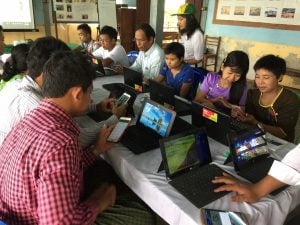
Communication for Development Training in Htan Tapin

Communication for Development Training in Htan Tapin

The last skill is soft skills which include customer service skills, communication skills, marketing skills, presentation skills and so on.  We often fail to look into technological and soft skills as most of librarians’ training is concentrated on traditional technical skills.

At the same time, any training that we give has to meet local demand and be applicable in the local context.  All our training is localised and delivered in the local language only.  For example, the Mobile Information Curriculum has been localised and has been given to over 5,000 community people through our library network. The demand for Media and Information Literacy (MIL) is so strong that nowadays we have to give MIL to other sectors such as civil societies, civil servants, university students and research firms.


  1. Monitoring and Evaluation

In all of the work we do, there are checks and balances system in place. We have to understand whether our projects are being carried out properly or not.  We are, in fact, more eager to learn about challenges than success stories so that we can improve ourselves.  In our Beyond Access Myanmar project, each library has to submit monthly reports via Survey Monkey. Indicators include number of users, types of users, types of programmes, and whether there is any support and collaboration from local or national organizations .  These data are analysed and put into our report and shared among our partners and potential sponsors as well.  By doing so, we will know which libraries are doing well and which ones need help.

In case of our school library ‘Let’s Read’ project, we have even tried to avoid the usage of monitoring and evaluation.  We call it monitoring and support. The reason to avoid calling it ‘evaluation’ is that we do not want teachers to feel that we are auditing them as they are already overloaded with a lot of work, both because of their teaching and library work.


  1. Institutionalization

Due to the nature of grants from international developmental agencies, each cycle lasts for 2-3 years.  These sponsorships have allowed for the first heavy life, and now the challenge is to find ways to get a sustainable model.

In the case of public and community libraries, IFLA, IREX, the Myanmar Library Association and the Ministry of Information helped MBAPF to draft a master plan for public libraries which become a precursor for the Public Library Law in Myanmar. We were able to mention all the requirements of community libraries to become a modern community centres in the master plan.  At the same time, MBAPF signed a Memorandum of Understanding agreement with the Ministry of Information to get a sustainable model for public libraries in Myanmar.

MBAPF is about to sign a Memorandum of Understanding with the Ministry of Education to roll out a consistent school library development system to the rest of the schools in the coming year. This MoU covers how to setup and manage a proper school library, teacher librarian training, selection of books, how to engage with the community and most importantly how to conduct monitoring and support for the implementing schools.  We have invited officials from both the Ministry of Information and the Ministry of Education to take part in all our trainings so that they can carry on even after our projects end.  In other words, institutionalisation is one of the key factors in sustainability of libraries.

 

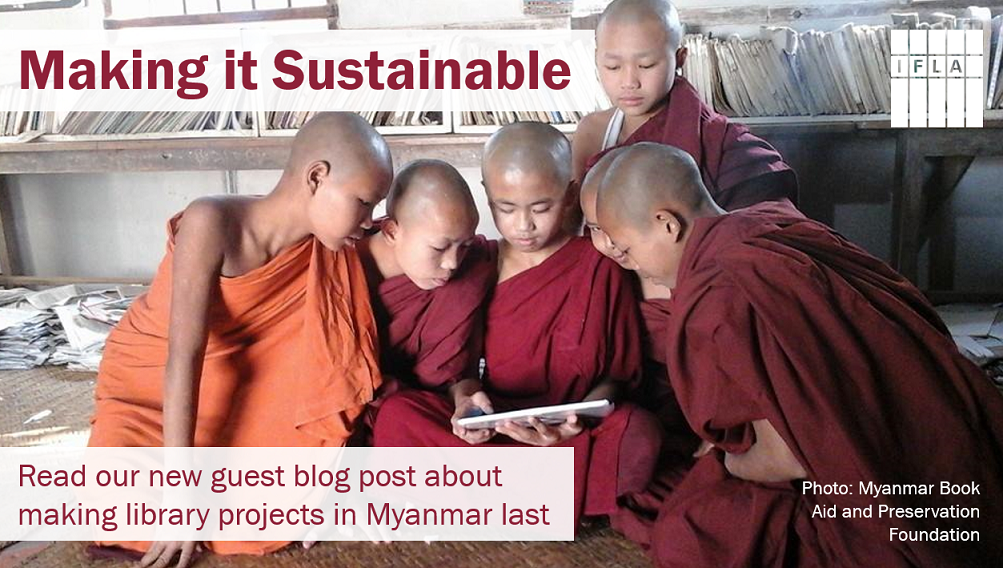
Buddhist Monks reading from a tablet at Tharsi Quarter Library

Tharsi Quarter Library

Conclusion

Even though I have been discussing the above mentioned seven points separately for the sustainability of libraries in Myanmar, there are many connections between them.  For example, in order to get fresh books, librarians have to partner with local publishers and parent-teachers associations.  We have full confidence that libraries will be sustainable with the effective implementation of these points.

Finally, I would like to point out that no matter how advanced technologies are in the 21st century, basic human factors of passion, dedication and commitment will bring sustainability of libraries in Myanmar and elsewhere.

6 Days to Human Rights Day: The Right to Education is The Right to a Library

The second in our series of daily blogs leading up to the 70th anniversary of the Universal Declaration of Human Rights focuses on education. This is also the subject of a major global conference – the Global Education Meeting – taking place in Brussels on 3-5 December.

It underlines the vital and complementary role that libraries play to schools and other formal education institutions in ensuring that everyone has the possibility to learn and improve their life.


The right to education features in Article 26 of the Universal Declaration of Human Rights. It is a key enabling right, one that should give everyone the possibility to play a full part in society in the future. This is borne out by the evidence – some of the most spectacular stories of successful development in the last century have been based on investment in teaching and learning.

Yet when we discuss education, it is easy to focus on schools and universities – ‘formal education’. Indeed, many people associate learning with sitting in a classroom or lecture hall, and absorbing knowledge.

Of course, many libraries are based within schools and universities, providing students and teachers with materials and skilled support. They can even be the heart of their institutions, as is the case for some school libraries.

However, learning is much broader than this. And it needs to be. The world we live in, and the jobs we do, are evolve and become very different from those for which schools prepared us. Formal education can offer a valuable starting point, but it cannot be enough.

This is where the world’s 350 000 public libraries can come in. As was recognised in the original UNESCO Public Library Manifesto in 1949, libraries are ‘a living force for popular education’.

Many of the countries which do best in terms of formal education also invest heavily in their libraries, such as Finland and South Korea, in order to promote the right to education throughout life.

This is just as true today as almost 70 years ago. This blog looks at two ways in which libraries complement formal education.


Helping Young Learners in the Community

In many countries, libraries have a strong focus on supporting young learners. They are part of the ecosystem that ensures that children have access to books from a young age, especially when parents are not able to buy books themselves.

There are many examples, for example those run through Boekstart in the Netherlands, which provides valuable support to parents – and a complement to schools – in developing early years literacy.

As children grow, they offer a different environment – quieter often than school or home – which for some at least can make a real difference to their chances of success.

Libraries can also fill in gaps where schools are not able to offer the resources – or spaces – for young learners. Many of the projects run by EIFL’s Public Library Innovation Programme focus on giving young people access to tools, materials, and support they may not get elsewhere.

Libraries can also provide skills, for example media literacy or coding clubs, which help children grow, develop, and seize opportunities.

As set out in an IFLA article for World Teachers Day, librarians and teachers are natural partners.


Education Throughout Life

Of course education does not stop at any particular age. As highlighted in the introduction, changing technologies and changing jobs mean that people need to continue to learn.

Libraries can provide a vital gateway in this respect. Many offer basic education about how to make best use of the internet, for example to access eGovernment services or look for a job.

Some provide more advanced course in coding for example, or programmes aimed at personal fulfilment, such as creative writing or local history.

They can be attractive – and effective – as venues for learning precisely because they are public buildings, but are not as intimidating as formal education institutions.

They are particularly important for refugees, the focus of this year’s Global Education Meeting. For people arriving in a new country, at whatever age, there is always a need to learn, be it language, skills, or simply how the system works.

Libraries across host countries have looked to reach out, providing specific resources and support, especially around languages. And in refugee camps, actors such as Libraries Without Border are bringing these benefits to people who might otherwise struggle to carry on learning.


If the right to education is to be a reality throughout life, the need for libraries is clear. Libraries need to be a core part of education, training and lifelong learning strategies, engaged in conversations, and supported accordingly.