Tag Archives: Australia

Attending the IFLA Information Futures Summit 2024: A Grant Winner’s Experience

This is the third and last post in a series tracking the experiences of the ARL grant recipients who attended the Brisbane summit.

Adi Ela Radini Davuilevu, a library information assistant at Fiji National University, generously contributed to this post.

I had the privilege of attending the IFLA Information Futures Summit 2024, held in Brisbane from September 30 to October 3, as a grant winner sponsored by Sage. This summit provided a valuable platform for library and information science (LIS) professionals to explore emerging trends, share insights, and discuss the future of information services globally.

Among the diverse sessions and discussions, Ms. Gina De Alwis led one of the most impactful presentations I attended. Her session delved into the status of Continuing Professional Development (CPD) offerings for LIS employees in selected Asian countries. Through her detailed analysis, Ms De Alwis shared five significant findings, shedding light on progress and ongoing challenges in LIS professional development.

One particularly concerning finding was the limited CPD programming across many regions. Numerous programs were repeated, leaving gaps in innovative learning opportunities for professionals. The absence of structured LIS curricula further compounded the issue, making it difficult for employees to advance their skills or stay updated with evolving industry demands. Ms. De Alwis also identified several critical barriers to CPD success, including a general lack of interest among employees, mainly due to limited opportunities for career progression.

This session underscored the need for a more proactive approach to developing diverse, forward-thinking CPD initiatives to meet the aspirations of LIS professionals. As a grant winner, this experience has inspired me to advocate for improved CPD structures within my network, aiming to foster a more robust culture of continuous learning and advancement in the LIS field.

The memorable experiences at the IFLA Information Futures Summit in Brisbane, Queensland, Australia were significant

 This post is the second in a series of three that track the experiences of the beneficiaries of the ARL grants to attend the Brisbane summit.

This post is generously contributed by Pham Ba Toan, Vietnam National University, University of Science.

 Attending the IFLA Information Futures Summit in Brisbane, Australia, for the first time, with sponsorship from SAGE and the IFLA ARL Section, was a memorable experience that brought many emotions. I was surprised and excited to find out I had been selected to attend this event. IFLA is one of the largest forums in the field of libraries and information, attracting top experts from around the world.

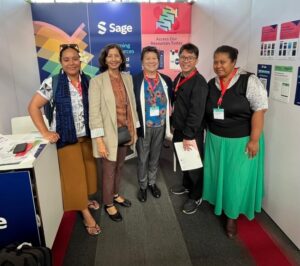
        

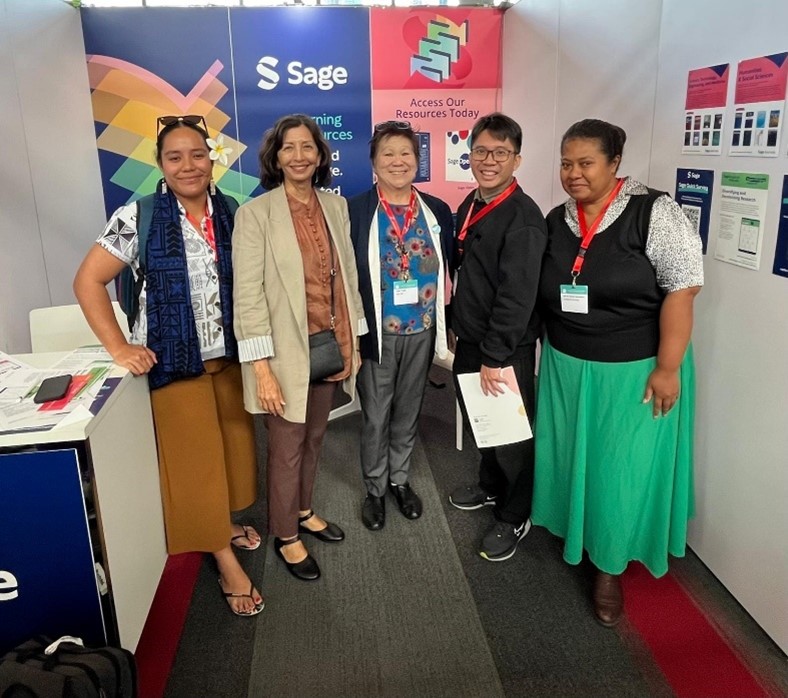
Figure 1: Thank you for the participant grant supported by the IFLA ARL Section and SAGE Publisher

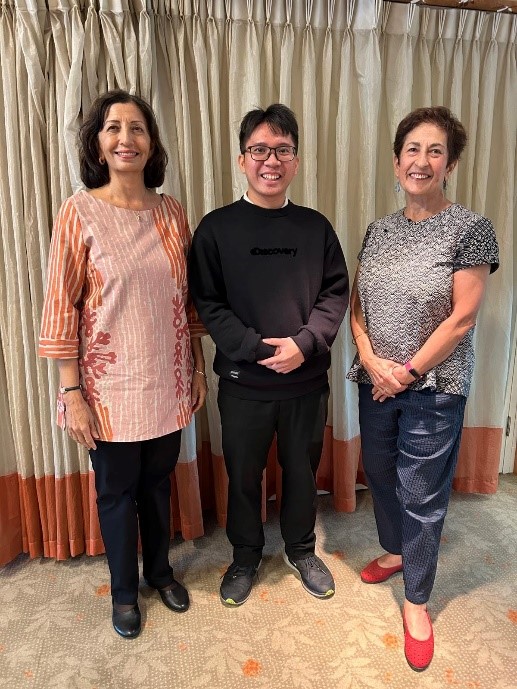
Before the Opening day, I was invited to the IFLA Asia & Oceania Division with all IFLA Asia & Oceania Committee members. Mainly, I had a photograph with Gulcin Cribb and Jayshree Mamtora. It is a beautiful time to listen to the practices of colleagues in the IFLA Asia and Oceania Division and the plans people will prepare and organise next year.

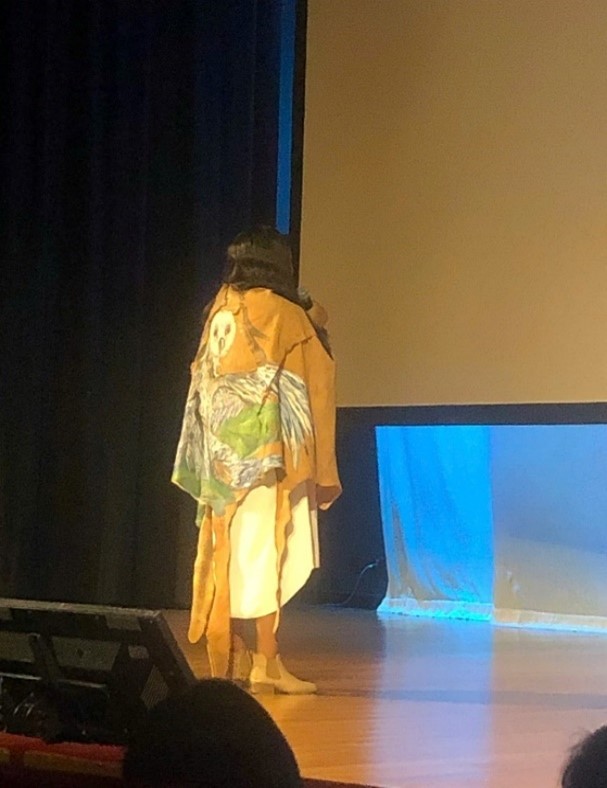
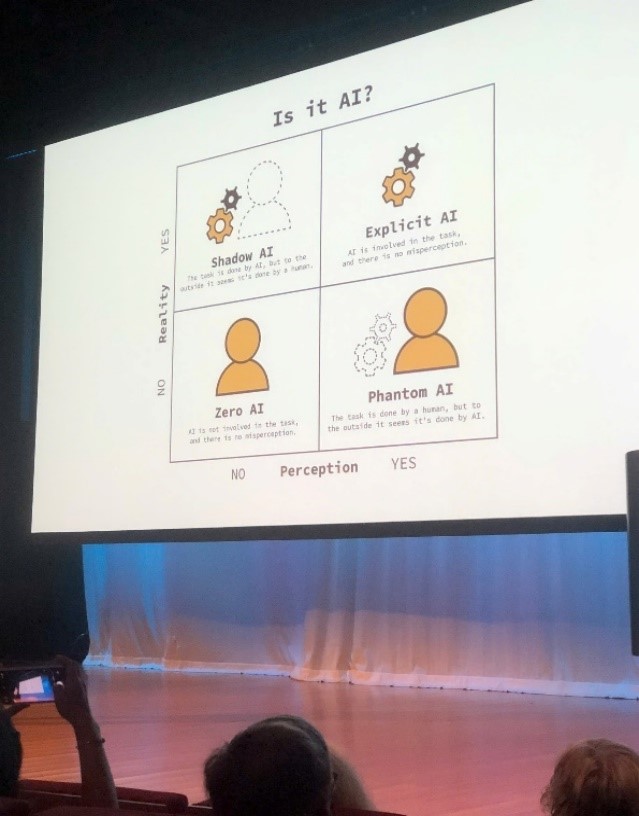
In the Opening Session, I was amazed by the cultural performance of a Native Australian girl with her native song and Tyto alba or barn owl symbolic cloth, which is preserved and protected by many descendants. “AI and the Rise of the Digital Minions”, presented by Marek Kowalkiewicz, attracted and affected my work. The AI detection features are incredibly beneficial and practical in the AI rise era based on the Knowledge Creation Map. When applying this, I can recognise AI and understand AI nutrition, which is mentioned in his presentation.

Figure 2: The meaning of Tyto Alba and her Native Culture Preservation Effort story
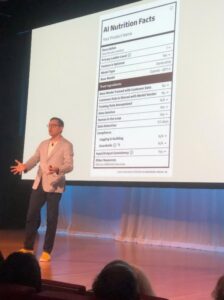
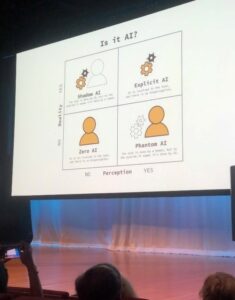
 

Figure 3: AI Detections and Nutrition Facts

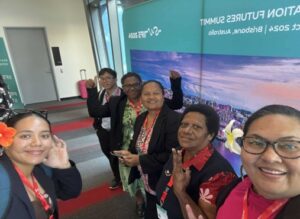
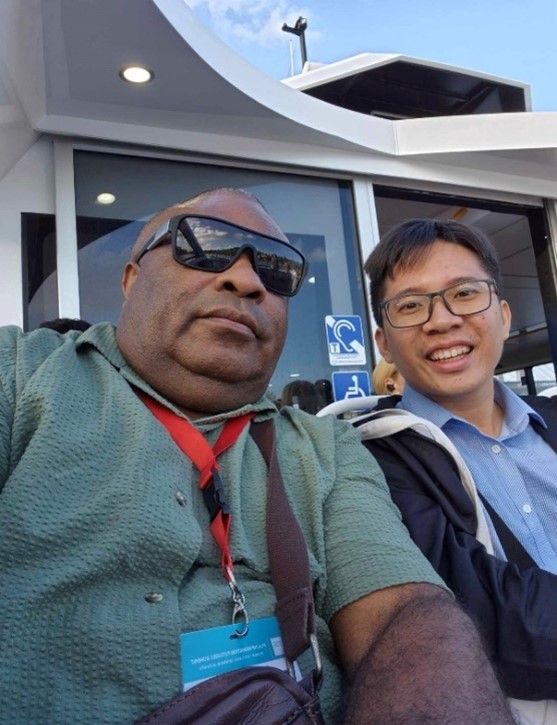
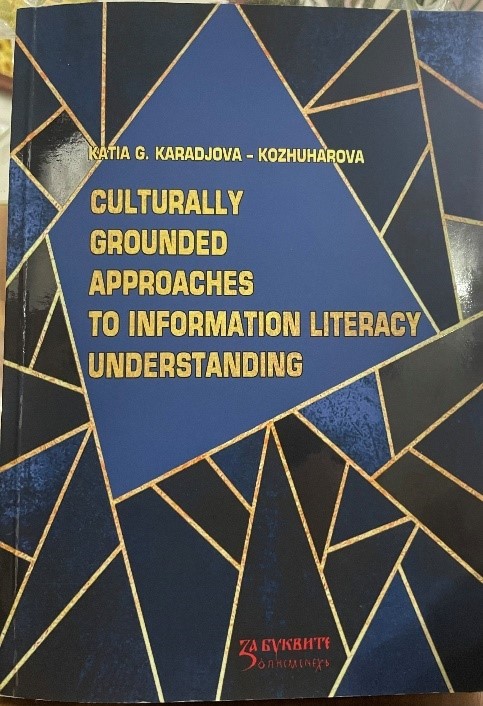
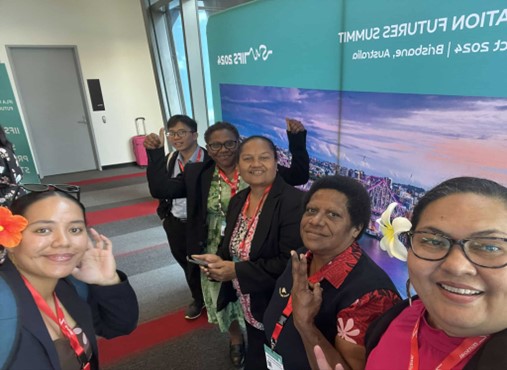
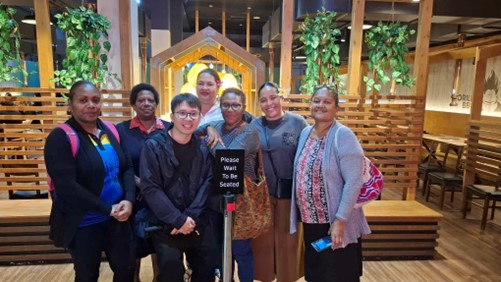
As “Stronger Together”, after each session or summit day, I often had a chance to meet many multicultural friends and chat with them on topics and social life. I met and connected with friends in Oceania nations, including Nelly, Nina, and Lonneth from Vanuatu, Fiji, Miraneta and Ane from Samoa, Kim from New Zealand, and Benzamine from Papua New Guinea. Also, I received a gift for incorporation on information literacy research from Katia, Associate Dean of Research & Assessment and Professor at Georgia Southern University,
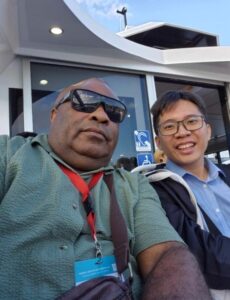
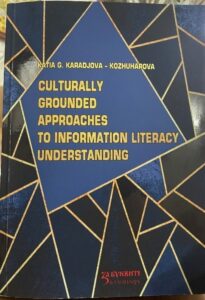
Figure 4: International friends met and connected at the IFLA Information Futures Summit

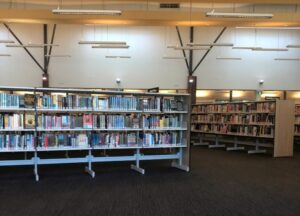
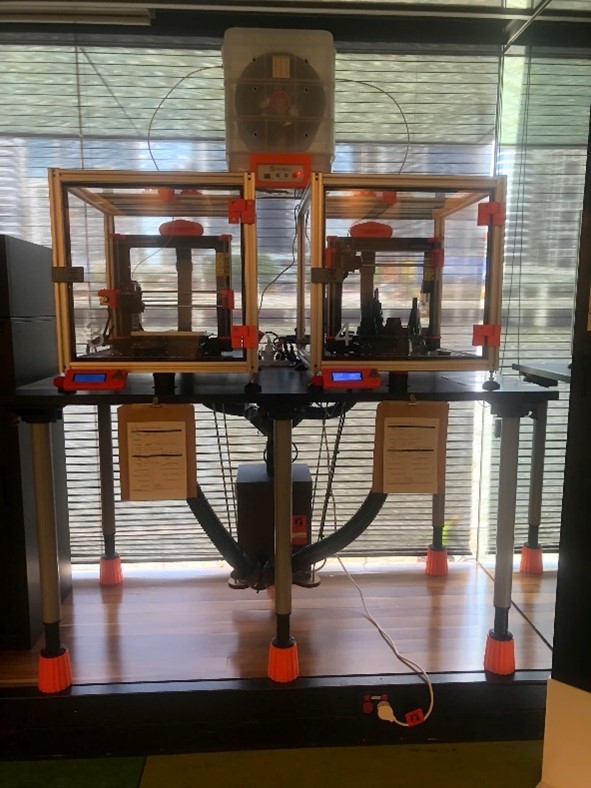
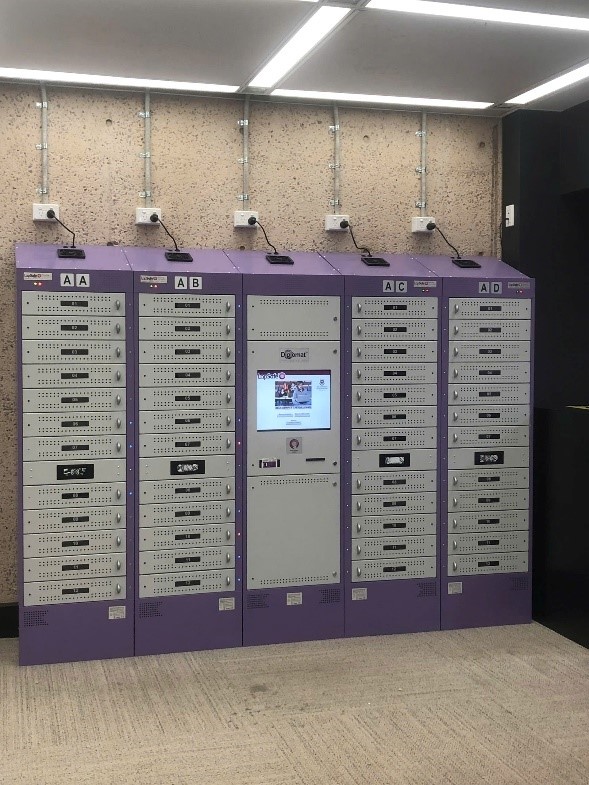
Exploring the Library tour, in my opinion, is one of the best experiences, besides IFLA Summit sessions and IFLA colleagues. I visited three kinds of libraries in Brisbane and GoldCoast, Australia. Exploring with Benzamine, the State Library of Queensland, and the University of Queensland Library is a fantastic tour with the service and technological advancement supporting patrons in reading, learning and researching. Mainly, I was surprised by a Laptop borrowing system in the UQ library where students could exchange or store their laptops and the Edge space where patrons can use 3D printing, laser cutting machines and others such as Makerspace. Otherwise, I travelled to Broadbeach Library, where the community can learn and amuse with many kinds of titles such as literature, sci-fi, etc.
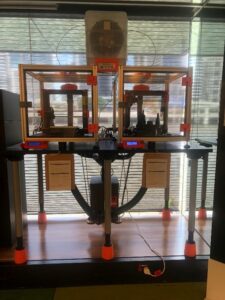
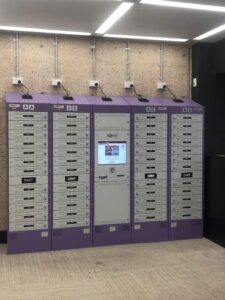
 

Figure 5: Some of the photos on the Library exploration tour
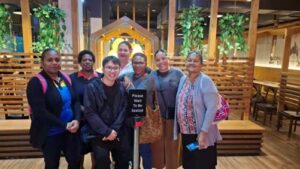
Figure 6: A dinner with library colleagues after the IFLA Information Futures Summit

As a young librarian, I participated in the IFLA Information Futures Summit and gained valuable insights into the significance of artificial intelligence and technological advancements. I realised that connection, collaboration, and community development are emerging as essential trends and missions for libraries of all types. This is particularly relevant to my current role, where I focus on engaging with students, collaborating with student clubs, and preparing training courses. I am grateful for the opportunities to explore, learn, and connect with fellow library colleagues.

My Experience at the IFLA Information Futures Summit 2024

This post is by Ane Ah Poe, one of the beneficiaries of the ARL grant to attend the IFLA Information Futures Summit 2024 in Brisbane, Australia.

Attending this three-day Summit conference with more than 700 participants and 70 nationalities can be an overwhelming experience, exhilarating and enlightening at the same time. This experience not only expanded my knowledge but also taught me more and more about the crucial role of libraries in all countries. This also provided some invaluable networking opportunities and lessons along the way. I am beyond grateful to have received the ARL Grant, which allowed me to attend and learn more about the importance of our roles and responsibilities in amplifying and advocating for our libraries.

This invaluable experience has been thought-provoking and opened worldwide access to challenges and solutions. The vibrant venue and the beautiful people have charged the atmosphere with energy to the point of people engaging in animated discussions and catch-ups. The organisers have done a marvellous job organising this summit, from the well-designed venue, spacious halls and breakout rooms for presentations to the exhibition booths for gathering and collecting more information and resources. As I navigated around each fruitful session, I felt excitement and trepidation as each panel member brought a unique perspective, sharing innovative ways and insights drawn from their experiences and expertise.

All keynote speeches were profoundly highlighted at the conference. Each speaker shares their views and thoughts on moving forward with the modern use of technology, especially AI. We cultivate and captivate the ethical implications of AI in our everyday life. This sparked a thought: as our developed countries are racing and generating AI, I wonder if our Pacific islands are also keeping up with this.

The IFLA strategy should be a great framework and a guideline for your work in your country. This can inspire more library associations to work together for a better future today or tomorrow. The trendsetter can navigate your workspace and create objectives to guide and transform your roles into a more active and generative opportunity to promote and advocate for your libraries.

But beyond the sessions, this Summit provided me with ample networking opportunities. I always find good conversations with people during coffee breaks and meals, engaging with our dear participants from various backgrounds and industries where we share our workspace, experiences, aspirations and challenges. Connections were forged with some professionals whose work I admired, and I learned about their journeys, gaining insights that could apply to my career. There were friendships made in these short periods, and contact details were exchanged to keep in contact and work together.

As the conference ended, I reflected on multiple information and insights I gained. As I head home, I know the renewed sense of purpose inspired me to implement what I learned from this Summit. The connections felt meaningful, and I look forward to nurturing these relationships in the future.

Lastly, my attendance at this Summit was more than just an opportunity to learn and network. It was a transformative experience that ignited a passion for my workspace. I return home with new knowledge and a network of inspiring individuals with the same enthusiasm for innovations and amplifying our libraries. Conferences like this remind us of the power of working together. Collaborating, forging partnerships, building trust, and continuous learning in an ever-evolving platform for our communities and within our libraries. Our theme for this Summit is “Stronger Together!”

PIDs in Australia

This post is by Matthias Liffers. He is the Product Manager for the Persistent Identifier Services at the Australian Research Data Common

Persistent Identifiers (PIDs) are a core component of a national information infrastructure and key to world-class research and innovation. In 2024, the Australian Research Data Commons released the 2024 Australian National PID Strategy – developed through a coordinated, comprehensive and collaborative process and informed by international developments and the international PID environment.

But what is a PID? It is a globally unique, unambiguous, long-lasting reference to a particular person or thing in the research ecosystem. A typical PID consists of two parts: the identifier itself, which is a unique string of characters and/or numbers; and an accompanying public metadata record.

For ease of use, most PIDs can be displayed as a URL that you can visit in your browser in order to access the metadata record. For example, the PID that refers to me (Matthias Liffers, the author of this post) is https://orcid.org/0000-0002-3639-2080. If you visit that URL, you can see a human-readable representation of the metadata record known as a landing page.

I have only one ORCID, and that ORCID will always refer to me. If another person called Matthias Liffers creates an ORCID, they will get their own. Admittedly, my name isn’t very common, but it makes more sense if you think all the researchers that are called Kim Lee or John Smith.

There are many PIDs, each suited to identifying a particular type of thing. An ORCID iD, for example, is designed for researchers and other contributors to research, whereas a DOI is more appropriate for a research output like a publication, a dataset, or a piece of research software. There are also PIDs for organisations (ROR ID) and projects (RAiD).

Why are there so many different types of PID? Because the metadata required for a human is quite different to the metadata you would need for a publication. The metadata schema for each type of PID is tailored to the type of thing you want to identify.

Generally, the person or organisation responsible for a particular thing will mint – create and assign – a PID to it. For example, a researcher would create their own ORCID and keep it through their whole career, whereas a publisher would mint DOIs for the articles in their journals. Items deposited into trustworthy repositories like Dryad, Figshare, and Zenodoreceive DOIs. If you work at a research institution, you might have access to an institutional repository that can also assign DOIs.

You might have noticed that my ORCID record contains references to my current and past employers, my education, and my publications. This demonstrates where the real power of PIDs lies – being able to make links between PIDs, so that you can establish unambiguous relationships between authors and their papers, their dataset, their affiliations, their projects, and their funding.

This global network of relationships is known as the research graph and, as more researchers and research organisations apply PIDs to their contributions to research, it gets easier to find research, establish its trustworthiness, and measure its impact on society.

To learn more about the use of PIDs in Australia, visit the Australian National PID Strategy and Roadmap website. On top of the PID Strategy, the ARDC is leading the development of RAiD – the Research Activity Identifier, as the global Registration Authority for ISO 23527:2022.

Australia isn’t the only country working on a National PID Strategy. A couple of weeks after the publication of this blog post, PIDfest 2024 will be taking place at the National Technical Library of the Czech Republic in Prague from 11-13 June 2024. It is an opportunity for PID providers like ORCID, DataCite, Crossref and the Australian Research Data Commons to come together, share knowledge, and work on pain points to make sure that when someone turns on the tap for research information, it flows.


Research Support Community Day, Australia

Author: Jayshree Mamtora, Manager, Scholarly Communications, James Cook University, Australia

In Australia, Research Support Community Day (RSC Day) has become the premier professional development event for research librarians, and open to anyone working or interested in research support and related services. It started “small” with the very first event held in person at Griffith University in Brisbane in 2013 with just 100 participants. This year close to 300 participants attended the 11th Research Support Community Day/s held online from 27–29 June 2023.

RSC Day started as a free, annual event and has remained a free, annual event. Due to circumstances and world events the event has been run online since 2021, and over a period of three days. It is held in three-hour blocks each day to enable as many colleagues as possible in different time zones in our region wherever they may be – Australia, New Zealand or further afield – to be able to easily participate.

Each of the three days is headlined by a keynote speaker followed by a series of speakers who can select a 15–20-minute slot depending on their chosen topic or opt for a five-minute lightning talk giving as many different speakers as possible to present on a variety of different research-related subject areas.

We have been fortunate to have had the support of Dr. Cathy Foley, Australia’s Chief Scientist who has presented a keynote at two of our recent events and who has announced open access to research outputs as one of her four strategic priorities. Other keynote presenters have come from a variety of research backgrounds including senior research academics, research administrators and representatives from research funding bodies.

As founding member and Chair of the Research Support Community Day organising committee, I invite you to check out the recordings of the online presentations from our YouTube Channel. You can view the details of all 11 events from our website: rscday.info.

We are very grateful to Sage APAC for their continued support and sponsorship of our event, as well. as the many institutions that provide staff or in-kind support to ensure its continued success.

[email protected]


State Library of NSW and Wikipedia unite in Australia’s first GLAM residency

Wikipedia is set to experience a dramatic increase in Australian content with the State Library of NSW becoming the first Australian cultural institution to engage a GLAM (Galleries, Libraries, Archives and Museums) Wikipedian-in-residence.

According to Alex Byrne, NSW State Librarian & Chief Executive: “There’s limited Australian content on Wikipedia compared to USA and Europe, and we want to provide more. The Wikipedian-in-residence will enable local knowledge to be more easily accessible on one of the world’s most popular websites.”

Over a 14-week residency Wikipedian Gillian White will equip 20 library staff with the skills to create and contribute authoritative content to Wikipedia on the significant people, places and events in NSW and Australia.

“Librarians are a natural fit with Wiki as they are trained professionals with a passion for sharing knowledge, and appreciate the importance of referencing credible sources within their online contributions – it’s not commonly known that Wikipedia articles and edits must be accurately referenced,” says Ms White.

The newly trained library staff will be using the State Library’s extensive collections on Australia and its region to contribute valuable content to Wikipedia articles on the Blue Mountains, the convict era, WWI servicemen, Indigenous sacred sites, and many others.

“The State Library is committed to making content from our significant collections more accessible, more discoverable and re-usable, and the GLAM Wikipedian-in-residence project is an important step to the Library becoming a key global resource,” says Alex Byrne, NSW State Librarian & Chief Executive.

Source:  SLNSW Media Centre