
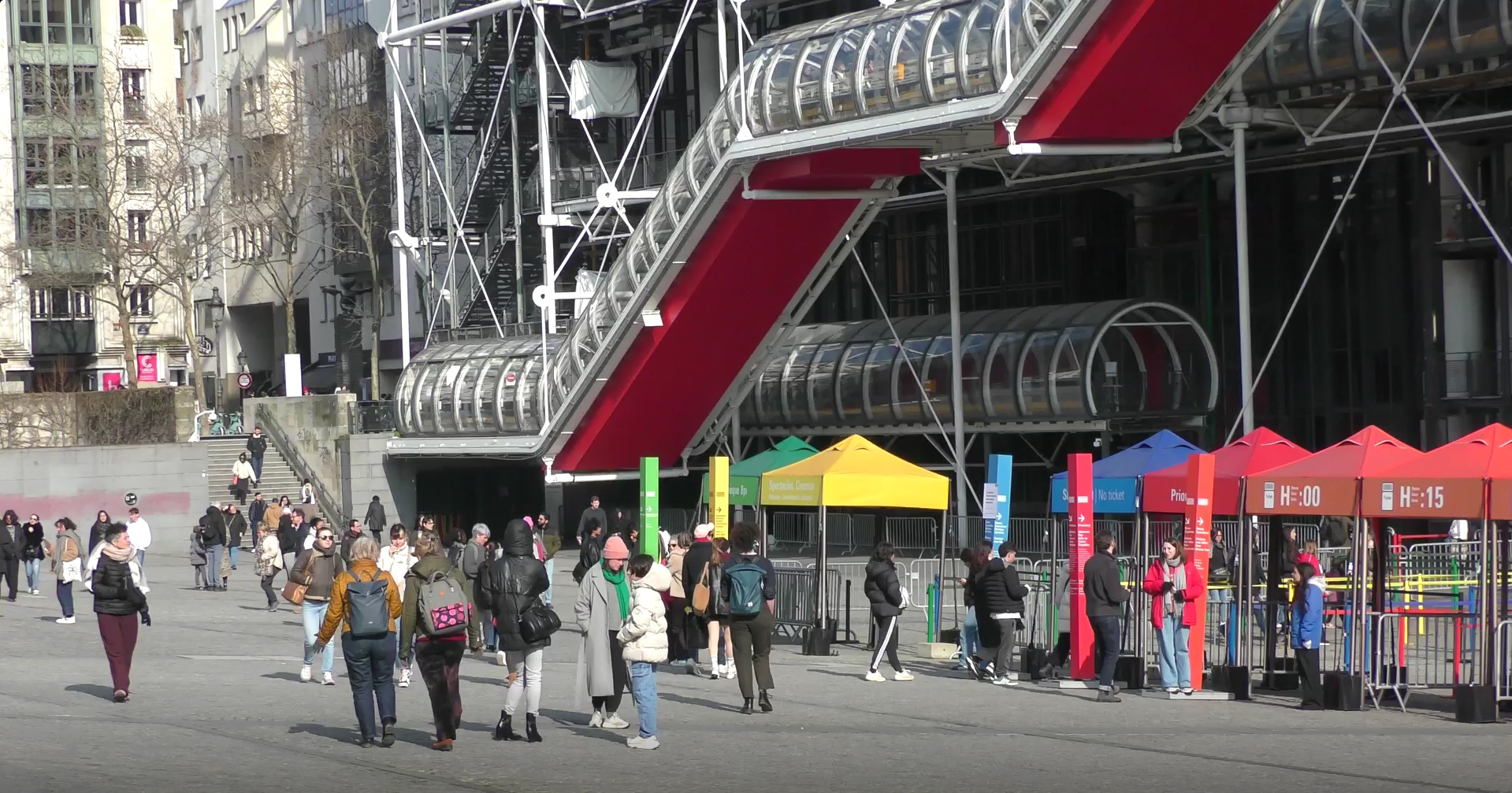
People come and go at the Bibliothèque publique d’information. (Bpi). Image source: Camilla Notarbartolo, ” Author photo” 2025.
Introduction
In a time of profound transformation for public libraries, investing in workplace learning and fostering international collaboration is more crucial than ever. From January 19 to February 28, 2025, with the support of the Milan Library System, I had the opportunity to participate in the “Résidence Culture” programme at the Bibliothèque publique d’information (Bpi) in Paris—an initiative supported by the French Ministry of Culture that offers six-week professional placements to French-speaking international librarians, providing a unique framework for professional development, cross-cultural exchange, and strategic reflection.This residency offered me the chance to explore how the BPI structures training and lifelong learning for both staff and users. It also allowed me to gather insights to enrich professional development initiatives in Milan and to reflect on the design of future services for users—especially in light of the upcoming BEIC (European Library of Information and Culture), Milan’s new central library scheduled to open in 2027.
Objectives and Approach
My main goals for the residency were to:
- Analyse Bpi’s strategies for staff training and user learning
- Identify transferable practices to enhance professional development in Milan
- Explore tools to strengthen international professional mobility
- Observe services and organisational models relevant to the BEIC project
Over the course of six weeks, these objectives expanded into a broader strategic exploration of library services and governance, through:
- Structured interviews with BPI staff and managers
- Observation of daily operations across departments
- Study visits to libraries in the Paris region (including the BnF, the Paris municipal library network, the Plaine Commune network, and the Val-d’Oise departmental library)
Lessons Learned: Training, Collaboration, Innovation
1. A Culture of Internal and External Learning
The BPI integrates formal and informal learning through:
- A structured internal training programme for staff
- A vibrant network of knowledge sharing events, including webinars, study days, and site visits
- Open-access resources via the Bpi Pro website, offering tools, reports, funding opportunities, and “How-to sheets” with replicable practices
This blend of internal capacity-building and outward-facing collaboration fosters a dynamic, peer-driven learning culture. The approach reinforces the idea that professional development doesn’t stop at the institutional boundary—it thrives on connection and exchange.
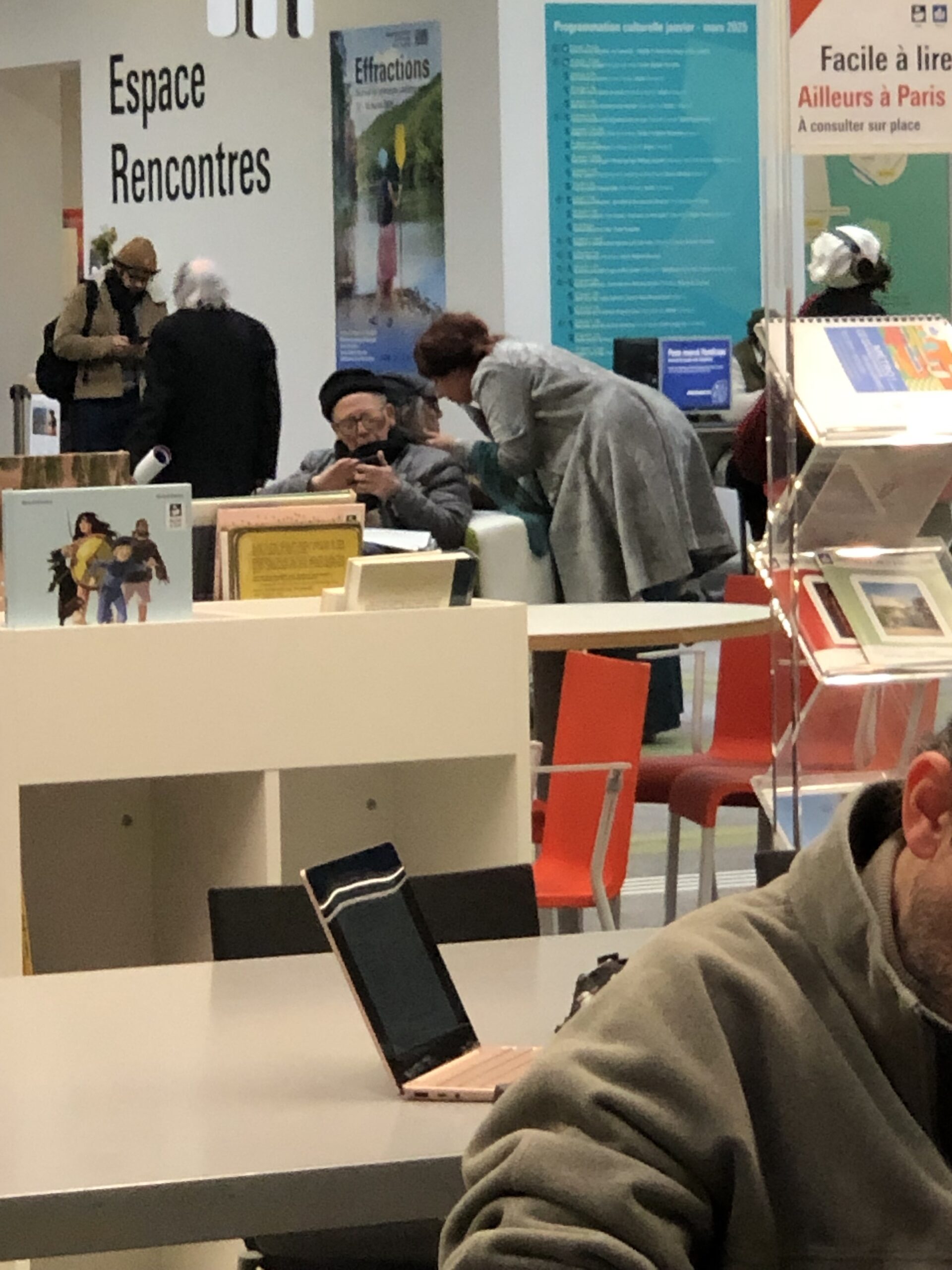 Espace Rencontres at the Bpi. Image source: Camilla Notarbartolo, ” Author photo” 2025. |
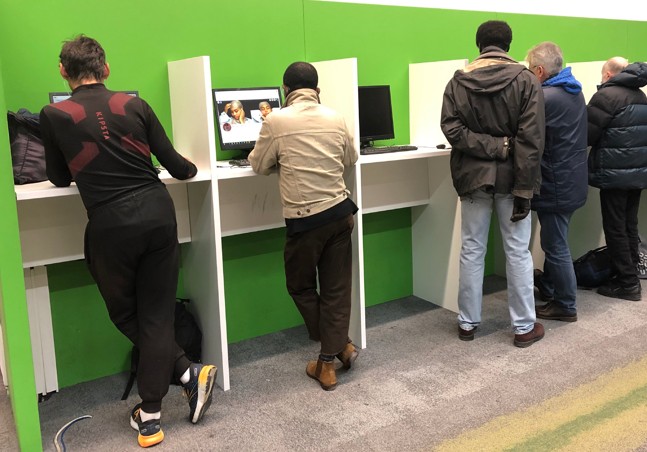 Everyday Learning at the Bpi. Image source: Camilla Notarbartolo, ” Author photo” 2025. |
2. Spaces That Embody a Learning Mission
The BPI’s open-plan, non-circulating model supports its encyclopaedic ambition: documents are always available, and the spatial design encourages spontaneous interaction between people, collections, and ideas. This architectural openness reflects a deeper principle of accessibility and equity, and offers inspiration for the design of Milan’s future central library.
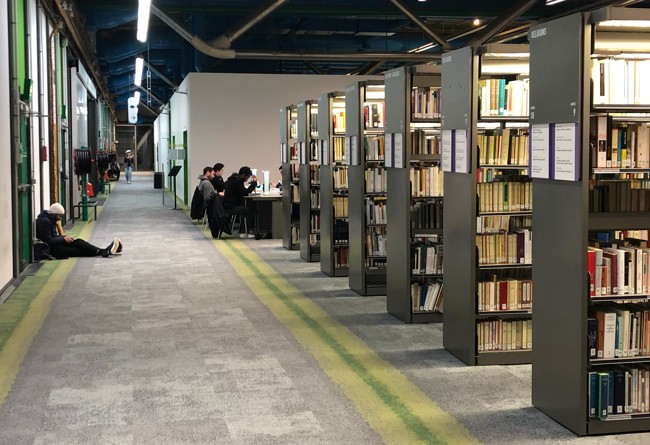 Make yourself comfortable at the Bpi. Image source: Camilla Notarbartolo, ” Author photo” 2025. |
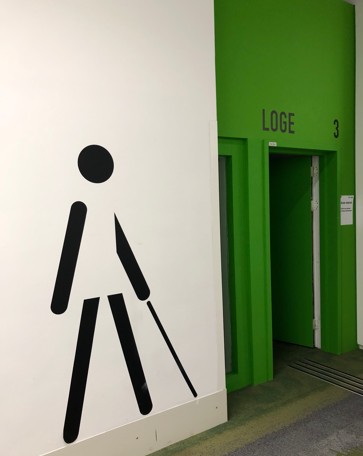 Accessibility at the Bpi. Image source: Camilla Notarbartolo, ” Author photo” 2025. |
3. Inclusive, Horizontally Organised Public Service
At the BPI, public service is a shared responsibility. Librarians, heads of departments, and senior staff all contribute to the reference desk in a collaborative spirit. This participatory model fosters a strong sense of purpose and connection with users, while flattening hierarchies and enhancing institutional cohesion.
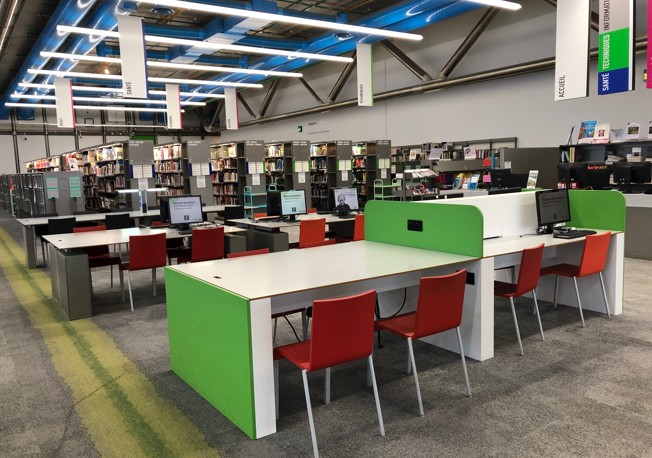
Horizontality at the Bpi. Image source: Camilla Notarbartolo, ” Author photo” 2025.
4. Specialised Departments for Research and Innovation
Several BPI departments stood out for their relevance to emerging library missions:
- Studies and Research: supports audience development and user studies
- Data and Access: works to optimise catalogue accessibility and digital services
- Technical and Multimedia Production: manages the logistics, recording, and dissemination of cultural events
These units demonstrate how transversal expertise can enhance learning experiences for both staff and users.
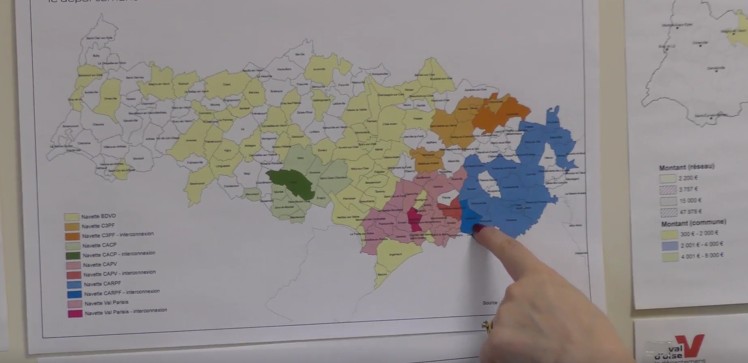
Data Visualisation through maps at the Val-d’Oise Departmental Library. Image source: Camilla Notarbartolo, ” Author photo” 2025.
Tools and Frameworks to Bring Home
The residency also equipped me with practical tools to inform training and organisational development in Milan, such as:
- BPI’s functional organisational chart and internal intranet—a model of clarity in task allocation and communication;
- France’s National Competency Framework for territorial librarians designed by the Ministry of Culture through a participatory process involving library professionals;
- the strategic use of data cards to efficiently manage interlibrary loans, observed at the Bibliothèque départementale du Val-d’Oise;
- transversal functions implemented by the City of Paris libraries and the Plaine Commune network;
- Best practices in accessibility at BnF, BPI, and local libraries;
- Examples of lifelong learning initiatives, including self-learning stations, knowledge-sharing and empowerment workshops, services to support the development of practical skills.
These references will help inform both staff development planning and the creation of innovative, user-centered services in Milan.
Local Reflections: Connecting to Mi Biblio Tour and Erasmus+ accreditation for mobility
This residency also reaffirmed the importance of peer-based, workplace learning—an approach we’ve embraced in Milan through the Mi Biblio Tour programme. These professional exchange visits between our libraries allow staff to observe, question, and learn from each other in their real working contexts. Like the BPI’s emphasis on cross-institutional dialogue, Mi Biblio Tour reflects a belief that our colleagues are often our most valuable teachers.
The thematic focus of our professional development programme, including Mi Biblio Tour, is aligned with the 2023–2026 Development Plan of the Milan Library System. This strategic document outlines four core priorities—Environment and Digital Transition, Proximity and Participation, and Accessibility and Inclusion—as guiding principles for the future of our libraries. These axes reflect a deep commitment to equipping citizens with the knowledge, tools, and skills needed to navigate a society in rapid transformation—one that is more innovative, equitable, sustainable, and welcoming to all.
This vision for peer-led development has recently taken a major step forward with the Erasmus+ accreditation awarded to the Milan Library System in early 2025. This recognition will enable us to support staff mobility across Europe, reinforcing the international dimension of our training strategy. Inspired by the BPI’s structured approach to knowledge sharing—particularly the use of fiches pratiques (practical guides)—we are now working to develop a similar tool in Milan to enable colleagues to document and disseminate replicable practices that they will observe during the mobilities. This format will allow us to capture the insights gained during exchange visits and study trips, making them accessible and reusable across the entire library system. In this way, individual learning experiences can become a shared resource, fostering a culture of ongoing improvement.
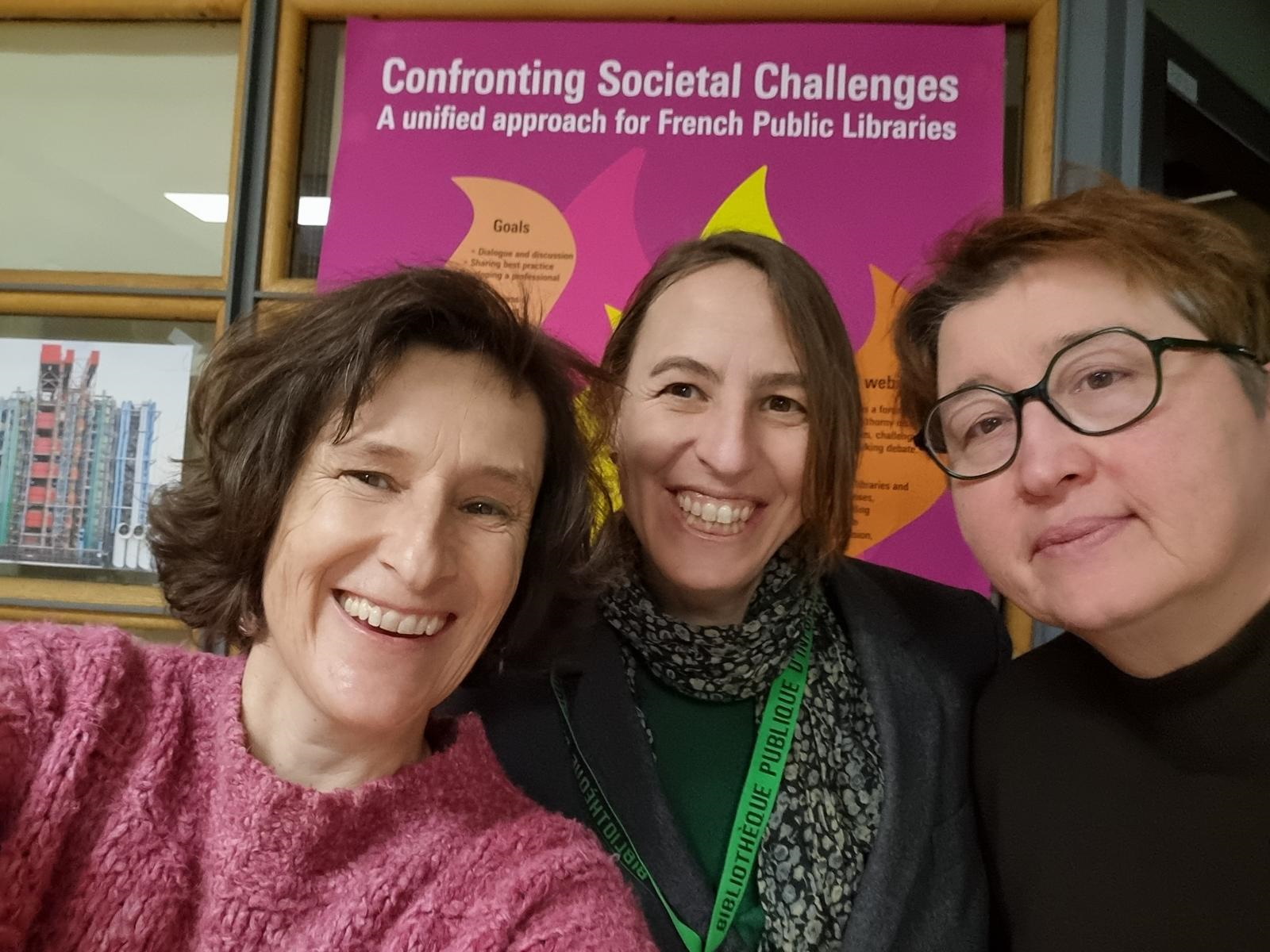
My colleagues at the Delegation for National and International Cooperation of the Bpi. Image source: Camilla Notarbartolo, ” Author photo” 2025.
Looking Ahead: A Vision for BEIC and Beyond
As Milan prepares to launch the BEIC, many of the practices observed during this residency will help shape its vision: from open, democratic spaces and transversal teams, to continuous learning for staff and users alike.
What I take home from Paris is not only a notebook full of ideas and a collection of video interviews with BPI colleagues, but also a renewed commitment to embedding professional development into everyday library life.
Final Thoughts
Workplace learning and international mobility are not add-ons—they are essential to preparing public libraries for the future. Whether through structured residencies or peer visits across the city, professional growth happens best in connection with others, across roles, institutions, and borders.
————————————————————————————————————-
Camilla Notarbartolo, Training Manager (Milan Library System)
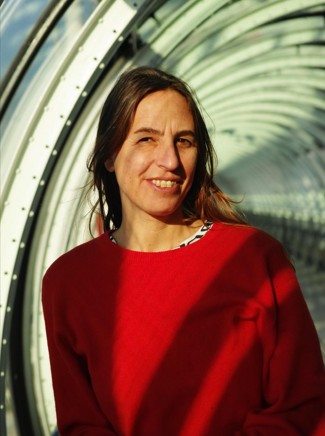
Camilla Notarbartolo
Camilla Notarbartolo is the Training Manager of the Milan Public Library System, where she’s responsible for the continuing professional development and workplace learning of library professionals, as well as for managing national and international mobility programmes.
Her role also includes planning and implementing EU-funded projects, coordinating the working group on lifelong learning for library users, and overseeing internships, apprenticeships, volunteering and community service activities.
She is a member of the IFLA CPDWL Standing Committee 2023-2027 and participates in the MetLib Learning Circle 2025-2026.