As the Chair of the IFLA Continuing Professional Development and Workplace Learning Section (CPDWL), I recently had the honor of attending a landmark event commemorating the 35th anniversary of the Comparative Education Society of Hong Kong at the University of Hong Kong (HKU), alongside the 40th anniversary of the HKU Faculty of Education, and the 30th anniversary of the Comparative Education Research Centre. This convergence of milestones provided a rich backdrop for profound discussions on the evolving needs of lifelong learning in our rapidly changing world, particularly highlighted during the keynote address on November 24, 2024.
Prof. Wing On LEE, former Executive Director at the Institute for Adult Learning, Singapore, provided the keynote speech on November 24th, titled “Comparative Lifelong Learning: Emerging Programs and Pedagogies for Developing New Knowledge and Practice for the Changing Economy”. He offered critical insights into how lifelong learning must adapt to meet the demands of what is variously described as Industry 4.0, the knowledge economy, and the future economy. The future economy includes the gig economy and platform economy, characterized by short-term contracts and the prevalence of freelance work over permanent jobs.
Prof. LEE’s insights are particularly relevant to the field of library and information science, a domain where continuing professional development and workplace learning are already integral. Lifelong learning is not a new concept for library practitioners; however, the idea of the 60-Year Curriculum (60YC) introduces a new paradigm that encourages educational models to serve an agile labor market more effectively.
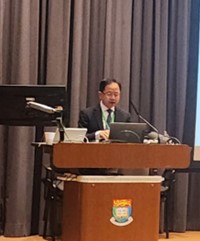 Prof. LEE delivers keynote address. |
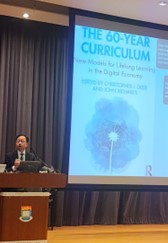 Prof. LEE discusses 60 -year curriculum. |
Lifelong Learning and Library Science
The 60YC proposes a lifelong educational pathway that encourages a new paradigm of thinking about learning and the education process and seeking to be relevant for people across a broad range of life and career transitions. It offers ongoing learning opportunities crucial for adapting to technological advancements and economic shifts. For library professionals, this could mean continuous training in digital literacy, data management, and other emerging areas crucial for staying relevant in the profession.
Workplace Learning and Library Professionals
The closest concept to the 60YC in our field is workplace learning, which, as articulated by Prof. Justina TAN and Prof. Wing On LEE in their 2024 book, Making Employee-Driven Innovation Achievable: Approaches and Practices for Workplace Learning, emphasizes the importance of learning that continues throughout one’s career. This approach is vital in library settings where the ability to innovate and continuously improve service delivery can significantly enhance user experience and operational efficiency.
Addressing Challenges and Inequalities
Furthermore, the Third International Handbook of Lifelong Learning (Evans et al., 2023) highlights several challenges, such as the low skills equilibrium and the social exclusion of vulnerable young adults. Library professionals can play a critical role in addressing these issues by providing accessible learning resources and programs that help bridge the skills gap and foster a more inclusive society.
Library and information science professionals, by leveraging their expertise in knowledge organization and dissemination, can also help mitigate the under-utilization of talents among migrants, as discussed by Marie Macauley, Ruud Duvekot, and Yann Jakub Bertier in the handbook. Making certain that prior qualifications and skills are recognized and valued is crucial for integrating migrants into their new communities.
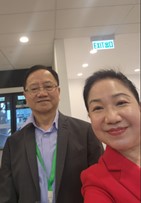
Prof. LEE and Helen Chan
Reflection
The discussions and learnings from the conference serve as a potent reminder of the critical role that lifelong learning plays in the library and information science field. As we move forward, it is clear that embracing models like the 60YC will be essential for developing resilience and adaptability among professionals. This approach not only supports personal and professional growth but also ensures that libraries continue to serve as essential pillars of lifelong learning in their communities. I am deeply grateful for the opportunity to have participated in such an enriching event and look forward to implementing these insights to further enhance the continuing professional development and workplace learning within our field.
References:
Evans K., Lee W. O., Markowitsch J., and Zukas M. (Eds.) (2023). Third International Handbook of Lifelong Learning. https://link.springer.com/referencework/10.1007/978-3-031-19592-1
Tan, J. and Lee, W. O. (2024). Making Employee-Driven Innovation Achievable: Approaches and Practices for Workplace Learning. London: Routledge.