
IFLA CPDWL | WLIC 2025, Astana
Dr. Jessica BrodeFrank, Clinical Assistant Professor and Digital Librarian at the University of Illinois Chicago, has prepared an insightful presentation titled “Digital Literacy & Crowdsourcing: Tackling Descriptive and Algorithmic Bias through Doing” for the upcoming IFLA CPDWL Open Session: “Navigating Opportunities and Challenges of Digital Transformation”, which will take place this August during WLIC 2025 in Astana. Her presentation focuses on addressing the intersections of digital literacy, crowdsourcing, and ethical artificial intelligence (AI), offering actionable strategies to mitigate bias and promote inclusivity in digital spaces.
Libraries and museums, as trusted sources of knowledge and community engagement, are uniquely positioned to advance digital literacy. Dr. BrodeFrank highlights their key role in educating the public about the opportunities, challenges, and ethical implications of digital technologies. By fostering lifelong learning, these institutions can empower individuals to navigate the digital world responsibly and effectively.
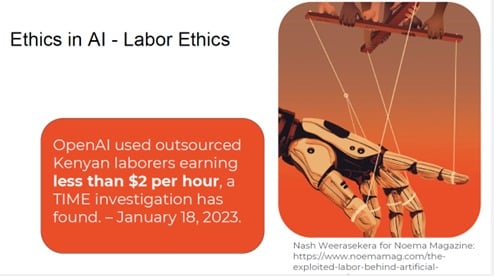
Figure 1. Presentation slide from Dr. Jessica BrodeFrank on AI labor ethics, focusing on outsourced labor and wage disparities in the AI industry.
One of the core aspects of her presentation is the importance of metadata. Dr. BrodeFrank emphasizes that metadata, described by Tammy Lee as “the connective tissue of the internet”, is essential for shaping discoverability and amplifying diversity. Without accurate and inclusive metadata, underrepresented voices remain invisible in digital environments, making metadata creation a critical tool for equity and inclusion.
Dr. BrodeFrank also highlights the potential of crowdsourcing as a participatory method to engage the public. By involving communities in metadata creation and cataloging, projects like Zooniverse and the Smithsonian Transcription Center show how libraries and museums can transform passive users into active contributors. Crowdsourcing enhances the discoverability of collections while fostering a sense of ownership and connection among participants.
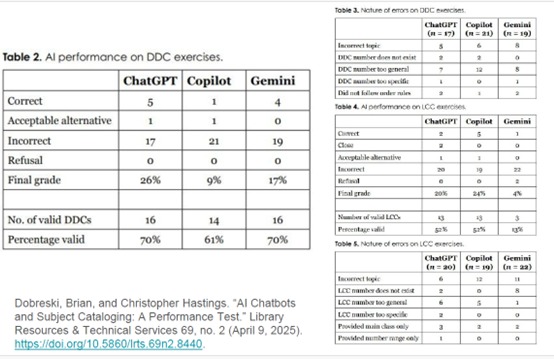
Figure 2. Presentation slide from Dr. Jessica BrodeFrank comparing the performance of AI chatbots (ChatGPT, Copilot, and Gemini) in DDC and LCC exercises.
Her presentation further addresses the ethical challenges of AI, including algorithmic bias, labor exploitation, and environmental concerns. Dr. BrodeFrank explains how AI models trained on biased data can perpetuate systemic discrimination. She also highlights the environmental cost of these systems, noting that a single ChatGPT query generates 4.32 grams of CO2 emissions, underscoring the need for a sustainable approach to AI use.
To tackle these challenges, Dr. BrodeFrank proposes actionable strategies, such as using crowdsourced metadata to surface underrepresented voices, ensuring transparency in cataloging practices, and raising awareness of the ethical and environmental implications of AI. These strategies reinforce the role of libraries and museums as leaders in fostering inclusive and equitable digital spaces.
For those interested in exploring her work further, Dr. BrodeFrank’s materials are available:
Paper: Download “Digital Literacy & Crowdsourcing: Tackling Descriptive and Algorithmic Bias through Doing”
Presentation Slides: Download PPT File
Recording: Watch the Presentation
Dr. BrodeFrank’s contribution to the IFLA CPDWL Open Session, “Navigating Opportunities and Challenges of Digital Transformation” offers valuable insights for library and information professionals. By addressing digital literacy, combating algorithmic bias, and utilizing innovative tools like crowdsourcing, her work inspires cultural institutions to take meaningful steps toward creating a more inclusive and equitable digital future.