By: Hend El-Shennawy
Director Quality and Administrative Services Department
Library Sector/ Bibliotheca Alexandrina
The Library of Alexandria
Alexandria, Egypt

Partial view of the Bibliotheca Alexandrina main reading hall.
Developing a library manual that captures workflows, procedures, and performance metrics is more than just documentation; it’s a strategic approach to elevating service quality, ensuring consistency, and fostering a culture of continuous improvement. My experience at Bibliotheca Alexandrina after developing a library manual exemplifies how a well-crafted library manual can serve as the cornerstone of effective quality assurance.
The Challenge
Our library sector faced the common challenge of unifying operations across diverse departments, establishing clear standards, and implementing measurable performance indicators. Without a formal reference document, it was difficult to ensure consistent service delivery, understand operational bottlenecks, or identify opportunities for improvement.
The Solution: Creating a Comprehensive Library Manual
To address these issues, we embarked on developing a detailed manual that outlined all work processes, workflows, and specific tasks within the sector. Our focus was to create a practical, accessible resource that could serve both specialists and non-specialists alike; an authoritative guide that promotes standardization and accountability.
The manual includes:
- Clear descriptions of core tasks
- Step-by-step workflow diagrams
- Key performance indicators (KPIs) for each process
- Notes and supplementary information to provide context
- Attachments like forms, policies, and guidelines
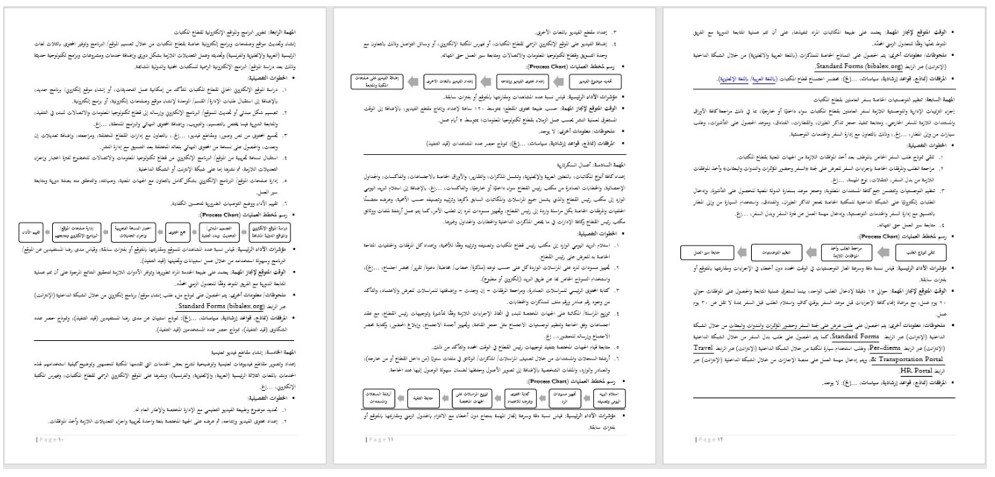
Sample pages from the library manual (Arabic)
How It Helped Us
Standardization and Consistency:
The manual provided staff with explicit guidelines, reducing variability in how tasks are performed and ensuring uniformity across departments.
Performance Measurement:
By defining KPIs such as beneficiary satisfaction ratings and process timelines, we gained valuable insights into our operational strengths and weaknesses. These metrics enabled us to monitor progress and focus on areas needing improvement.
Continuous Improvement:
With clear KPIs and the ability to track performance, we established preventive actions for risks and corrective measures for weaknesses. This data-driven approach fostered a culture of ongoing refinement and accountability.
Participatory Process:
Developing the manual involved staff collaboration, which increased buy-in and ensured that workflows reflect real-world practices. It also served as an excellent training resource for new team members.
Lessons Learned
Creating a library manual is a dynamic process that requires adaptability, stakeholder engagement, and ongoing updates. Resistance to change can arise, but where communication and training are prioritized, the benefits significantly outweigh the initial effort.
Takeaways for Other Institutions
If you’re considering implementing a similar approach, keep these tips in mind:
- Clearly define core tasks and procedures within your library.
- Incorporate KPIs that align with your strategic goals.
- Use visual tools like process charts to map workflows.
- Regularly review and update the manual to reflect new practices and insights.
- Engage staff at every stage to foster ownership and continuous learning.
Final Thoughts
Documentation, when approached thoughtfully, has the power to transform library services. At Bibliotheca Alexandrina, our library manual is more than a static document; it’s a living tool that enhances our standards, improves our processes, and supports our mission of excellence in library service delivery.
I hope sharing our journey inspires other library professionals to leverage documentation as a strategic asset for quality assurance and growth.
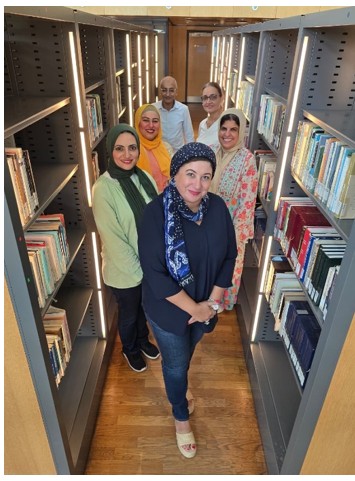
The Quality Team at Bibliotheca Alexandrina.