Colleagues, we are excited to announce the our next episode (for season 2) of the CPDWL Podcast Project where we feature library and information professionals who support and participate in professional development work.
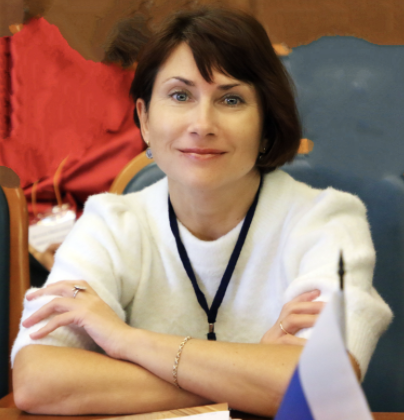
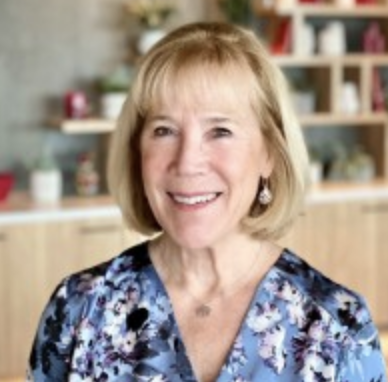
This episode’s guests are Daria Beliakova and Monica Ertel.
To see the episode, see here: https://anchor.fm/ifla-cpdwl/episodes/S2E2-Daria-Beliakova-and-Monica-Ertel-on-Knowledge-Caf-envs08
Curious about the upcoming Knowledge Café on Feb 9th 2021? See here: https://www.ifla.org/node/93475
Transcript is below.
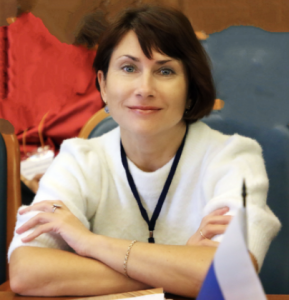
Daria Beliakova has received the specialty of a librarian-bibliographer at Moscow State University of Culture. She has been working in the Library for Foreign Literature (LFL) since 1995. Her professional interests include: study and dissemination of experience of foreign libraries; preparation of publications in professional journals and social networks; organization of professional development programs for cultural workers, coordination of work with professional organizations, including IFLA, the Russian Library Association (RLA), the Library Assembly of Eurasia (LAE), with leading Russian, foreign libraries and universities.Since 2013, Daria has headed the International Librarianship Group. She was the compiler, one of the authors and editors of the annual scientific and practical collection “Open Access. Libraries Abroad”. She participated in the preparation of the annual annotated bibliographic index “Library Business and Bibliography”. She coordinated internships of Russian and foreign specialists in the Library for Foreign Literature and other Moscow libraries, and internships of students from specialized universities in the LFL.From 2016 to 2019 Daria headed the educational department of the Library for Foreign Literature “Rudomino Academy”. Her tasks included preparation and implementation of professional development programs, methodological events (working meetings, section meetings, round tables, conferences). She developed and participated in advanced training programs: “Modern Practices of Russian and Foreign Libraries”, “Library as a Center of Local Cultural Heritage”. She took part in adaptation to the Russian language and holding in Russia the educational program of the Mortenson Center for International Library Programs “Strengthening Innovative Library Leaders” (SILL). Since 2019, she has been the Head of the Center for Cooperation with International Professional Organizations. From 2015 to the present day Daria participated as a speaker in conferences and working meetings on librarianship, including the Congresses of IFLA, RLA, the 2nd and the 4th meetings of the Russian-American Library Dialogue (Suzdal, 2018 and online 2020) . In 2018, she completed an internship at the International Institute “Life Beyond Tourism” to study the concept of responsible tourism and preservation of cultural heritage. Member of the Standing Committee of the IFLA Continuing Professional Development and Workplace Learning Section (2018 – 2022); Member of the Standing Committee of the Section for International Cooperation of the Russian Library Association (2018 – 2023).
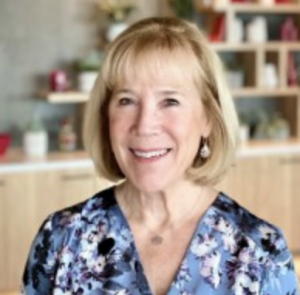
Monica Ertel is currently Vice President of Global Information Services for Bain & Company where she leads their worldwide information services network in 59 countries. Her responsibilities include managing an international team of researchers who provide high-level research analysis and support, desktop delivery of key information resources, end-user consultant training and strategic information leadership for the firm. Ms. Ertel has over 25 years of library management experience, including Korn/Ferry International where she was the Director of Global Knowledge Management and North America Research. Prior to that, she was with Apple Computer where she was the Director of Knowledge Systems that included the Apple Library as well as research programs in the field of information management. Monica holds a Master of Library Science degree from San Jose State University in addition to an MBA from Santa Clara University. She has been active in a number of library and information associations and was appointed Fellow of the Special Libraries Association and Outstanding Alumni award from San Jose State University. She has also held leadership positions with the American Library Association and the International Federation of Library Associations and Institutions where she has been a member since 1988.
Transcript:
Hi, this is Raymond Pun, Welcome to the IFLA CPDWL Podcast Project. In this space, we talk with library and information professionals who support and participate in professional development work.. Today’s guests are Daria Beliakova and Monica Ertel.
Daria Beliakova has received the specialty of a librarian-bibliographer at Moscow State University of Culture. She has been working in the Library for Foreign Literature (LFL) since 1995. Her professional interests include: study and dissemination of experience of foreign libraries; preparation of publications in professional journals and social networks; organization of professional development programs for cultural workers, coordination of work with professional organizations, including IFLA, the Russian Library Association (RLA), the Library Assembly of Eurasia (LAE), with leading Russian, foreign libraries and universities. Since 2013, Daria has headed the International Librarianship Group. Member of the Standing Committee of the IFLA Continuing Professional Development and Workplace Learning Section (2018 – 2022); Member of the Standing Committee of the Section for International Cooperation of the Russian Library Association (2018 – 2023).
Monica Ertel is currently Vice President of Global Information Services for Bain & Company where she leads their worldwide information services network in 59 countries. Her responsibilities include managing an international team of researchers who provide high-level research analysis and support, desktop delivery of key information resources, end-user consultant training and strategic information leadership for the firm. Ms. Ertel has over 25 years of library management experience, including Korn/Ferry International where she was the Director of Global Knowledge Management and North America Research. She has also held leadership positions with the American Library Association and the International Federation of Library Associations and Institutions where she has been a member since 1988.
Welcome Daria and Monica!
0:04
Let’s talk about the knowledge cafe and our upcoming workshops. First tell us briefly what is knowledge cafe, who started it in IFLA. And when did it start. And why is it so wildly popular under Congress, Monica. Would you like to address that?
0:20
Sure. And thank you, Ray. The concept for knowledge cafe started in 2013 and IFLA in Singapore. We have a session CPDWL on libraries as learning organizations how to nurture growth in our staff and communities, and it was several presentations, if I can remember back that far, but we also broke up into tables to talk about topics that had to do with learning organizations, and we had 294 people. So we knew we were on to something. We didn’t call it a knowledge cafe at the time, but we decided to build on this idea, so a knowledge Cafe is a place where people come together to talk to share ideas of common interest so just like you go into your local coffee shop, you see people, chatting with their friends talking about their families or talking about movies, whatever is of interest. So, as librarians, our job is to listen to share to help to educate our patrons, and it’s just very natural to do this for ourselves. So, we come to IFLA to learn, in many ways, and I think some of the best ways is from talking to one another and so that’s why we decided to formalize a session where people could just come and talk on topics of interest to them in a very non formal way. And here we are, 2020, and we’re headed off into, I think this will be our eighth or ninth one.
1:59
Wow, eighth or ninth one? that is quite impressive. I remember going to a couple of knowledge cafes in person. During the past few congresses, and it is very popular, lots of people coming in with different perspectives, sharing their ideas, the trends that are going on to address these specific topics. Right. And so right and it’s interesting because we have an upcoming knowledge cafe session on Zoom In February, and some of the table topics such as change management techniques for staff and designing user centric services and programs are really great ideas for discussion particularly now. During this period that we’re all experiencing, and Daria Can you tell us which topics are relevant to you, and in your work.
2:45
Hello everybody. Thank you Ray and I thank you Monica. Actually when preparing the program, we chose from topics that were popular last time and have not lost their relevance. And of course we have suggested some new topics. My favorites are: Upgrade your brain! Top 10 essential competencies for modern info pros and Working with diverse generational staff: Millennials, Gen X and Baby Boomers. Because my activity has been related to the implementation of professional development programs for librarians for several years. We always need to upgrade our brains! Using information technology, online teaching methods and personnel management. We need to learn how to quickly assimilate large amounts of information. How to communicate with people of different generations? These people have different competencies. They have different life experiences. They have different approaches to their daily challenges. It is very interesting! And together in the work team, they complement each other perfectly. But we must understand and remember these differences well.
Well, yeah, those are really great points Daria, and I think the one that you mentioned upgrading your brain, that, that, that beginning part I did stood out to me so I find some of these topics, I’m certain, most of them are really connected to the bigger issues and some of them are very can be very specific. And so we want to talk about these topics and trends like how are they chosen and Daria mentioned them being popular, but if you, if Monica, if you can also expand on how are they chosen from your point of view and which one stands out to you. I think our listeners would like to hear that.
Sure. Um, well, it’s really the top of search chose and just based on as Daria said what are hot topics at past cafes what has been interesting, getting ideas from colleagues, and the organizers. This year it’s CPDWL, and knowledge management. So Daria, and I are the representatives, organizing this. We put together a long list between the two of us. And then we passed it by the leadership in the cam and CPDWL standing committees and ask them for their ideas, and we put together a big list and then we just send it around and we, we kind of voted on it but really it was up to Daria and me to say, these are the top topics we figure out “how many tables we want.” I should back up and say, “okay that purse drives” “How many do we have” and we base it on the number of people that we had in the prior year and where the conference is being held so generally we’ve had 10 to 12 tables of 10 people each. And so that means we come up with 10 to 12.
6:26
And so that said it’s pretty simple. There’s nothing very scientific to it but just based on what we know is going on out there and what we think that people want to talk about and I suppose some of it is kind of selfish because it’s what do I want to hear about and to me the sessions that are interesting have to do with measuring impact of our learning activities, and finding motivation for how do you take control of your own professional development.
6:58
Yeah, that’s a really great point about the motivation aspect particularly now with so many distractions going on. And for folks who are going from one zoom meeting to another webinar, and so forth.
Right.
And so how do they adapt some of these features into their work and continue right sharpening their skills and experiences and you brought up a really great point about the coordination with you and Daria, which is really important, right, if you are interested in organizing a knowledge café, whether it’s in person or in zoom, definitely have a team of folks to help, help us get that started. So we certainly hope to see more of these types of sessions down the line. And so you had mentioned about the roundtable discussions, people coming in together and then having a facilitator and a reporter potentially and then documenting all of that discussion so that it could be shared later. But I wanted to ask on this other type of question on this note what happens with the shared notes after the discussion. Do you think the discussion, helps participants share their ideas in their workplaces Daria, what do you think?
8:08
Ah, well, first, you do prefer a summary of the results, or the discussion for each focus, and then video series for all participants of the knowledge coupler and before sir for all the attorneys that are interested in it and do publish their results in our blog and our newsletter. I’m sure many librarians. Did you find it useful information for themselves? Most important.
8:44
Well, at first we will prepare a summary of the results of the discussion of each topic. And then we will share it for all participants of the Knowledge Café. and of course for all specialists who are interested in it. We will publish the results in our blog and newsletter. I am sure many librarians will find useful information for themselves. Most importantly, during the discussions, we share the best practices of our work. Things that work in some libraries and countries are likely to work in others. And besides, the competent professionals will discuss their best ideas. I believe these ideas must work in practice.
9:14
Right. And certainly, I think it’s important for all of us to try to create a strategy where you can transfer knowledge to the workplace, I hear this a lot, even in our discussions at IFLA, how do they translate and transfer what they’ve learned into what they’re doing directly, and sometimes it might not be connected and sometimes they are curious, right they don’t know what topic, for instance of on a specific technology and then they participate in. And so it’s quite interesting to hear how the Daria, you share the strategy to disseminate in different areas so that other people who couldn’t attend can also get an idea and participate and share their reactions and feedback, potentially with their own colleagues.
Now we want to pivot to this other question here really looking at, for those who are interested in organizing a knowledge café session, whether it’s in person or online. What advice do you have for those interested in doing so, Monica? Would you like to start first?
Sure.
10:17
I would say if you have a topic that you want to learn more about from people from your colleagues, it’s a very simple way to get people together to talk and share at the say the kind of the impetus to the knowledge café for me was a long time ago when I was at Apple, and I was hired to start a library for them and asked to do it on was an apple two at the time, and I said in the interview, “yes I can do that”, you know, and then I got the job and I thought, What am I going to do you know I don’t know how to do this, but I knew a lot of people were using Apple’s own library so I put a call out in American libraries and said, “Anybody want to get together to talk about how they’re using apples in their libraries”, and I got a lot of response, and we kind of went for there and for several years we did this we broke people up into different tables to talk about circulation systems or reference and so it, it kind of comes out of a need that you have to learn and to share in a more informal setting with your colleagues who have more experience and everybody learns.
Definitely not necessarily a sage on stage kind of approach. Right. So we have you here, and a community of practice
And Daria, what advice do you have?
Invite the best professionals to the discussion! Invite the most experienced moderators as discussion leaders! Invite the smartest secretaries to write and prepare the reports. Discuss current topics with your audience in advance. And now, if you do it online, try to bring people who live in different time zones together in one session.
12:21
Yeah, that those are really great points, it’s really challenging right now that we’re sort of working in this vacuum of sorting out different time zones and for those listeners who have been following in our previous conversation, IFLA President Christine Mackenzie also mentioned that this has been a lingering challenge right for everyone, even to the work that she’s trying to do online.
Even though we are all connected right now in different ways, it’s still quite a challenge. And so, really, those are great points, thank you both for sharing. And now we want to end on this last question here since we are about professional development.
13:03
This last question is, what’s a professional development tip or advice that you’d like to share with others, particularly those who are new, and or would like to be involved in IFLA, Daria, would you like to start first.
13:16
Be proactive! IFLA is undergoing major changes. And really needs your fresh ideas and energy.
Get to know better your colleagues in the IFLA section. You can use their rich experience in your work. And fear nothing! IFLA is a very friendly community of professionals.
13:44
Great. Great advice.. Monica.
13:47
I would say, my advice would be to get involved. Join a standing committee, attend to meeting, volunteer do a poster session.
13:57
Anything you can you just get the most out of any organization when you get involved do meet people lasting relationships and again, you kind of have these informal knowledge cafes outside of the programs, but you, the more you give, the more you get so my advice is in any organization and IFLA especially.
14:22
Do what you can to get involved you will make friends for life, and you, it will really benefit your professional development.
14:33
Yes, those are really great points, as we mentioned there will be a knowledge cafe sessions, we have ongoing yearly webinars in collaboration with different groups. We have social media channels engaging with the library profession, and certainly those are opportunities, if you’re unable to attend in person, like all of us aren’t able to but even so when things change down the line. These are still opportunities to stay connected. And so thank you both so much for taking the time to speak with us today and sharing your thoughts on knowledge cafe.
15:07
Thank you, Ray enjoyed it.
15:10
Thank you very much.
15:12
See you all.