Category Archives: IFLA Congress

#WLIC2021 Programs from CPDWL

We have two sessions in WLIC 2021 and we hope you’ll be able to join us!

A 360 Degree Review of Supporting Data Science Skills – In collaboration with Science and Technology Section (STS) – Library Carpentries: A 360 Degree Review of Supporting Data Science Skills


NOW – NEW – NEXT: Seizing the opportunities to redefine and reimagine professional development through online learning

  • LIS training provider
    • Tony Zanders, Skilltype, USA; invited speaker CPDWL SC in 2020
  • Professional association
    • A/Prof Naoki Matsumoto, Dept. of Library and Information Science, Keio University, Japan; Vice-Chair of the Committee of Accreditation of Senior Librarians, Japan Library Association
  • LIS educator
    • Prof Sandy Hirsh, Associate Dean for Academics, College of Professional and Global Education, San Jose State University, USA; President of ALISE, current CPDWL SC member
  • Employer
    • Dr Alan Brine, Deputy Director, Library & Learning Services,  De Montfort University, Leicester, UK; Chair of CILIP Professional Recognition Panel; candidate for CPDWL SC
  • Learner
    • Matilde Fontanin, PhD student, Trieste, Italy; former CPDWL SC member

Q&A with Panelists

CPDWL and M&M Online Coaching during WLIC 2021

Need assistance in achieving your goals or expand your professional development or career? Would you like to tackle challenging situations? Have you ever tried the business method of coaching?

The IFLA Coaching Initiative, founded by IFLA’s Continuing Professional Development and Workplace Learning (CPDWL) and Management & Marketing (M&M) Sections, invites colleagues registered for WLIC 2021 without any additional costs to take part in an online coaching session.

Coaching is currently available in the following languages: Bosnian, Cantonese/Mandarin, Croatian, Dutch, English, German, Hindi, Italian, Portuguese, Punjabi, Russian, Serbian, Spanish and Swedish.

To prepare for the session as a coachee please visit the Coachee Information and Preparation page: https://lnkd.in/dup8pMn

Book with an individual coach in your time zone at https://lnkd.in/d5YnCyi .

Available Dates: August 9 – 13 & 23 – 27, 2021

For further information please contact [email protected]


Wow! What Did I Do in Athens? Reflections on my first year as SC Member in CPDWL during IFLA WLIC 2019

Contributed by

Rajen Munoo, [email protected], Head, Learning and Information Services, SMU Libraries

‘Tis the season of thanksgiving, of reflection, of baubles, tinsels, good tidings, and gifting! With travel plans up in the air and the next opportunity for a face-to-face IFLA WLIC distant, my blogpost gifts to CPDWL a celebration of my last gathering at the IFLA WLIC 2019 in Athens and showcases the opportunities afforded to me by CPDWL as new SC member.

My story is around 5Is.

Involvement

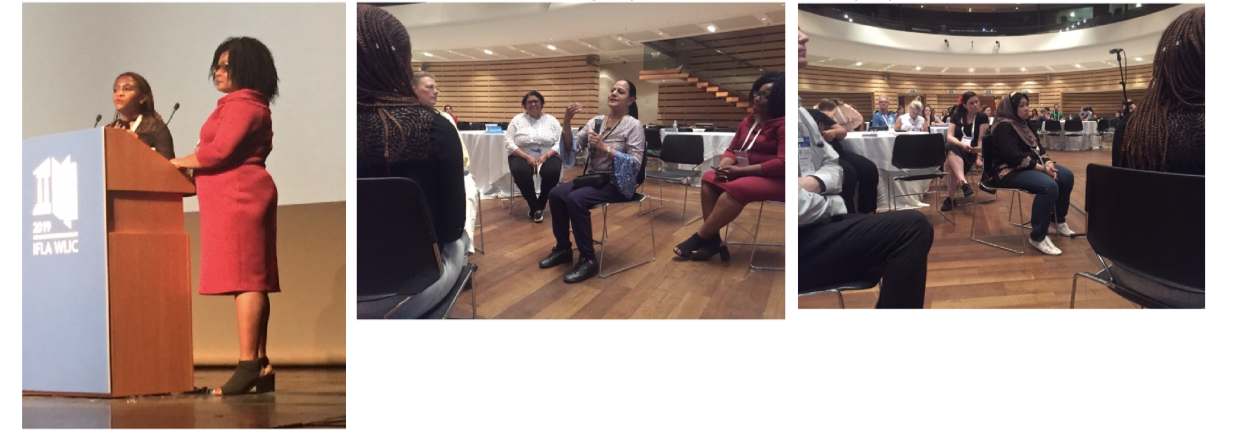
Session 101: Active and Interactive Learning and Development Strategy – Continuing Professional Development and Workplace Learning and Evidence for Global and Disaster Health SIG. This was joint session with CPDWL and IFLA Special Interest Group E4GDH (Evidence for Global and Disaster Health):

The remit of this session was around the need to equip a skilled, flexible and agile library and information workforce for the future and to demonstrate a range of strategies and methods that improve learning and knowledge transfer – and build on the experiences of the participants. With interactivity being key, various options were put forth such as practical exercises, group work, or other innovative methods, e.g.  Fishbowl Technique / Speed Networking / Pyramid Discussion / Gallery Method /Appreciative Inquiry / Opinionator Triangle / Knowledge Café / Flipped Classroom

Initiating

And so the team was formed co-led by Dr Gillian Hallam, Co-Chair CPDWL, Dr Anne Brice, Head of Knowledge Management, Public Health England and Feili Tu-Keefner as facilitator, Assoc Professor School of Library & Information Science, University of South Carolina. Included was Emma Farrow, Public Health England together with Blessing Mawire, Librarian & Knowledge Management Specialist, Pretoria, South Africa and Mercy Moyo, Senior programme Officer, ITOCA (Information Training & Outreach Centre for Africa) Pretoria, South Africa. With different time zones and countries, we had numerous virtual meetings and curated a successful programme down to the minute!

Ingredients

I gave a presentation entitled, “Engaging Students using a webinar to deliver and information literacy class as part of Emergency Preparedness Teaching and Learning at the SMU Library: Learning from Our Experience”

In 35 minutes, What do I cover? How do I structure my presentation? How do I fulfil the learning outcomes? My presentation plan, outline and transferrable learning strategies included:

Part A: Singapore in a VUCA World

  1. Scene setting [2 mins] > outline questions
  2. Video [5 mins]
  3. Reflection [5 mins]: Pairs / Table Talk
  4. Who are the different stakeholders? [Discuss at tables]
  5. Is anyone missing? [Discuss at tables]

iii. What opportunities for libraries and librarians (as first responders)?  [Feedback via Mentimeter]

Part B: Case Study [15 mins]

Part C: Fireside chat [5 mins]

Blessing Mawire and Mercy Moyo used the fish bowl method for discussion, including a silent fishbowl member. This session was highly interactive and popular.
Interventions, strategies and methods that improve learning and knowledge transfer

  • Self-Reflecting Questions: Posing a few scene setting questions before the start of your presentation piques the curiosity of your participants especially if it’s a provocative one!
  • Video: This is good to grab the attention of your participants and also brings a sense of realism especially if the video is produced in-house as the one created by Blessing and Mercy.
  • Fireside Chats: Creates and informal conversational setting personalising the experience where the facilitator and presenter share using a set of guided questions
  • Mentimeter: Visual word cloud presentation of ideas for participants to share especially for introverted and extroverted participants.
  • Fishbowl: Provides opportunities for proactive sharing of ideas and experiences by ‘taking the chair’ and facilitates discussion around a topic. A silent Fishbowl member plays the role of scribe, and resource person
  • Social Learning: Tweets and postings using social media tools on social networking sites highlights the Aha! Moments and key learning points to a wider audience

Upon reflection, little did I realise the foresight of my presentation on our current COVID-19 pandemic.

In my current role, I have oversight of the SMU Libraries staff learning and development portfolio and I am excited about being involved in the taskforce to develop the CPDWL Toolkit – Transferring learning back to the workplace which I hope to use myself.

Integration

CPDWL made me feel welcome and I actively contributed in the following ways:

  • Attended both the business meetings where I got to meet other members and understood the pulse of this awarding winning section.
  • I also co-facilitated Session 184 Knowledge Café 2019 – Knowledge Management with CPDWL and Library and Research Service for Parliaments with Crehalet Marie-Estelle where we harvested ideas around the topic, “Focus on what the library does versus what it has”
  • Session 251 Coaching Drop in Session – CPDWL with Management and Marketing was also enriching were I am still Facebook friends with my coachee who was from Athens!

In closing, being a CPDWL SC member provides opportunities for all! It’s how you seize them to be actively involved. I look forward contributing further during my term.
CPDWL Coaching initiative: Campaign for volunteer coaches

The coaching method has been explored by the Continuing Professional Development and Workplace Learning Standing Committee over the years, as part of Satellite Conferences and as part of the IFLA WLIC programme. Since 2019 CPDWL is collaborating with Management & Marketing Section on the Coaching initiative.

We are now very pleased that the Coaching initiative was approved by the Professional Committee of IFLA for the next three years 2020 to 2022.
At the WLIC 2020 n Dublin the session will focus again on individual coaching, and the format will be a drop-in/walk-in session where coaches are prepared to meet the delegates that want to be coached. As was the goal of the 2019 session, CPDWL and M&M aim to offer coaching in all IFLA languages this year too, as well as any additional language spoken by volunteer coaches.The purpose of the Coaching initiative is to support the coachee (the person who wants to be coached) in aligning organisational and individual goals to improve individual performance and to ensure that the organisation’s mission is achieved.

Coaching focuses on asking open questions, and allowing the coachee to come up with the solution. This differs from mentoring which mainly focuses on giving advise.

In order to give the coaching session, we need many coaches. Maybe you are one of them? If you have experiences in coaching or if you are interested in developing your coaching skills, you are very welcome to contact us!

During Spring term 2020 an online coach training programme will be given in the format of webinars, in order to prepare for acting as coach at the WLIC coaching session. Vera Keown, member of M&M SC and Certified Leadership Coach, is planning the training programme and will be instructor at the webinars.

Since we aim to offer coaching in many languages, we are also interested in knowing if you can coach in any of the IFLA languages or your mother tongue.

Please send your expression of interest to: Carmen Lei [email protected] or Barbara Schleihagen [email protected].

For further information about CPDWL’s coaching initiative, please contact: Ewa Stenberg , Convenor of the Coaching initiative [email protected].

More general information about the Coaching Programme here https://www.ifla.org/cpdwl/projects

The coaching work group: Ewa Stenberg, Almuth Gastinger, Barbara Schleihagen, Carmen Lei, Ulrike Lang, Vera Keown

January 2020 Issue OUT!

Check out CPDWL Section’s Latest Newsletter (January 2020 Issue)!

The issue features:
CPDWL’s activities during IFLA WLIC 2019
IFLA Division IV, Division Chair Letter by Catharina Isberg
Communication initiatives
Staying relevant by Susan Schnuer
Opening up new vistas for Inostranka by Maria Bereslavskaia
…and more!

Check it out here!

Top Five CPDWL Blog Posts in 2019

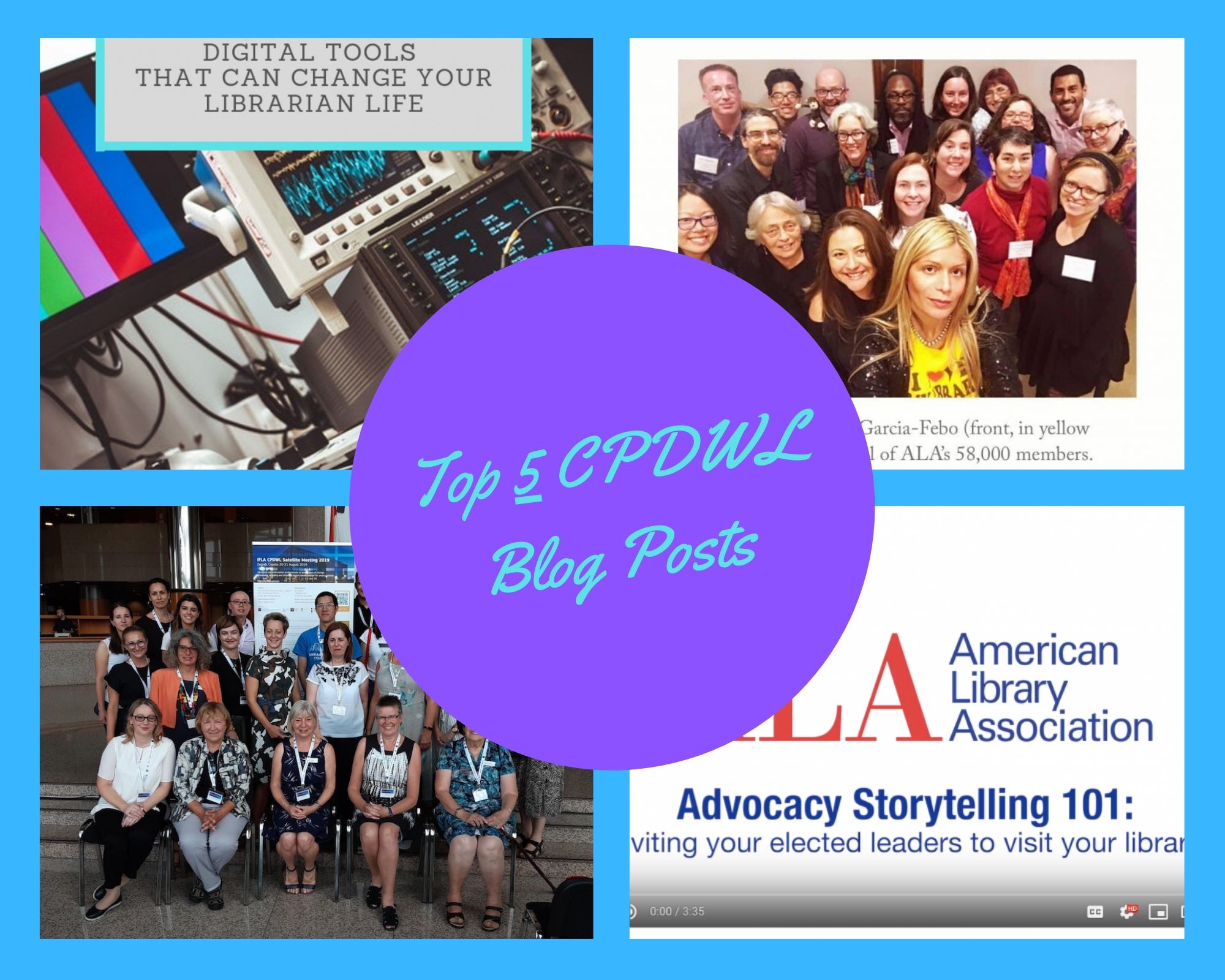
CPDWL Section members frequently blog about their work, programs or activities throughout the year. Here are our top 5 popular blog posts with the highly numbers of visits:

5. With 880 visits, CPDWL Podcast Project: Episode 1 is our 5th most popular post. It kicked off our podcast series featuring Loida Garcia Febo! (Published in October 2019)

4. CPDWL Satellite Meeting 2019 in Zagreb, Croatia: RECAP is the 4th most highly visited post in 2019 with 896 visits. (Published in September 2019)

3. “New Resources for Library Advocacy” by Loida Garcia-Febo (Published August 2019) and “INELI-MENA-Egypt: Librarians as Motors of Change” by Heba Mohamed Ismail (Published in July 2019) are our third most visited post with over 900 visits!

2. With over 1k+ visits, our post on “Digital Tools That Can Change Your Librarian Life” is the second most popular blog post of 2019. The recording is also listed in the post. (Published October 2019).

1. With over 4k+ visits, “Wellness for Library Workers” by Loida Garcia-Febo is our most popular blog post of the year! (Published August 2019)

Stay tuned for 2020, we have of interesting posts coming soon!

Knowledge Café 2019: Change Literacy: Digital, Collaborative, Creative compiled by Monica Ertel

The 7th Knowledge Café was held at the 2019 WLIC in Athens, Greece.  Approximately 150 information professionals attended this meeting to share and learn from their colleagues on a number of interesting table topics.  Participants represented a diverse number of countries including Russia, Sweden, Norway, Ghana, Canada, Singapore, Germany, United States, Kenya, Japan, Uganda, Australia, Brazil, Greece and many others.  Public, school, university, parliamentary and special libraries were among the organizations of the participants. The goal of this program was to provide an opportunity for IFLA colleagues to discover, share and takeaway new ideas.

Change is the currency of our libraries, communities, parliaments, organizations, and world.  Whether it involves digital transformation, collaborating with traditional or non-traditional agencies, or creating new and exciting engagement opportunities, change is at the heart of our activities.  Learning, growing, developing and succeeding in the face of change are our challenges.  

Summaries of the table topics are included below.

Table topics:

  1. Developing New Communication Tools: Keeping Up with Advances in Technology
  2. Outreach and Collaboration with Non-Library Agencies
  3. How Library Spaces Affect Learning
  4. Creative Uses of Social Media in Libraries
  5. Change Management Techniques for Staff and Users
  6. Digital Transformation: Adapting to Changing Client Needs
  7. Developing Library Leaders of the Future
  8. Improving Performance Through Mentoring and Coaching
  9. Focus on What the Library Does versus What it Has
  10. Learning, Training and Finding the Gaps
  11. Managing Staff in Tough and Uncertain Times
  12. Succession Planning and Getting the Right Skills

Full Report available here. [PDF]