Category Archives: New Librarians

Information Professional Caucus Camp for Kenyan New Professionals by Nyakundi James Nyambane

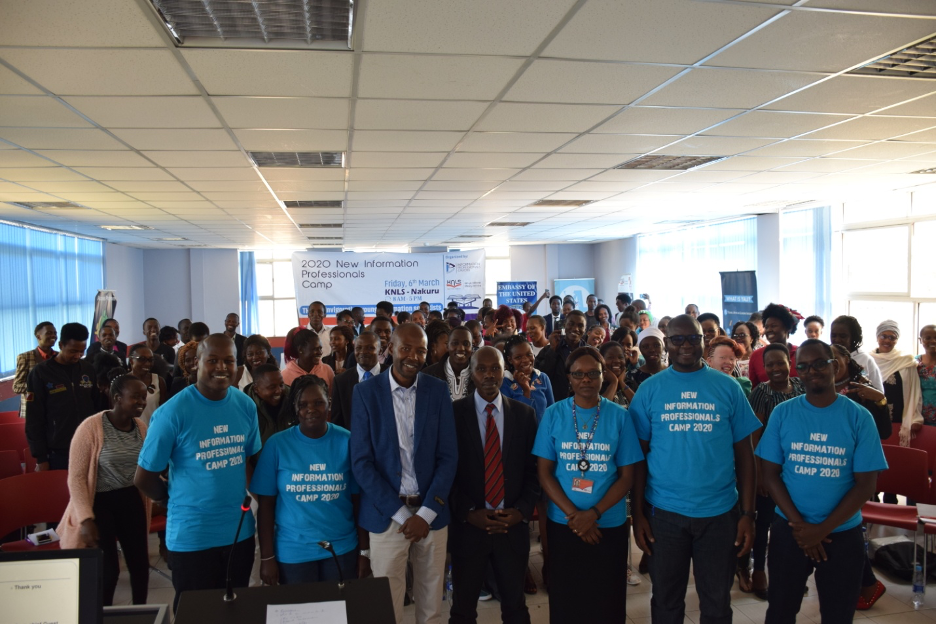
(IPC camp organizers and participants March, 2020)

The IPC Camp event was hosted by the KNLS Nakuru at the American Corner on 6th of March 2020. The event attracted new professionals from all over the country. It was themed “Invigorating New information Professionals”  The New professionals comprised of students, new employees and senior employees as well.

The camp received a grant from the Kenya Library Association of USD 500 dollar in support of the event. The event attracted 160 new information professionals and other invited guests.

Aim of the KLA New Professionals Camp

The aim of The KLA New Professionals’ Camp was to attract new professionals who have the spirit and motivation to run with the new vision. Hot and trendy topics in the library world were deliberated upon with an aim to give working solutions in the Kenyan contemporary society of information. The camp also presented an immense opportunity for networking and professional interaction.

Objectives of the Camp

  1. To empower new professionals in the library and information career to get involved in the national association and with KLA, thus prompting them to be local and international thinkers and leaders.
  2. To increase the librarians’ network by linking new professionals with each other and existing gurus, thereby sharing experiences, opportunities, social interaction and laying strategy for further virtual interaction through social spaces.
  3. To offer first quality free training and knowledge exchange opportunities through open programmes and future satellite meetings.


Mapping New Professionals’ Camp Concept

There has been a new and awakening trend in the library profession to have camps, otherwise referred to as ‘unconferences’.  These are refreshing yet informal setups that have been attributed to seeing the sharing of new ideas, rise of motivation among peers, fostering of unity in librarians and key discussion of future trends which have a direct impact on the professional. Impressive ideas pertinent to the career were shared. From the participants who attended the event, the camp was more than a success. For The KLA professionals, it is a matter of catching up with the in-thing, as we have a lot more to share than to ignore in this profession.

Proposed schedule of events

The venue was settled at the American Spaces Nakuru KNLS, Venue provided by Nakuru KNLS Librarian Purity Kavuri. Experienced presenters who are information professionals from within the country and the Globe dedicated it to exploring a variety of trends. In addition to the lively discussions, the IFLA SG- Gerald Leitner sent the new professionals a message of encouraging such events and gatherings for new professionals. Below are some of the presenters.

           Purity Kavuri- Library Advocacy” KNLS-Nakuru Branch Librarian

Raymond Pun, International “Librarianship and academic publishing” (California, USA)

Prof. Tom Kwanya, “Invigorating New information Professionals”  Knowledge Management Expert. Director, School of Information and Communication Studies The Technical University of Kenya.

New professionals’ camp was about daring to give the body freedom of being an important part of creative processes, provoke mind and connect it with ideas through the different “logic”, also to brush up the ability of alternative from spoken word ways of communication. The participant-driven approach allowed for active involvement of all attendees.

In conclusion, librarians are encouraged to find ways to include new professionals in library association projects. We encourage senior librarians to provide mentorship and guidelines for new professionals.


Nyakundi James Nyambane,

Librarian User services, USIU-A.

IFLA CPDWL Member
CPDWL/NPSIG Webinar: “Mindfulness to Manage Workplace Stress and Microaggressions”

Save the date! IFLA Continuing Professional Development and Workplace Learning, IFLA New Professionals Special Interest Group, and the American Library Association invite of all you to take part in a free webinar “Mindfulness to Manage Workplace Stress and Microaggressions”. This meeting is a part of the webinar series “New Librarians Global Connection: best practices, models and recommendations“.

Date/time: Tuesday, July 14th at 8 am PT, 10 am CT, 11 am ET (check your time zones here: https://www.timeanddate.com/)

Registration Here!

Description: Navigating workplace stress and microaggressions—verbal and non-verbal messages that are invalidating or demeaning—can be difficult in any profession, but is especially challenging in service-oriented professions like librarianship. In addition to identifying and naming stressors and microaggressions, various tools can be employed to mitigate the negative effects of these encounters. This session will provide attendees with a framework—mindfulness—that can be used to help process the often-fraught interactions that may take place in our libraries. The webinar will be recorded.

What will you find out on the webinar?

You will understand the roles of microaggressions and workplace stressors.
You will know how mindfulness can be used in workplaces in libraries.

Speakers:
Chippewa M. Thomas is a Professor of Counselor Education in the Department of Special Education, Rehabilitation, and Counseling and Director of the Office of Faculty Engagement at Auburn University. Thomas has published in journals such as the Journal of Counseling and Development, The Family Journal, Educational Gerontology, Journal of Specialists in Group Work, International, Journal of Thought Journal of Progressive Education and collaborated on book chapters in edited books. Thomas’ scholarship focuses on culturally competent counseling practice, social justice in action, community engagement/publicly-engaged scholarship, and wellness/vitality in higher education. She is active with several professional national and international counseling, education and outreach-scholarship affinity groups and organizations, and currently roster-listed as a Fulbright Specialist in Counselor Education.

Pambanisha Whaley is the Collections, Assessment, and Resource Management Coordinator at Alabama State University. Whaley has been an academic librarian for 15 years. Her research interests include: the role of minority library residencies in career advancement, the relationship between psychosocial factors and the success of library mentoring programs, and retention strategies for librarians from underrepresented groups.

Jaena Alabi is a Research and Instruction Services Librarian for the areas of English, psychology, and Africana Studies at Auburn University’s Ralph Brown Draughon Library. Her research interests include peer review of teaching for academic librarians, library collaborations with writing centers, and the effect of racial microaggressions on librarians and profession.

The CPDWL Satellite Meeting is described as “in a country of movies, an event out of series”

Noé Nessel, Librarian, Buenos Aires, Argentina


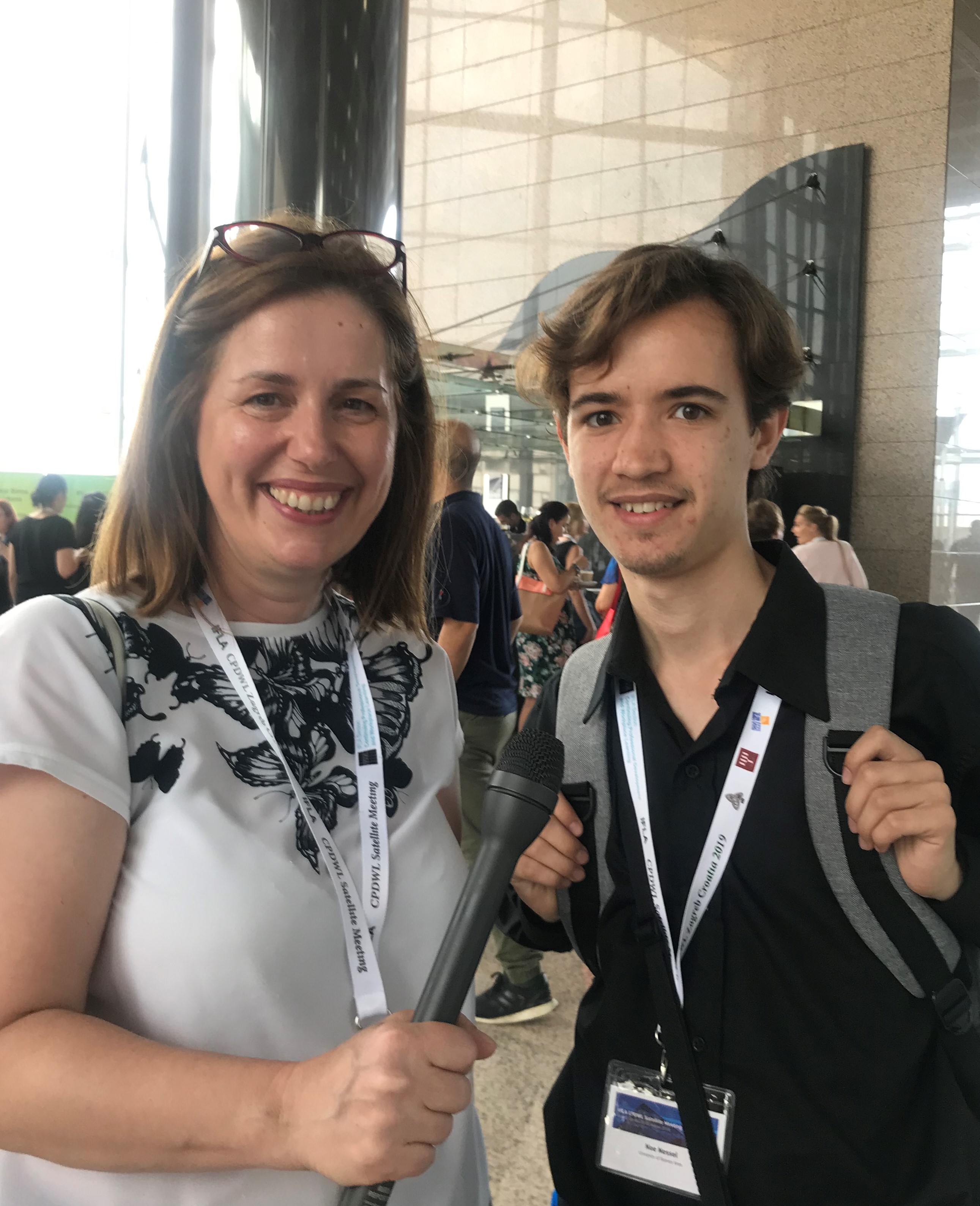
Noé Nessel being interviewed by Jasenka Pleško at the Satellite Meeting

For me, participating in the Satellite Meeting was a miracle. From the end of the world to IFLA without stops. A privilege to have the possibility of landing in a meeting of international excellence. An opportunity to strengthen global professional citizenship. A short and intense experience. Ideal for personal and work development. During both days, empowered protagonists for the activation of informational collective intelligence were enhanced. A genuine meeting of intellectual impact for the stimulation of professional neuroplasticity.

Having obtained the bursary has allowed me a passport between North and South Worlds. A unique opportunity to participate in rich intercontinental information exchange scenarios. Conferences where a global vision of the digital age is perceived. An admirable program to generate coworking spaces in relation to academic cognition for future information ecosystems. A Federation that adds and integrates emerging actors for the adequate digital transformation of intelligent societies.

In Zagreb, the human creativity of librarians was enhanced. We sought to sum the value of the information centers. The public policies of the Ministry of Culture counts kilometers to our previous knowledge. And in turn, the teachings and intellectual productions of the five continents increase miles of learning. What allowed to start a postmodern high-cultural path. It was an enrichment of heterogeneous theoretical and artistic worlds; where design objects and traditional emotive music from the host country were included. In my case, I have generated contact; for example, with colleagues from India, Hong Kong, Turkey and Italy. Guaranteed exchanges in an amazing architectural headquarters. Also, it allowed me to know the land of my great grandmother.

Intellectual capital has been embodied in posters, sessions and keynotes. In which human bridges were established for the realization of future projects. A boost for library socialization facilitating education and permanent updating. The forceful take off will exalt the curriculum vitae of the bursary recipients to obtain prestigious jobs; through the support of Croatian public funds for the enrichment of specialists in the strategic information sector. Democratic fields of knowledge for interactive knowledge managers.

It is appreciated:
* The inclusion of a Latin and millennial information librarian
* The academic training of my alma mater, IFTS 13 in Buenos Aires
* And, personally, my thanks to CPDWL and the National Committee of Croatia.

 “In a country of movies, an event out of series.”

The impact of attending the CPDWL Satellite Meeting in Zagreb

Roberta Montepeloso, PhD student, Sapienza University of Rome, Italy

IFLA CPDWL Satellite Meeting 2019 was held in Zagreb, at the National and University Library (NSK). Gillian Hallam opened the works exhorting the participants to wonder what kind of impact could have the attendance at the conference. She invited the audience to reflect not only on the informational impact – knowledge that would be appropriate – but also on the social impact of the meeting: the chance to meet professionals in the same field coming from all over the world. In a nutshell, the power of serendipity. I was in the main entrance hall of the beautiful building of the National and University Library and I asked myself the question.

With regard to the first aspect, we have to think about the contents of the meeting. They are focused on how digital technologies are transforming our lives. Societies are becoming smart thanks to the deep use of Information and Communication Technologies (ICT) but, as the keynote speaker Mario Hibert highlighted, we have to pay attention to the “smart narration” because transformative technology could potentially give rise to new forms of inequality, for example between those who can afford and access digital technology, and those who cannot. The use of ICT in order to improve the quality of people’s lives is a relevant issue of contemporary society, according to keynote speaker Philip Schreur. Librarians’ management of knowledge is an example of actions which strengthen citizens’ competencies and allows digital inclusion.

In this sense we should note the best practices presented in the poster session (e.g. the work of Vildan Coşkun, Abdullah Turan and Ebru Gönül Türk from Turkey about the use of gamification in libraries) or the information literacy programming at a lot of public libraries (e.g. Zagreb City Libraries; Ljubljana City Library; Tampere City Library; Helsinki City Library). In order to create sustainable digital societies, librarians should be able to immerse themselves in the process of digital transformation. As suggested by Tatjana Aparac Jelušić, librarians have to improve their technical knowledge and invest in continuing professional development. Both were sub-themes of the Conference and they were discussed starting from the experience of professional organisations (as the Italian Librarians’ Association, AIB) or centres for permanent professional development (like the Ljubljana Learning Centre, LCL).

The social impact of the Conference deals particularly with events organized by the Croatian Library Association (library visits, lunches and dinners, city tour by night) and with the virtual relationship created in social networks (CPDWL Facebook; Twitter; Instagram). But under the umbrella of this concept – the “social impact” of the Meeting – we can also include the effect produced on the users of the National and University Library. I appreciated the organisers’ choice to situate speeches in the Main Entrance Hall of the NSK. I think it is a good strategy to raise awareness on the role of libraries in the development of smart, innovative and inclusive societies.

In conclusion, putting together the two forms of impact, I personally believe that the experience in Zagreb allowed the exchange of informational contents, the growing of international collegiality and the development of critical thinking.


New Resources for Library Advocacy by Loida Garcia-Febo

Each librarian is an advocate. Each library worker is an advocate. Library associations like IFLA and ALA, and library schools have developed a myriad of materials, including courses, to help library advocates continue advocating to keep libraries open, funded and equipped. As we know, programs and services provided by libraries are essential to better the education and lifelong learning of the communities they serve at academic, public, school and all types of libraries.

This past year, while I presided the American Library Association, I worked with the incredibly talented ALA staff members and my Presidential Advisory Board to develop new library advocacy resources which I am very happy to share in this post.

A comprehensive website that became a one-stop clearinghouse for all-things Advocacy: http://www.ala.org/advocacy/

Videos to help libraries use the power of storytelling to impact advocacy:

Video #1 – Advocacy 101: Getting Your Library Story in your Local News

Page includes a checklist for reaching out-  http://www.ala.org/advocacy/media


Video #2 – Advocacy 101: Inviting Your Elected Leaders to Visit Your Library

Page includes a visit checklist- http://www.ala.org/advocacy/tour

Video #3 is a playlist! – The many reasons why ALA members advocate for libraries #IamALA (Fabulous campaign you can customize for your own library association!) https://www.youtube.com/playlist?list=PLY6JdvV7ZFZvjSwPO2Wj7MIkS40uKC8E1

Additionally, I would like to share that as a part of the ALA’s 2019 National Library Week celebrated last April, and ALA’s year-round advocacy work, ALA released two new superb tools to help library advocates and libraries across the USA share their story on digital platforms: a Live Stream and Video Storytelling Checklist and a Social Media Advocacy Toolkit! The resources were rolled out in conjunction with the amazing #MyLibraryMyStory initiative, a video and social media effort that aimed to encourage library advocates and users to create and share videos and content about their libraries on social media such as Twitter, Instagram and Facebook.

I hope you can review these resources and adapt them to the needs of the libraries in your city, region and country. I am happy to connect with you about them!

Loida Garcia-Febo

International Library Consultant

Immediate Past President, American Library Association

IFLA Governing Board Member 2013-2017

IFLA CPDWL Member

Webinar April 16: “New Librarians Global Connection: best practices, models and recommendations”

For the 4th consecutive year, IFLA Continuing Professional Development and Workplace Learning and IFLA New Professionals Special Interest Group are partnering with the American Library Association (ALA) to present a series of free quarterly webinars on issues of interest to new librarians, library associations and library schools, library-decision makers, and all library workers. This is a great opportunity for membership participation via new worldwide online programming.

This session is titled “Making the Leap to Library Leadership” and is designed both for people who have been called upon to serve a leadership role and those who wish to take on more leadership responsibility. The session will outline essential skills for twenty-first century library leaders and help participants to gain a deeper understanding of their own role, as well as that of their department and library, within the larger picture of their umbrella organization. Topics such as emotional intelligence, professional comportment, understanding organizational culture, change management and intellectual agility will be covered in a practical, non-theoretical way. This webinar is designed to be a small taste of what is offered at such institutes so that participants can begin to chart a course for personal leadership development.
Please contact Loida Garcia-Febo ([email protected]), Series Coordinator for questions and requests for information.

Recording available– Free IFLA/ALA webinar “New Librarians Global Connection: best practices, models and recommendations

Dear colleagues:

We continue to work to provide opportunities for membership participation via new worldwide online programming. Here, below, is the link to the recording of the IFLA/ALA free webinar with Speakers:
IFLA President Elect, Sinikka Sipila from Finland:: Susanne Riedel, former President of German Library Association:: Kate Byrne, Program Coordinator of International Librarians Network, Australia.

Best regards,
Loida