Category Archives: Professional Development Opportunity

#LibraryTwitter – What to look up?

twitter on phone

Twitter, a social media networking tool, has been on the news a lot lately. If you don’t have an account or thinking of starting one, check out Twitter and how it might enhance your learning in the field.

New to twitter? It is an opportunity for you to engage with a global profession through this social media tool!

Watch this short video on how to start twitter account. Be sure to follow up at @iflacpdwl to find the latest trends and updates coming from our section and section members.

This blog post will highlight the hashtags that you’ll want to follow and search to learn more on what others in the field are discussing:

#librarytwitter

#libraries / #library

#critcat (learn more about #critcat here: https://critcat.org/)

#LISMentalHealth (learn more about #LISMentalHealth here: https://lismentalhealth.org/)

#critlib (learn more about #critlib here: http://critlib.org/)

There are many hashtags to search but these hashtags will show many conversations about the field in areas. Have fun reading and tweeting!

10th Forum of Young Librarians of Russia

The 10th Forum of Young Librarians of Russia was held in Moscow on the 11-
13th of October, 2022, and was designed to promote professional development
of young librarians, to increase their motivation to improve competencies and
boost their creativity, to create favourable conditions for professional
networking and launching team projects.
Themed “Show Yourself to the World”, the Forum was the largest in the history
of the young librarians movement in the country. Supported by the Ministry of
Culture of Russia and Russian Library Association, the Forum brought together
over 350 new professionals from more than 60 regions of the Russian
Federation.
The Russian State Library for Young Adults, M. Rudomino All-Russia State
Library for Foreign Literature and the Russian State Library developed the
concept and organized this significant event, supported by the Russian Library
Association, federal libraries and the Moscow library system.
Among the Forum’s speakers and coaches were prominent library experts, as
well as IT and creative industry professionals, specialists in social
entrepreneurship and the arts, career development and advancement.
It was important for young librarians to meet prominent people in their
profession and to feel the attention and interest on the part of the high-ranking
officials who determine the development trajectory of the country. President of
the Russian Federation Vladimir Putin, Minister of Culture of the Russian
Federation Olga Lyubimova, Chairman of the State Duma Committee on Youth
Affairs Artem Metelev made welcoming addresses to the participants. The
experienced library experts shared memories, gave advice, laid out their vision.
The three-day program included about 80 events at more than 20 venues. The
discussions centered upon realities and prospects of the library field in Russia.
On the first day the panel discussion, “Knowledge economy: what a young
person needs to know and be able to do to become part of it”, was aimed at
engaging new professionals in an intensive process of learning new ideas and
providing them with the skills and abilities, which they could utilize back in
their regions.
On the second day the participants were offered a variety of interactive events at
eight federal libraries, which hosted lectures, discussions, pitch sessions,
training sessions and master classes, introducing the participants to their
practices and inviting them to join the on-going projects as well as to produce

their own. In the afternoon, 32 papers were delivered in the pitch sessions under
the themes “How can library become a driver of creativity and intellect?» and
«Dialogue of Cultures in the Library». The communication at the Forum
enriched the participants with new knowledge and emotions and resulted in
growing friendship between people, libraries and cities.
The third day of the Forum was marked by a highlight event – the ten (out of
90) shortlisted teams from the regions of Russia presented their projects within
the All-Russia competition for the best library project held among new
professionals. The competition showcased projects related to creative industries,
inclusion, volunteering, local studies, information literacy, organization of
library space, promotion of books and reading, etc. The three winning projects,
which came up with the most creative and enriching practices, were announced
based on the results of the on-site electronic voting of the Forum participants
and the professional jury. The winners were awarded diplomas, cash certificates
and gifts.
The first prize was awarded to the project “Library Volunteers, Sparkles of
Good” from the town of Beriozovsky (Sverdlovsk Oblast). The local librarians
view their library as an open and inclusive space offering equal opportunities to
everyone. In 2013, they launched an inclusive television studio «Compass TV»
as part of the library volunteers club “Sparkles of Good”. It has brought together
disabled young adults from the local municipality. The TV studio helps them
record podcasts, make and edit videos and movies about books, libraries,
museums. The volunteers assist their library in organising events, eg meetings
with interesting people, training workshops.
The second prize was won by the Ilyinka Digital project from the city of Nizhni
Novgorod. One of the city library branches set up a creative space for youth
where IT-technologies help reconstruct the historical appearance of Ilyinka
Street and its surroundings. The modern digital methods of 3D modelling and
holography restore images of the historical buildings. The users can conduct
research in local studies on their own and discover the city’s historical and
cultural heritage.
The third prize was given to the project “Emotional Map of Kolomna”
presented by the team from the town of Kolomna (Moscow Region). In 2021,
the public libraries of Kolomna launched an interactive map displaying town
sights which are ideal to dream or appoint romantic dates or spend time alone,
etc. The sights include photographs, brief historical overviews and legends
associated with the places, as well as an audio guide of stories told by town
residents, thus incorporating their impressions of the native town. Anyone can

use the Emotional Map of Kolomna to line up a route and delve into the local
history. This project reveals the local people’s emotional ties to their hometown,
upholds them and generates a genuine interest in the local cultural heritage.
These winning projects constituted the first contribution to the Bank of Creative
Ideas and Innovative Practices, a project realized by the Russian State Library
for Young Adults with the support of the Ministry of Culture of the Russian
Federation.
The host of the next Forum of Young Librarians of Russia in 2023 will be the
city of Chelyabinsk and the Chelyabinsk Regional Universal Scientific Library.

The recording in Russian can be viewed here: https://youtu.be/vJVG5IJcIfE

“As an active member of IFLA for many years, it is a natural part of my commitment”

Translated from an interview with Catherina Isberg with the Swedish Library Association, in Swedish, published on October 6, 2022:

The Swedish Library Association has several interesting and important professional networks. One of them is the network of IFLA, the International Federation of Library Associations and Institutions, which is the world organization for libraries. Catharina Isberg, library manager in Lund, is the contact person for the network.

Continue reading

Librarians in the borderland between professionalism and amateurism

I know – the title may provoke, but by the end of this text, it will hopefully seem comprehensible and justified.
As senior lecturer at a Swedish university offering educational programs in Library and information science (LIS), I sometimes get questions and comments about the training of future librarians. Often it is about what aspiring librarians should know and how this is best taught. It is striking how engaging the issue of librarians’ competence is – the various opinions come from widely different quarters. Sometimes librarians’ work is even proposed as the answer to major societal challenges such as reawakening young people’s lust to read and strengthening citizens’ digital skills.

In addition to the outside world’s expectations of the profession, there is an internal tendency to problematize the professional role and competence. That debate has recurred over decades in trade press, mailing lists and social media. In parallel, research is conducted with the aim of understanding, challenging, equipping and ideally inspiring the profession, and the production of Bachelor and Master theses at our universities testifies to the interest in profession-related topics among students. Their small-scale research contributions are quick-footed and likely to delve into the field’s hottest questions.

Debate and recurring discussions are sometimes interpreted as the profession facing a crisis. For my own part, however, I am both optimistic and incurably curious (the researcher’s occupational injury?). I see vivid discussion as an expression of the importance of libraries for the country’s inhabitants, and internal debate as a sign of vitality. Few professions show such spark! The need for discussion can be linked to the history of the profession; the professionalization process of the past century, amalgamated professional organizations, academisation of training and the establishment of the LIS discipline. Today the profession is powerfully organized, but at the same time it spans disparate activities.

As a natural reaction to societal developments, and perhaps as a backlash for the unifying professional project, new competences are called for in libraries, and more specialized training.

Another important aspect of the position of librarianship today, is its quality as a welfare profession; one of the female-intensive occupations that have thrived within the Nordic welfare hub. Ambivalence towards the profession’s theoretical basis is typical, and compared to classic professions, the welfare professions are less hierarchical, more collaborative and highly focused on the clients. I know from experience, that responsiveness to users’ needs and interests is a shining beacon for aspiring and active librarians, regardless of library type.

Surely that sounds nice? But every medal has its flip side. The emphasis on responsiveness, commitment, and (often) idealism, can make librarians stretch far in their compliance. Always being prepared to tone down competitive thinking and professional pretensions out of consideration for the interests of others, is an attitude that risks backfiring. For an illustration of this dilemma of a welfare profession, we may turn to the children’s librarians – a group that was early associated with selfless work of the “vocational type”. We’d like to think that image faded decades ago, but my research into the competence of children’s librarians was an eye-opener.

The participants in my study said they appreciated the rich opportunities for competence development as well as their chance to influence its content. But several librarians also described dissatisfaction with the overly free choices and the perceived lack of managerial steering of the knowledge-developing activities. Rather than seeing the collective competence as a strategic resource for the workplace, competence development was often treated as an encouraging ‘salary benefit’. Several managers also hesitated in connection with my interview question concerning what incentives they saw for children’s librarians’ competence development. Their answers were that the librarians’ heartfelt meetings with the users – in this case children who love to read – were to be regarded as both a driving force and a reward.

Get me right – trusting relationships and personal appreciation are worth their weight in gold in everyday work, but should we really, in 2022, regard professional work as its own reward? Such an approach, with the logic of the old “vocation” just below the surface, undeniably brings to mind non-profit and amateur work.

There is no room here for the follow-up questions that need to be asked. I end by stating that those concerned with how the librarian profession can be strengthened for the future, should pay attention to where the boundaries are drawn between professional and personal commitment. As a representative of research and higher education, I want to promote a reflective professional practice, where sensitivity to the outside world is complemented by research-oriented and proactive working methods; an ambition that probably applies to most universities offering LIS education around the globe.

What do you think – is there reason to push the discussion about the prerequisites and the future of librarianship one step further? I think so.


Jenny Lindberg
Lecturer at the Swedish School of Library and Information Science, University of Borås, Sweden


Note: This article has previously been published in Swedish at http://www.noll27.se

The study on children’s librarians mentioned in the blog entry is accessible (in Swedish): https://regionbiblioteket.se/publicerat/barnbibliotekariers-kompetens/


 

#NWILL Conference & Copyright Resources

NWILL conference

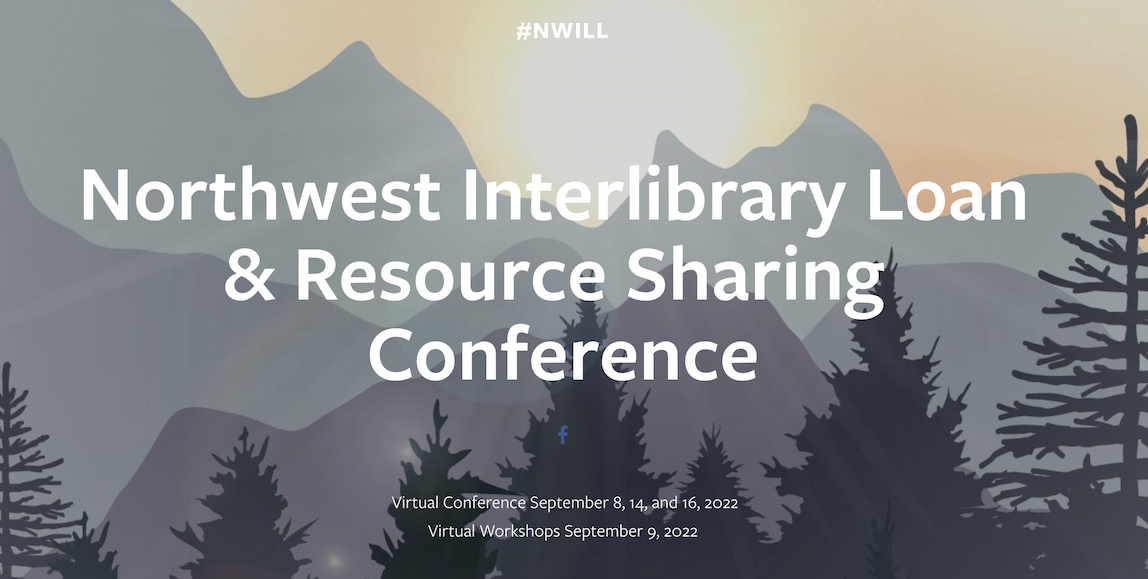
This upcoming September I will be attending the Northwest Interlibrary Loan & Resource Sharing Conference also known as #NWILL. This online conference focuses on interlibrary loan (ILL), document delivery, and resource sharing. In my role as a library worker, I provide support in these areas so I look forward to learning how to develop better practices and streamline processes in serving patrons through ILL. I am thankful to the conference committee for providing a free scholarship for me to attend.

I’ve been attending the Virtual Copyright First Responders Series led by Kyle K. Courtney, a lawyer and librarian, and a Copyright Advisor for Harvard University. Here are the topics of discussion:

  • Practical Copyright for Libraries, Archives and Cultural Institutions
  • US Copyright 108
  • Fair Use, part 1
  • Fair Use, part 2 & the Right of First Sale/Licensing

Kyle has been very engaging in the sessions – covering these complex topics and making them very relevant. It’s very fascinating to learn more about copyright and how it affects our work in libraries and archives.

If you are interested in learning more about copyright, consider viewing these resources:

Copyright laws vary from country to country so if you have a particular resource from your own country that you refer to, please share in the comment box!

35 day of City Expo – Management Skills and Learning Opportunities

How do you manage during a 35 day long city fair which is the result of a 3 year long innovation journey? And what skills do you need to have in order to manage this?

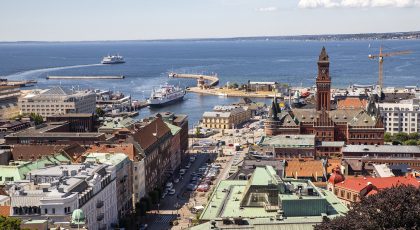
In a previous blog post, Tina Haglund has described the H22 City Expo of Helsingborg Sweden. https://blogs.ifla.org/cpdwl/2022/06/14/h22-city-expo-helsingborg-sweden/

In this blog post I follow up on this and reflect on the management skills needed and the learning opportunities the City Expo gave.

During the past years, all departments and employees of in the city of Helsingborg have had the opportunity to explore and apply for funding to test new ideas and innovations. The public library of Helsingborg has for example been working with co-creating together with citizens to find out the needs and ideas in a new (and rebuilt) library in 2026 https://innovation.helsingborg.se/en/initiative/development-and-rebuilding-of-the-city-library/. Also the library has a project collaborating with the University of Lund, on “The sustainable/resilient workplace” https://innovation.helsingborg.se/en/initiative/sustainable-workplace-a-collaboration-and-research-project/. Digidel 2.0, exploring how to develop the digital competence center of the library is another example of the work https://innovation.helsingborg.se/en/initiative/digidel-2-0/. And many other innovations and development initiatives have been put in place.

The results of the innovation work so far was presented during various talks and presentations during the 35 days. This meant that at the same time as keeping business running as usual, the library staff also were involved in many different activities. At the same time employees could work as volunteers during the H22.

Of course this affected both the employeeship as well as leadership and management skills. All managers of the city of Helsingborg have, during the last three years, gone through a management skill program called “Samspel Helsingborg” (= interplay/interaction Helsingborg). This program has given us the skills needed in moving from New Public Management (NPM) into a Trust Based Management model and has been key to the success of the innovative movement.

The Trust Based Management model is something which have been worked on at the national level through a research based work “The Swedish Delegation of Trust”. The guiding principles in Trust Based Management is according to The Swedish Delegation of Trust:

  • Focus on the Citizen – their experience and knowledge, understand what is needed
  • Comprehensive/holistic view – everyone take responsibility for the whole
  • Space for action – delegate powers and mandates, welcome co-decisions
  • Support – closely as part of the core business (rather than central)
  • Knowledge – reward continuous learning
  • Openness – share information, welcome dissent and respect criticism

My reflections on some management skills that were of importance before, during and after this period of innovation and City Expo are:

  • Involvement in strategy and business plan – involve all staff in the strategical planning as well as the operational planning of the library business. Make real use of all the knowledge within the organization and ensure that everyone knows where we are heading. Follow up together with the staff, so that everyone see how the work proceeds.
  • A culture of participation – ensure to build a culture where both staff and users gets involved and participate in the development work.
  • Trust – really manage by trust and let go of control. Let the employees use their skills and solve different situations using their full potential and experience. Keep the written routines and rules to an absolute minimum as it is impossible to foresee what will happen and there is a risk that every situation makes you write a new routine instead of focusing on doing the job and solving the situation.
  • Brave – be brave and have the courage to let go of things. Delegate a lot and let others solve the issues in their way, using their skills and expertise. Be sure to enjoy when things turn up in another way than you expected.
  • Make mistakes and learn from them – ensure a culture where it’s really ok to make mistakes. A culture where you don’t try to avoid making mistakes or try to find who did the mistake and blame them. Instead celebrate the mistake and learn from it. Most important as a manager here is to really walk the talk and do the same thing as you say.
  • Communicative skills – keep the communication open and transparent in all directions so that everyone knows where to find the information needed and communicate when things needs to be acted on. Listen (don’t just hear) what people are communicating and act. Also use communication as a learning tool so that every day gives a learning experience.
  • Together – we do this together. This is really of utmost importance as no one can have all the skills, expertise, know the solutions and work on complex issues alone. No one has the answer by themselves. Especially the manager does not know everything in the complex world we are living in. Those working close to the library users usually are the ones with the best solution and they need to get the mandate and tools to act. Other businesses and organizations have skills within their areas. Find those, collaborate and network and make them flourish. We need to do it together.

For us at Helsingborg City Libraires it was also important to use the City Expo so that everyone within the staff could get the opportunity to learn new things from everything going on during the expo. We therefor decided that all staff could use up till 8 hours each, to take part and participate in different events to improve their skills and to get inspired by what others do. Often you can get new ideas for your library business by talking and listening to other kinds of services and see how they meet different challenges. We used this as a learning opportunity. And importantly, we did not ask for details on what the staff did, we trusted that they used this time to learn for their and the libraries’ future.

Further information on the H22 City Expo is available at: www.h22cityexpo.se

Information on different innovations we have worked on in the city can be found at: https://innovation.helsingborg.se/en/


by Catharina Isberg, Library Director, Helsingborg Sweden

What collaborating with others at IFLA mean?

CPDWL Section has written in its Action Plan what specific subjects we want to cover and work on within the next two years (2022-2023). We must review the Action Plan every six months and update the tasks, challenges, working group members, and timetables. It’s a decision of our Section made long ago that every standing committee member has to work in at least one of the working groups.

As our tasks are widely distributed across topics such as continuing professional development, workplace learning, life long learning, work-life-balance, etc., there are many connections with other IFLA Sections and Special Interest Groups. Sometimes we approach others to cooperate, and occasionally Sections ask us for collaboration. Some may be unsure what such cooperation means. And always we are looking for interested and experienced colleagues in the Section to become part of the working groups.

It is always different and isn’t easy to describe.

We have some projects and cooperations that are limited by time—for example, working with another Section to prepare a satellite meeting connected with the WLIC. It depends on how many colleagues are involved in the working group and what you must do. It might be very time-consuming for a while until the conference takes place. Or your duties are quickly accomplished because you have to book the venue or find the speakers etc.

Other working groups have been together for years, for example, the IFLA Coaching Initiative by CPDWL and Marketing & Management section. This group started working together in 2018! The group meets regularly every second month via Zoom, and we always brainstorming what to do next. We hope to continue as long as there is a demand for coaching in the IFLA family.

Every standing committee member is encouraged to actively publish their contributions on this blog, Twitter, Instagram, or Facebook. We are happy to receive articles or statements about national, regional, or local projects that might interest the worldwide community, book reviews, announcements for engaging webinars, conferences, or summaries of these events.

We look forward to publishing not only in English but in your native language, too (but please with an English summary).

IFLA supports the collaboration of sections and special interest groups, so we have some requests for cooperation right now. Usually, Section chairs or officers will have the first contact, and we’ll send the request to our SC list. Most of the time, we can’t say what is planned in detail because the project will only develop through the participants. But if you are interested in the topic, you should contact us. Even if you realize in the working process that you can not participate as intensively as desired, you can still be an essential source of inspiration at the beginning.

Be sure that every cooperation in a working group with other sections will also expand your horizon and might be helpful for your daily work. In addition, it also might be beneficial in solving problems, sharing sources, and sharing your knowledge. It is also wonderful to meet people from around the world with a different view on a subject you think you know very well.

We look forward to your comments and feedback and hope we were able to dispel some uncertainties.