Category Archives: General

#NWILL Conference & Copyright Resources

NWILL conference

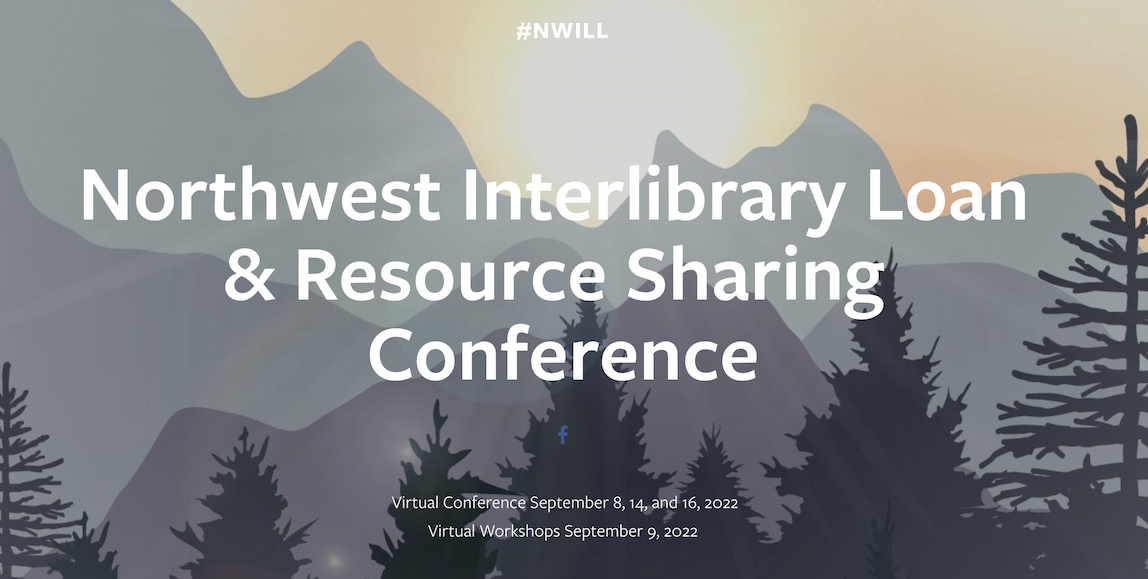
This upcoming September I will be attending the Northwest Interlibrary Loan & Resource Sharing Conference also known as #NWILL. This online conference focuses on interlibrary loan (ILL), document delivery, and resource sharing. In my role as a library worker, I provide support in these areas so I look forward to learning how to develop better practices and streamline processes in serving patrons through ILL. I am thankful to the conference committee for providing a free scholarship for me to attend.

I’ve been attending the Virtual Copyright First Responders Series led by Kyle K. Courtney, a lawyer and librarian, and a Copyright Advisor for Harvard University. Here are the topics of discussion:

  • Practical Copyright for Libraries, Archives and Cultural Institutions
  • US Copyright 108
  • Fair Use, part 1
  • Fair Use, part 2 & the Right of First Sale/Licensing

Kyle has been very engaging in the sessions – covering these complex topics and making them very relevant. It’s very fascinating to learn more about copyright and how it affects our work in libraries and archives.

If you are interested in learning more about copyright, consider viewing these resources:

Copyright laws vary from country to country so if you have a particular resource from your own country that you refer to, please share in the comment box!

My reflections on receiving IFLA’s Scroll of Appreciation

contributed by Gill Hallam


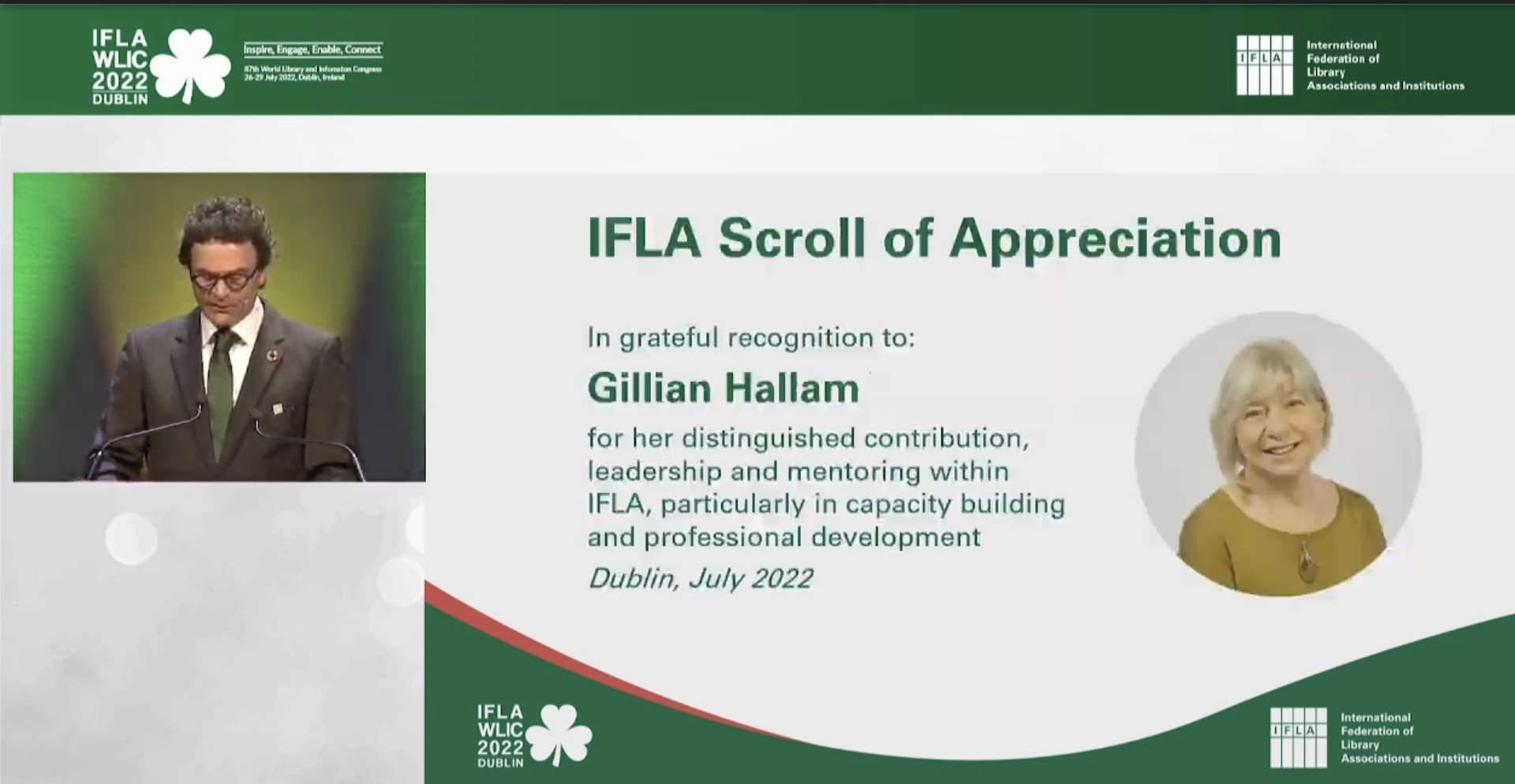
The IFLA Scroll of Appreciation is awarded in recognition of the contribution of “an individual who has given distinguished service to IFLA as a volunteer engaged in a committee or group, in addition to efforts in fostering IFLA values” [1].  At the closing ceremony of the WLIC in Dublin last month, three IFLA Scrolls of Appreciation were conferred: to Sanjay Kumar Bihani, to Sueli Mara Soares Pinto Ferreira, and to me. To be nominated for such a prestigious award was, firstly, an incredible surprise, and secondly, an incredible honour.

Very sadly, 2022 was the one year that I could not attend the WLIC, but I thank Christine Mackenzie, past-President of IFLA, for receiving the award on my behalf.

The citation states that this IFLA Scroll of Appreciation recognises “Gillian’s distinguished contribution, leadership and mentoring within IFLA, particularly capacity building and professional development. Her achievements have maximised the potential of individual librarians, as well as those involved in IFLA’s committees and in library associations across Asia and Oceania”.

These words are very humbling, because – just like all my friends and colleagues across the IFLA community – I have simply been doing what I love doing! Nevertheless, I am over the moon to know that through this award, IFLA  acknowledged the imperative for learning and development for  everyone working in the library and information profession!

I would argue that, for many years now, IFLA has been ‘my tribe’: my involvement in the organisation has provided  me with so many wonderful opportunities to connect and work with talented and passionate library and information professionals across the world. My own career has in fact been a very international one (I have been fortuntate to live and work in the United Kingdom, Europe, Africa, Asia, the Pacific Islands and Australia), so when I was introduced to IFLA’s activities by my colleagues with the Australian Library and Information Association (ALIA), Jennefer Nicholson and Christine Mackenzie, new energy was injected into my professional life.

My first job after migrating to Australia in the early 1980s was as a special librarian in the corporate sector in Brisbane. It was an exciting role, but as the solo librarian in the firm, I felt that the need to actively seek out like-minded LIS colleagues with whom I could explore and discuss professional issues. After becoming a member of ALIA as a new graduate, I discovered plenty of rewarding avenues to network and to contribute productively to the profession, and as my career evolved through the different roles as LIS practitioner, educator and researcher, there were opportunities to lead and to mentor others.

Certainly, my involvement with IFLA represented the chance to explore new and interesting activities. After initially serving as a member of the Standing Committee for the Section for Education and Training (SET), I joined the Section for Continuing Professional Development and Workplace Learning (CPDWL). Since 2015, I have served as ALIA’s nominee on the CPDWL Standing Committee.

It is really very hard NOT to get engaged with the work of CPDWL! Along with other members of the Standing Committee, I have been directly involved in so many great activities:

  • developing and updating of the IFLA Guidelines for Continuing Professional Development: Principles and Best Practices
  • translating the Guidelines for CPD poster into over 30 languages
  • planning and running the CPDWL open sessions at the WLIC, in partnership with other IFLA sections and SIGs
  • participating in the IFLA Coaching Initiative with the Management and Marketing Section
  • hosting a table at the Knowledge Café at the WLIC with the Knowledge Management Section
  • contributing to the New Librarians Global Connection webinars with the New Professionals SIG, supported by the American Library Association.
  • and much, much more…

Importantly, CPDWL’s satellite meetings have always provided smaller groups of people within and beyond IFLA to work closely together to plan and coordinate the specialised conference program, the most recent event held in Zagreb, Croatia (2019), in partnership with the Croatian Library Association.

The CPDWL team communicates to the world about all these activities through the CPDWL Newsletter and through its social media channels. In 2018, CPDWL was the inaugural winner of the IFLA Dynamic Unit and Impact Award, which recognises a section’s achievements in engaging members, developing strong identity and leadership, and communicating its activities within and beyond IFLA. Building on this success, in 2020 CPDWL received a special mention for the section’s excellent planning and clear and effective communication.

Beyond CPDWL, I also had the remarkable opportunity to contribute to IFLA’s  Building Strong Library Associations (BSLA) program, generously underwritten by the Bill and Melinda Gates Foundation. My involvement included preparing 20 case studies to support and expand the workshop materials, and to develop the BSLA Train the Trainer program. As one of the core trainers in the BSLA program, I was exceptionally fortunate to work with enthusiastic and committed LIS professionals with:

  • the Ukrainian Library Association (ULA)
  • the Arab Federation of Library Institutions (AFLI)
  • the Sri Lankan Library Association (SLA)
  • the Nepal Library Association (NLA)
  • the Pacific Islands Association of Libraries, Museums and Archives (PIALA).

In addition I was able to collaborate with colleagues from across the world at IFLA’s own BSLA convenings held in Berlin, Manila and The Hague.

Over the years, I have learnt so much from other IFLA members and officers, from other BSLA trainers and from IFLA staff members: you have all helped me grow and develop personally and professionally. Without doubt, the amazing journey I have travelled has been a shared experience with you, all the friends I have in ‘my tribe’.  You all know who you are: you have brought so much richness to my career and to my life, and therefore I dedicate the IFLA Scroll of Appreciation I have been awarded to each and every one of you. See you all in Rotterdam next year to celebrate!

[1]  https://www.ifla.org/ifla-scroll-of-appreciation/

A day in the life of an IFLA Section officer

This blog post aims to give prospective Standing Committee members the opportunity to experience – through words – a “day in the life” of an IFLA Section officer. I hope to answer some common questions, including what an IFLA Section officer “feels like” and what an Information Coordinator deals with at work.

As the Information Coordinator of this Section, I thought it was valuable to share what has shaped my work as an officer for my Section.

Time spent

I spend an average of about 5-10 hours per month as an Information Coordinator. It will vary accordingly, depending on the specific projects you take on as a standing committee member. This translates to about 1-2 hours per week. Most of my time is spent communicating on emails and updating our Basecamp, webpages, blog, and repository. It is more of a sprint rather than a regular block of time, dealing with projects and other matters as they come up.

Being a global library or information worker colleague

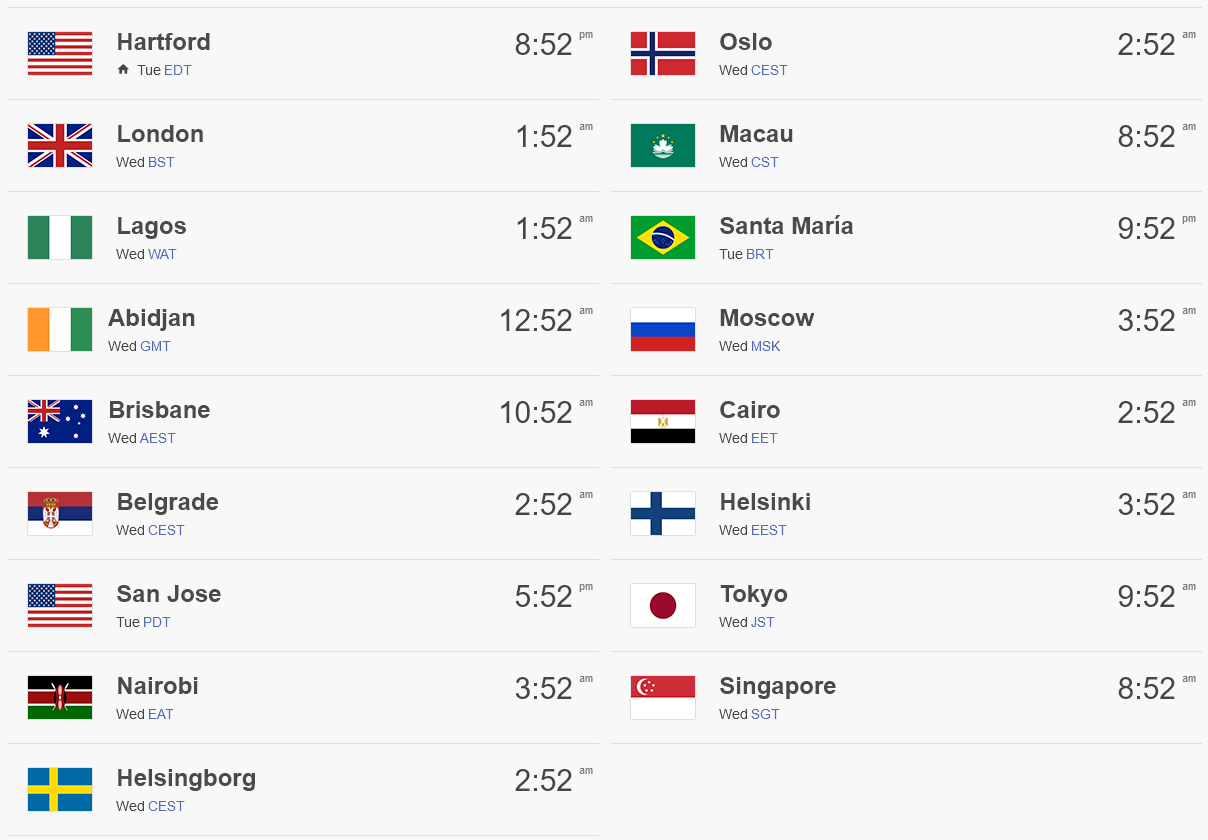
The Event Time Announcer tool on timeanddate.com has become my default go-to whenever we discuss upcoming events (meetings, webinars, etc.). Like many other IFLA sections, our Section has a standing committee with members from more than 10 countries and time zones. Sharing the web address will ensure that no one is confused about what time it is for them.

Screenshot of the timeanddate.com with many different cities and their local dates reflected.

Never a time when everyone’s awake or asleep.

I want to acknowledge that there is no magic date or date, as our colleagues operate in different environments and time zones. It is essential to accommodate various parties and interests and be flexible. We want to always give the benefit of the doubt to a colleague who cannot attend, will be late, or needs to leave early. Value good note-taking over recordings because we do not have time to sit through recordings even on 2X playback.

Cultural intelligence helps to build and maintain relationships

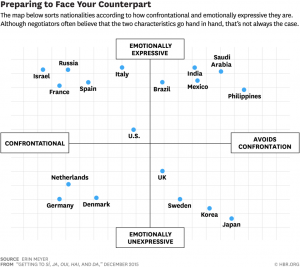
How do we communicate and listen effectively across cultures? Erin Meyer has developed a short, 25-part questionnaire that you can answer to learn more about your cultural profile. She is a professor at INSEAD, an expert in cross-cultural management, and the author of The Culture Map: Breaking Through the Invisible Boundaries of Global Business. The last question of her questionnaire is on your nationality (or where you were raised). I have met many colleagues with IFLA that have a different workplace from their nationality, including myself.

A graph depicting how confrontational and emotionally expressive people with a certain nationalities can be. Source: Erin Meyer.

Navigating the social media landscape of China can be tricky, similar to keeping up with the developments of Instagram and TikTok in other parts of the world. I am often quizzed about how to reach out to Chinese librarians and librarians working in the Asia Pacific, even as I am no longer working in that part of the world. (I can speak and read Mandarin and identify as ethnically Chinese, even though I belong to the vast, diverse, overseas Chinese diaspora.)

The million-dollar question: how do we adapt to our colleagues’ cultural preferences, lead across cultures, and create an accommodating, safe team culture? My response is the standard textbook answer. Be explicit with your team norms, be ready to explain the reasoning behind them, and acknowledge how it might feel outside one’s socially acceptable behavior.

Censorship, freedom of access, and freedom of expression

Censorship is an excellent example, especially relevant in our profession. Our Section has an explicit norm of not censoring others in their communications, exemplified in our blog posts. This may feel uncomfortable for me, growing up in Singapore, in a culture of self-censorship and mindful of what I say on specific topics involving politics and personal values. We have an exchange of perspectives, not to persuade others to our point of view, but to learn and acknowledge.

Working with international colleagues will require one to acknowledge different interpretations of what is universally accepted. For example, as librarians, we embrace one of IFLA’s core values of “the endorsement of the principles of freedom of access to information, ideas and works of imagination and freedom of expression embodied in Article 19 of the Universal Declaration of Human Rights”. Start a conversation about book censorship with the American librarians, and you will hear a different story from the European librarians.

Why getting names right matters

No name is common or “normative” in a global community. Consider sharing the pronunciation of your name using apps like Namedrop and NameCoach. If Zoom or the video conferencing platform allows you to use the original characters of your name, be proud of it. Others on the call might develop an interest or ask you about the significance of your name. I remain fascinated with the meaning behind names from languages unfamiliar to me.

I admit that I constantly mispronounce the names of my collaborators, especially with my European colleagues and friends. They are most understanding, and in return, I empathize with their attempts to get Asian names right.

Like any community, it is the collective experiences and expertise that we are better off together. There will be misunderstandings and apologies, which are part of learning and growing together. As an Information Coordinator, I keep it short and straightforward and leave time for stories and others to join our conversations.

What collaborating with others at IFLA mean?

CPDWL Section has written in its Action Plan what specific subjects we want to cover and work on within the next two years (2022-2023). We must review the Action Plan every six months and update the tasks, challenges, working group members, and timetables. It’s a decision of our Section made long ago that every standing committee member has to work in at least one of the working groups.

As our tasks are widely distributed across topics such as continuing professional development, workplace learning, life long learning, work-life-balance, etc., there are many connections with other IFLA Sections and Special Interest Groups. Sometimes we approach others to cooperate, and occasionally Sections ask us for collaboration. Some may be unsure what such cooperation means. And always we are looking for interested and experienced colleagues in the Section to become part of the working groups.

It is always different and isn’t easy to describe.

We have some projects and cooperations that are limited by time—for example, working with another Section to prepare a satellite meeting connected with the WLIC. It depends on how many colleagues are involved in the working group and what you must do. It might be very time-consuming for a while until the conference takes place. Or your duties are quickly accomplished because you have to book the venue or find the speakers etc.

Other working groups have been together for years, for example, the IFLA Coaching Initiative by CPDWL and Marketing & Management section. This group started working together in 2018! The group meets regularly every second month via Zoom, and we always brainstorming what to do next. We hope to continue as long as there is a demand for coaching in the IFLA family.

Every standing committee member is encouraged to actively publish their contributions on this blog, Twitter, Instagram, or Facebook. We are happy to receive articles or statements about national, regional, or local projects that might interest the worldwide community, book reviews, announcements for engaging webinars, conferences, or summaries of these events.

We look forward to publishing not only in English but in your native language, too (but please with an English summary).

IFLA supports the collaboration of sections and special interest groups, so we have some requests for cooperation right now. Usually, Section chairs or officers will have the first contact, and we’ll send the request to our SC list. Most of the time, we can’t say what is planned in detail because the project will only develop through the participants. But if you are interested in the topic, you should contact us. Even if you realize in the working process that you can not participate as intensively as desired, you can still be an essential source of inspiration at the beginning.

Be sure that every cooperation in a working group with other sections will also expand your horizon and might be helpful for your daily work. In addition, it also might be beneficial in solving problems, sharing sources, and sharing your knowledge. It is also wonderful to meet people from around the world with a different view on a subject you think you know very well.

We look forward to your comments and feedback and hope we were able to dispel some uncertainties.

A Start-Up Library for the Diaspora in Silicon Valley: An Emerging Story

by Mantra Roy

As an academic librarian in a public Higher Education Institute in the most diverse metropolitan city in the United States, San José in California, a major city in Silicon Valley in the greater Bay Area, I am very familiar with conversations about developing programs and services for students whose native language may not be English or who may speak multiple languages. San José is also home to several diasporic communities and in recent times, large percentages of Asian population have moved into the larger Bay Area, primarily because of the technology industry.

Of the Asian population, those from India have accounted for a major percentage. KQED reported in 2016, on the basis of AAPI Data (publisher of demographic data and policy research on Asian Americans and Pacific Islanders), that 350,000 Indians have moved to California over the last fifteen years. Mercury News reported that same year in an updated report about how affluent cities such as Cupertino, Palo Alto, Fremont, and Milpitas, have been experiencing more diversification in the Asian population owing to the rise in the number of Indians moving into them. In the growing Indian community, there are sub-groups based on languages as well as the states of origin in India. For example, there are Bengalis from the eastern state of West Bengal, there are Tamilians from the state of Tamil Nadu in southern India, there are Marathis from the western state of Maharashtra, and so on and so forth. Many of them can be Hindi speaking (typically spoken in the northern states of India) but coming from southern states like Telangana or Telugu speaking (the language of a southern state) but they have grown up in New Delhi, the capital of the country and located in North India.

Most of these communities have one or more cultural organizations which become community platforms for cultivating the arts such as music, cinema, dances, and religious or community festivals of each state or region. People from corresponding regions or states typically attend these events in order to stay connected with their native cultures and to pass it on to their children who, in many cases, are US citizens and experience their parents’ country during annual trips to India or through these cultural associations. These community associations also encourage the cultivation of the many languages of India, 22 of which are recognized by the Constitution of India, along with thousands of dialects. Many of these sub-groups conduct language classes as well.

All the languages of India have long literary traditions. Readers in these languages often purchase books on their annual trips to India or find niche bookstores in the USA where they find the latest authors writing in their languages. Many public libraries across the country respond to community needs by hosting small collections of books in Indian languages. Recently, in the Queens Public Library in New York, a Bangla Corner was inaugurated in response to the need for books in the Bengali language.

The Bengali language, often known as Bangla, is the language of what was the Bengal province in eastern pre-independent India. Today, there are 228 million first language speakers and 37 million second language speakers of Bengali. It is the 7th most widely used language over the world and the 5th most widely spoken native language.

The capital of the province, Calcutta, today known as Kolkata, was the capital of British India until 1911. When India became independent from British rule in 1947, the eastern part of the province became part of East Pakistan and later in 1971 became what is today the nation of Bangladesh. So, the Bengali language is shared between the country of Bangladesh and West Bengal, an eastern state of India. The language, literature, music, and food continue to be shared, cultivated, and cherished across the international border even today.

The role of Bengali literature in the Bangla speaking community is central to its identity. In the diaspora, reading and access to Bengali literature remains a matter of avid interest. It will be of interest to know that the first Asian to win the Nobel Prize in Literature in 1913 was Rabindranath Tagore who wrote in Bengali.

The Bay Area in California is home to thousands of Bengalis (the name of the community and language is the same) and several cultural organizations, founded, run, and attended by Bengalis from both India and Bangladesh, host events and festivals throughout the year. They celebrate Bengali music, literature, cinema, and food. There are several interest groups in the community where people meet to read poetry together or stage plays or record Bengali stories for online audiobooks.
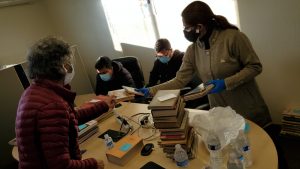
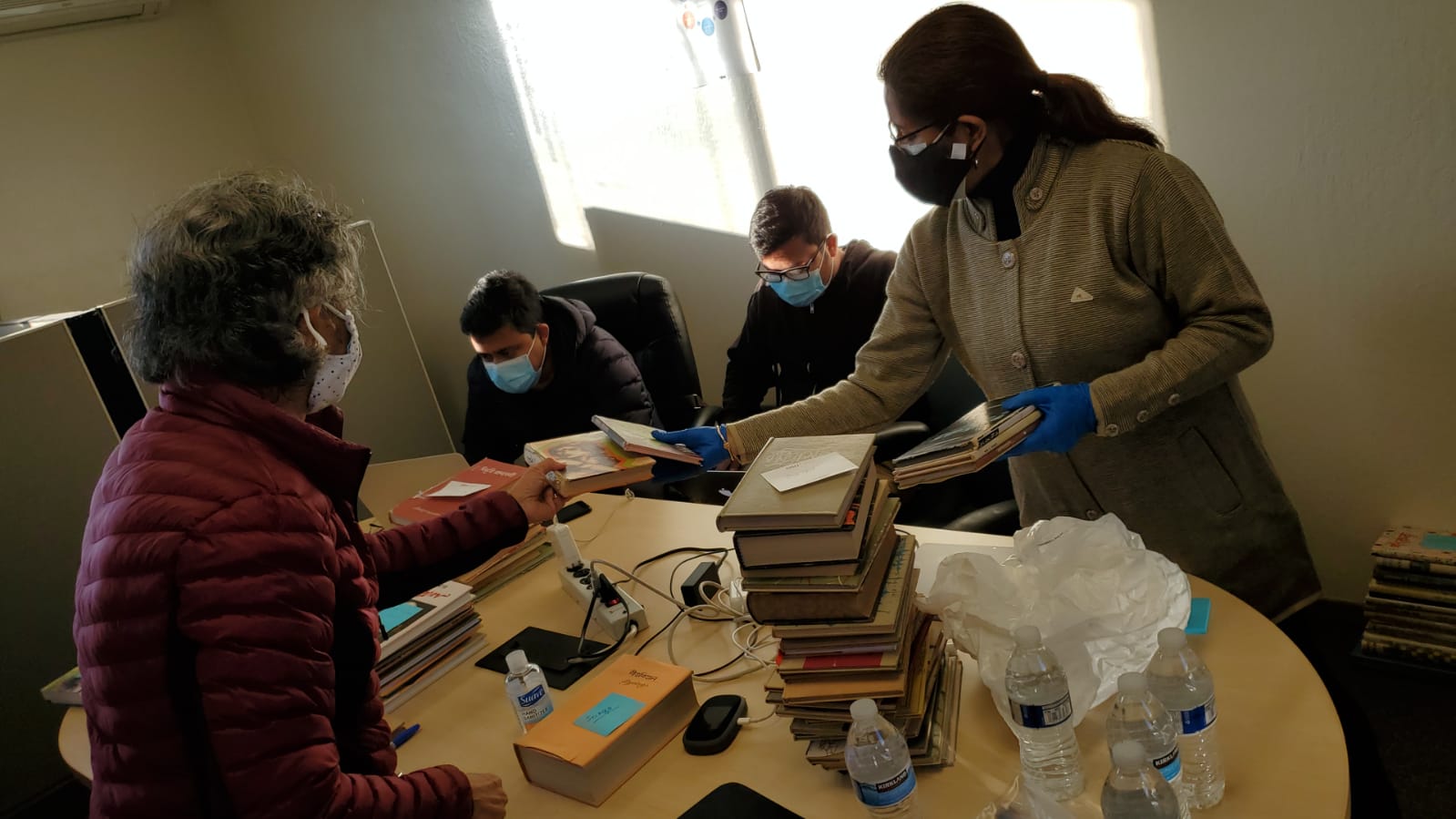
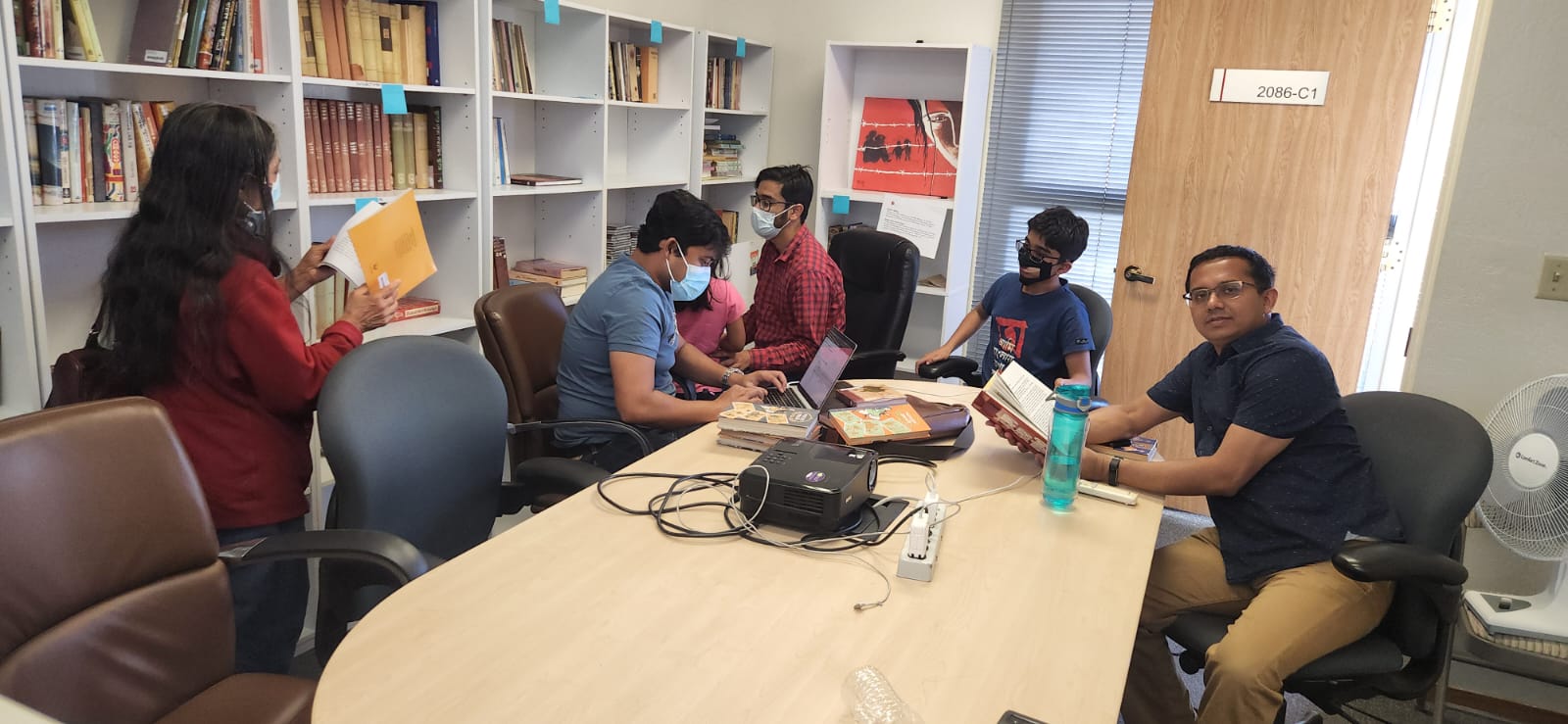
Some volunteers sort books into genres while others work on the library management system in January 2022.

However, the Bay Area has not had a library where Bengali books and magazines would be available for borrowing. February 26, 2022 changed this forever. The Dishari Public Library held its hybrid inauguration ceremony as the very first Bengali library of the Bay Area. ‘Dishari’ means ‘direction’ in many Indian languages. The idea originated in the Bangla language classes taught by The Dishari Foundation since 2014. Reading literary works in a language is the best way to cultivate the language. When the first round of conversations in the community met with applause, when a fundraising campaign in November 2021 was successful, when an office space was offered for free to host the library collection, and when a team of volunteers, including me, joined hands, we were ready to open the library doors.
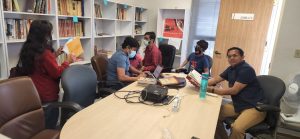
Cataloging by volunteers as the group discusses the genre classifications and transliterated spellings of books and authors in March 2022.

Some team members wrote the collection policy. Others built the Koha-based library management system, developed barcodes, and cataloged the books. Other team members procured the books: some met with community members and collected book donations; some went to Kolkata in India, purchased books and collected book donations from friends and families of Bay Area residents and had them shipped to the Bay Area. Others regularly attend cultural events in the area to promote the library collection. We have more than 500 books, including some rare author-signed copies. Many attendees at the inauguration event were from outside California and were curious about shipping books to out-of-state patrons. Some writers from Bangladesh have visited the library and expressed interest in supporting us. Many parents have brought their children to borrow children’s books.

But there are challenges. While we offer free membership and impose no fines for late returns, we have finite finances to run and expand the library. Currently, fundraising is our only source. Receiving book donations is not a problem but volunteer time to catalog them can become unsustainable. Transliterating Bengali titles for the catalog and determining several alternate spellings to facilitate discovery is time intensive and heavily dependent on volunteer availability. Increasing footfall in the library is a challenge as well because the library is open only on Saturdays when the volunteer team can be present in the library space. They have day jobs that keep them busy through the week.
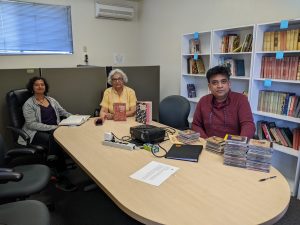
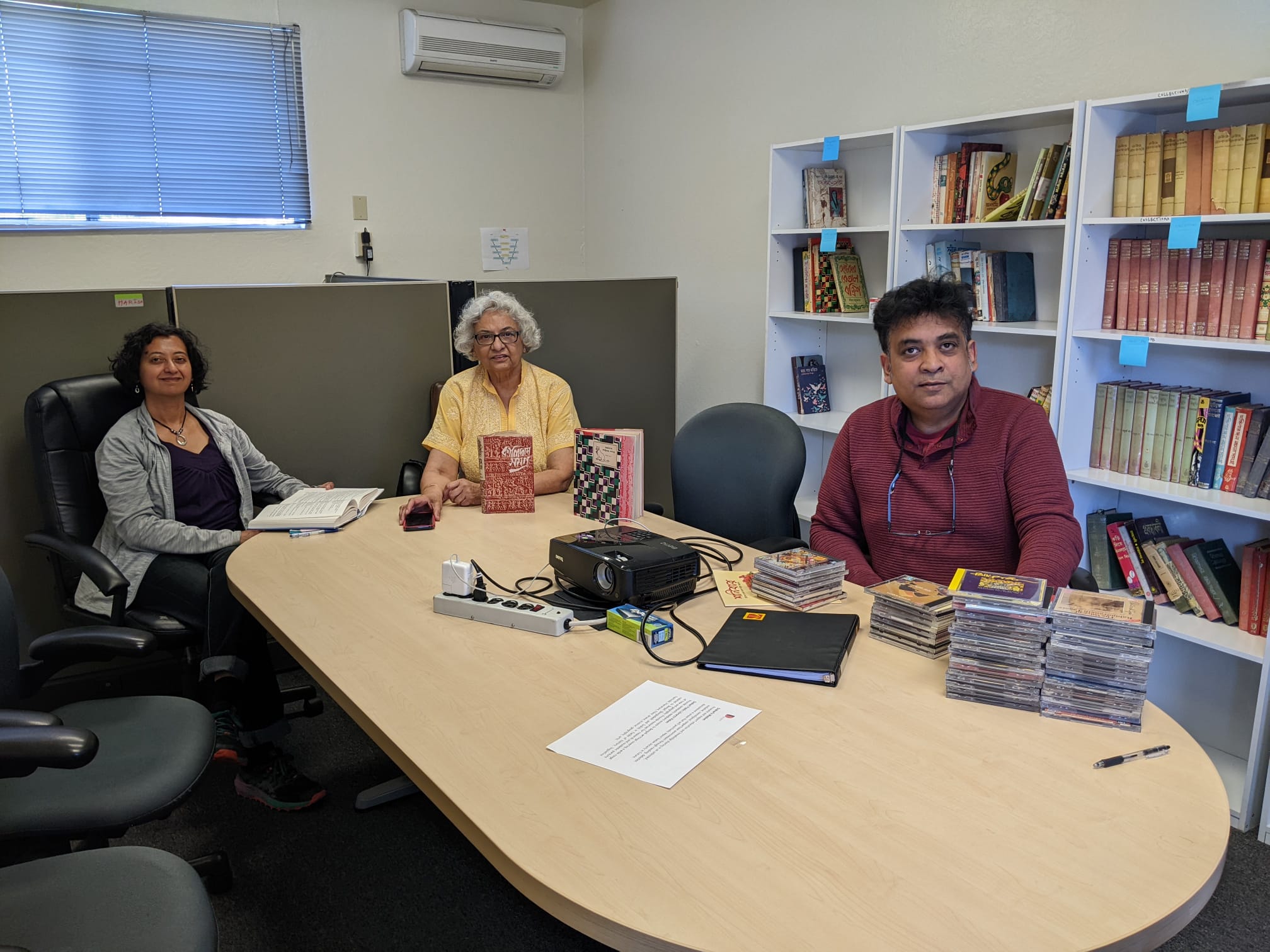
One of the founding members (right) with community members who donated rare music and audio collections in April 2022.

The team wants to create programs and services that will engage our community members. Public libraries in the USA have served mainstream patron communities by building collections in English but have responded to non-English language speaking patrons’ needs over time and on the basis of study and analysis. The Dishari library’s niche patron base tied to only one language poses an interesting challenge from the opposite end. Programs and services that will appeal uniquely to the Bengali community need to be built. The team has reached out to literary-minded interest groups in the area to collaborate with them and make the library a thriving platform for exchange of ideas and intellectual enrichment.

The team wants to collaborate with other language groups from India and expand beyond Bengali-language collections. Outreach to other cultural groups and seeking alliances to make the Dishari Public Library a pan-Indian resource for the diaspora is a milestone the team wants to achieve in the near future.

This community library is one of its kind and hopes to meet the reading needs of a diasporic community. While challenges are many, the volunteers are dedicated to make this library a success. As a trained librarian, the exercise of determining subject classifications for literary genres in a non-Roman language as well as creating ideas for programs and services for a diasporic community have been a great learning experience for me. We hope the Dishari Library is embraced by the community and it begins to flourish with their patronage and that there are more libraries that serve the unique literary needs of diasporic communities.


Mantra Roy, Ph.D, MLIS
Collection Strategy Librarian
Dr. Martin Luther King, Jr. Library
San Jose State University
San Jose, CA 95192-0028

Board of Directors, FORCE11
International Advisory Committee, SALIS (India)
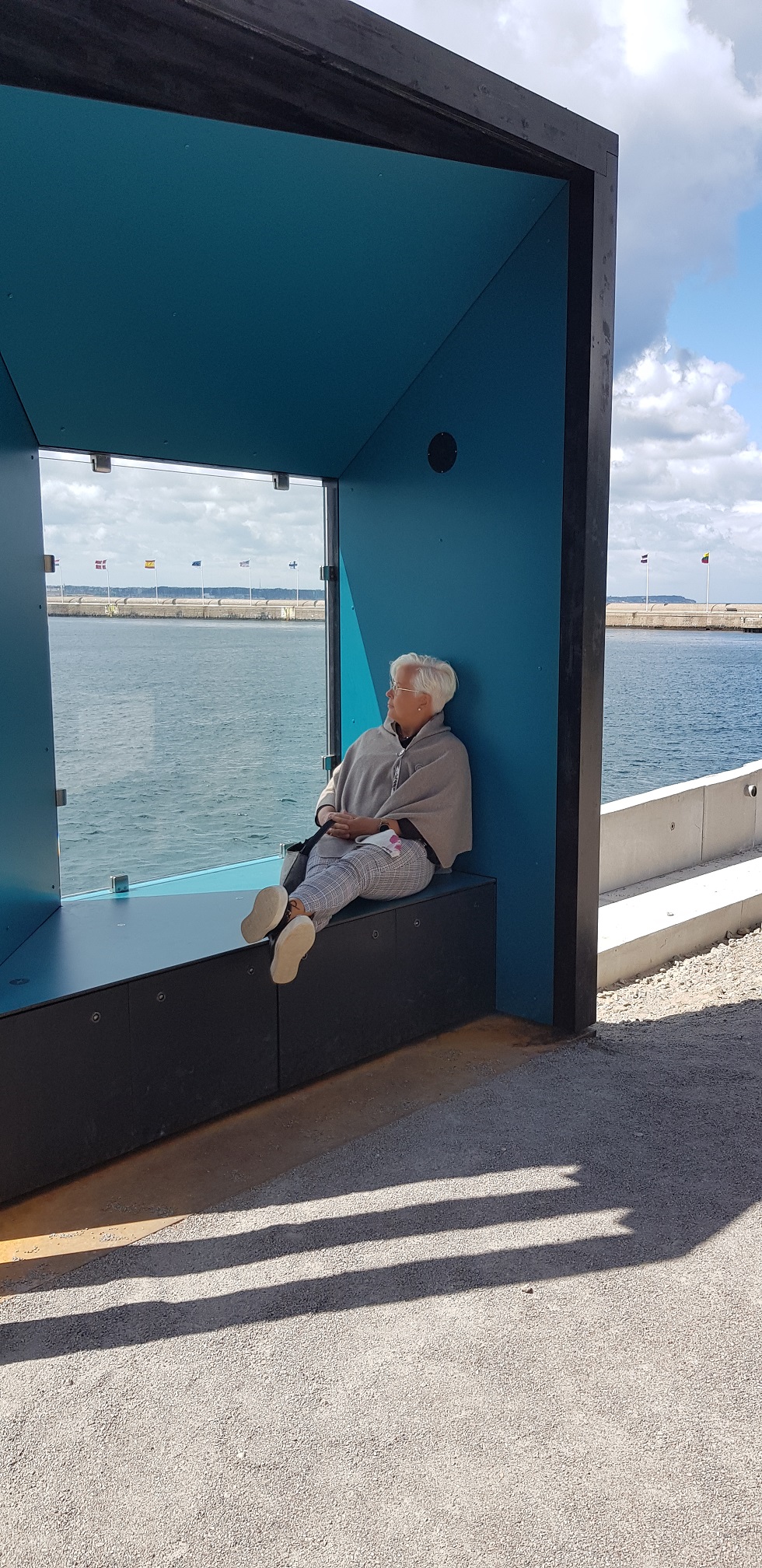
H22 City Expo in Helsingborg, Sweden

by Tina Haglund

For 35 days there is a buzz in the city of Helsingborg, Sweden. Between the 30th of May and the 3rd of July, Helsingborg City invites inhabitants, employees, and visitors to explore H22 City Expo. The overall theme for H22 is innovation for a smarter and more sustainable city. Within the theme, there is something for all ages and tastes – housing and design, national and international conferences, food and culture, entertainment, and family activities.

The H stands for Helsingborg. 22 alludes to the year 2022 when the city fair H22 City Expo will be held. H22 is also a nod to the previous fairs H55 and H99, even though they were more limited fairs. The city’s work with H22 consists of two parts: 1. A city-wide investment in innovation. It is about the journey itself towards a smarter and more sustainable city. 2. H22 City Expo – A stop where light is spread on everything that has been achieved until 2022.

During the past years, employees in the city of Helsingborg have had the opportunity to explore and apply for funds for testing new ideas and innovations. The public library of Helsingborg is for example working with co-creating with citizens to find out the needs and ideas in a new (and rebuilt) library in 2026. The results of this work so far are presented during various talks and presentations under these 35 days.

Employees can work as volunteers during the H22 and we can also take part and participate in different events to improve our skills and to get inspired.

Here are some of the things I´ve visited:

  • OPS! Sounds of Helsingborg. What does a city sound like? Sensors are collecting various data and create ambient music out of changes in the weather (wind strength, temperature, and light) by IoT.
  • Welcome home to 1972. An apartment is recreated as in 1972 in an area built in the same age. To understand the future you need to understand the past. In a combination with AR, you can also see the people who lived in the apartment.
  • Outdoor offices at Fredriksdals outdoor Museum. By providing outdoor workplaces as a way of promoting health and quality of life as well as sustainability and flexibility in working life. There are different diversified solutions with stationary and mobile outdoor offices with solar cells to cover the needs of wifi and electricity.

If you want to read more about all the things that happen, you find more info here: www.h22cityexpo.se

The event’s program content is arranged by administrations, companies, and H22 Partners – that is, companies, academia, and organizations that have chosen to become partners with the City of Helsingborg and H22.

Short-term Vacancy in our Section: Expressions of interest welcome

Dear colleagues,

Due to the resignation of a member, we are seeking to fill the vacancy with a colleague, preferably from a public or school library, but all interested and qualified colleagues are welcome to apply.

As a new member filling a casual vacancy, your term would be until the next formal election cycle in 2023. Then you can apply to be a full member of the section for another four years.

Please submit your expression of interest via the IFLA self-nomination form.  Nominations will be accepted until June 10, 2022, after which we will notify applicants.

As a member of CPDWL you would be expected to participate in at least one of our working groups and also contribute to our information to the library community through our social media channels:

We would also expect you to attend our online meetings and IFLA’s World Library and Information Congress 2022 WLIC, when possible.

For more information, please check our CPDWL website or contact one of our officers.

Thank you for your time and attention.


Kind regards,

Ulrike Lang
Chair of CPDWL
[email protected]